
Sublimation Batik Polos: Pattern and Colour Planning
Plan a modern sublimation batik polo with balanced motifs, readable logos and print-ready garment panels.
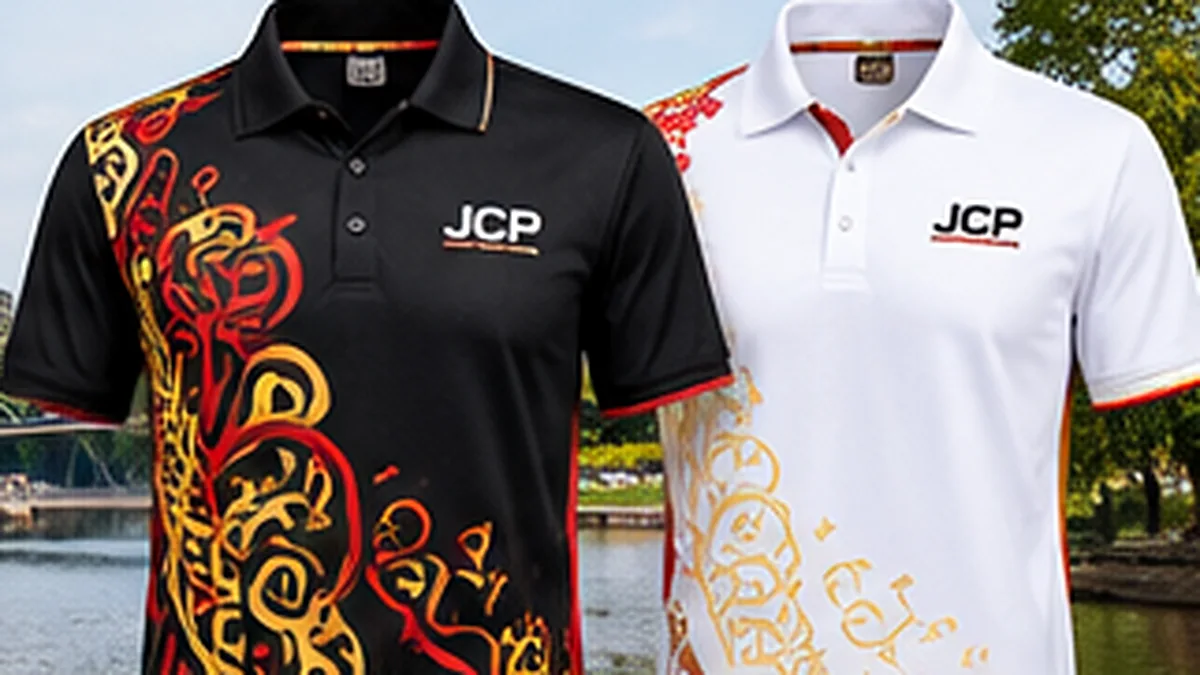
A batik-inspired polo can express local identity without becoming visually crowded. For a company garment, the design still needs to work as a uniform: the logo must be easy to find, the collar and seams must look intentional, and the pattern should remain attractive across different shirt sizes. Sublimation gives designers broad colour freedom on suitable polyester material, but a successful result comes from thoughtful layout rather than adding more motifs.
Start with the role the shirt must play
A reception team may want a restrained motif at the shoulder or sleeve. A brand ambassador can carry a more noticeable design, while a senior management uniform may benefit from a quieter composition. Before choosing artwork, decide whether the garment is for daily work, formal presentation, promotional use or a special programme. Those situations often demand different visual weight.
Choose two or three coordinated colours and test the main fabric colour against the approved logo. If the pattern competes with the logo, establish a calmer area around the chest position. Matching every edge to a brand colour is less important than maintaining a coherent overall appearance.
Understand how patterns cross garment panels
A shirt is not one flat rectangle. The front, back, sleeve and collar pieces meet along seams, and a flowing pattern can look interrupted if the artwork is not planned for the actual garment construction. Ask for a front-and-back mock-up as well as a view of both sleeves. When the motif is asymmetrical, specify where it should begin and which elements must not be cut across the placket or collar.
Repeating fine motifs on every panel can also make the shirt busy from a distance. A useful technique is to keep one visual focal area and let the remaining fabric breathe. Consider how the art translates onto the largest and smallest sizes in the order.
Respect cultural motifs and artwork ownership
If the design references identifiable traditional patterns, obtain appropriate permission or licensing where necessary and avoid presenting a new decorative composition as an official cultural symbol. An original geometric motif inspired by local design sensibilities is not the same as an exact reproduction of community-owned imagery. For commercial uniforms, ask who owns the source artwork and whether it is cleared for production.
This also matters when a company requests a previously used batik pattern. Check whether the file is a licensed asset, a client-owned graphic or merely a screenshot of another seller’s shirt.
Check fabric and sample colour
Sublimation works by transferring dyes into suitable polyester fibres, so cotton garments are not a drop-in substitute. The base fabric colour and manufacturing process affect the result, and soft proof colours on a phone screen can differ from finished cloth. View a test print under normal lighting and confirm collar colour, contrast and small text legibility.
| Design element | Approval question |
|---|---|
| Front motif | Does it leave room for the logo? |
| Back and sleeves | Do patterns join deliberately at seams? |
| Collar and placket | Are cut pieces and colours specified? |
| Size grading | Does the art work from small to large sizes? |
| Source artwork | Is there permission for commercial reproduction? |
For practical examples of the service, start at Uniform Sarawak’s sublimation batik page or the main website. JCP’s fabric and printing guide also explains where sublimation fits compared with other decoration methods.
Frequently asked questions
Can I print batik graphics on 100% cotton with sublimation?
Conventional dye sublimation is intended for suitable polyester materials rather than standard cotton.
Do front and back designs have to mirror each other?
No. They can be different as long as their colour and motif transitions have been planned.
More on JCP services: JCP production methods and material guide. Specific fabric, sizing, stock and lead-time recommendations should be confirmed for your order.