
Kota Samarahan Campus Orientation Kits: Shirts, Totes and IDs
Kota Samarahan is widely associated with higher education, including Universiti Malaysia Sarawak. For a campus orientation programme, the hardest part of merchandise is often coordination: knowing which volunteers need shirts, which attendees need bags and how to issue everything efficiently. Build the kit around how people actually move through registration.

Separate staff uniforms from attendee gifts
Volunteer shirts are operational clothing: they must identify helpers and be comfortable across a long registration day. Participant tees or keepsakes are different, because recipients may choose to wear them later. Specify these groups separately even if they share the same design theme. A functional event plan starts with a headcount by category, not a single combined shirt total.
If a shirt displays a society or university mark, obtain the authorised logo artwork and usage approval. Choose a colour that is easy to distinguish from the attendee crowd at the registration area. Use short role labels only where necessary. Plan for practical variation in sizing rather than dividing a large order evenly across all sizes.
Pack tote bags around the actual paperwork
A welcome kit often includes forms, schedules, stationery and small items gathered throughout the day. Choose a tote by measuring that stack, allowing room for the largest item and some additional space. Handles should feel comfortable on the walk between campus buildings. Printed artwork should remain readable when the bag is full and slightly creased.
Use a small content checklist inside the packing area so volunteers do not rely on memory. Count completed packs in labelled groups, and keep incomplete stock away from finished sets. If several registration points operate at once, assign inventory to each station before the crowd arrives. Attractive bags help with presentation, but error-free distribution is what people remember.
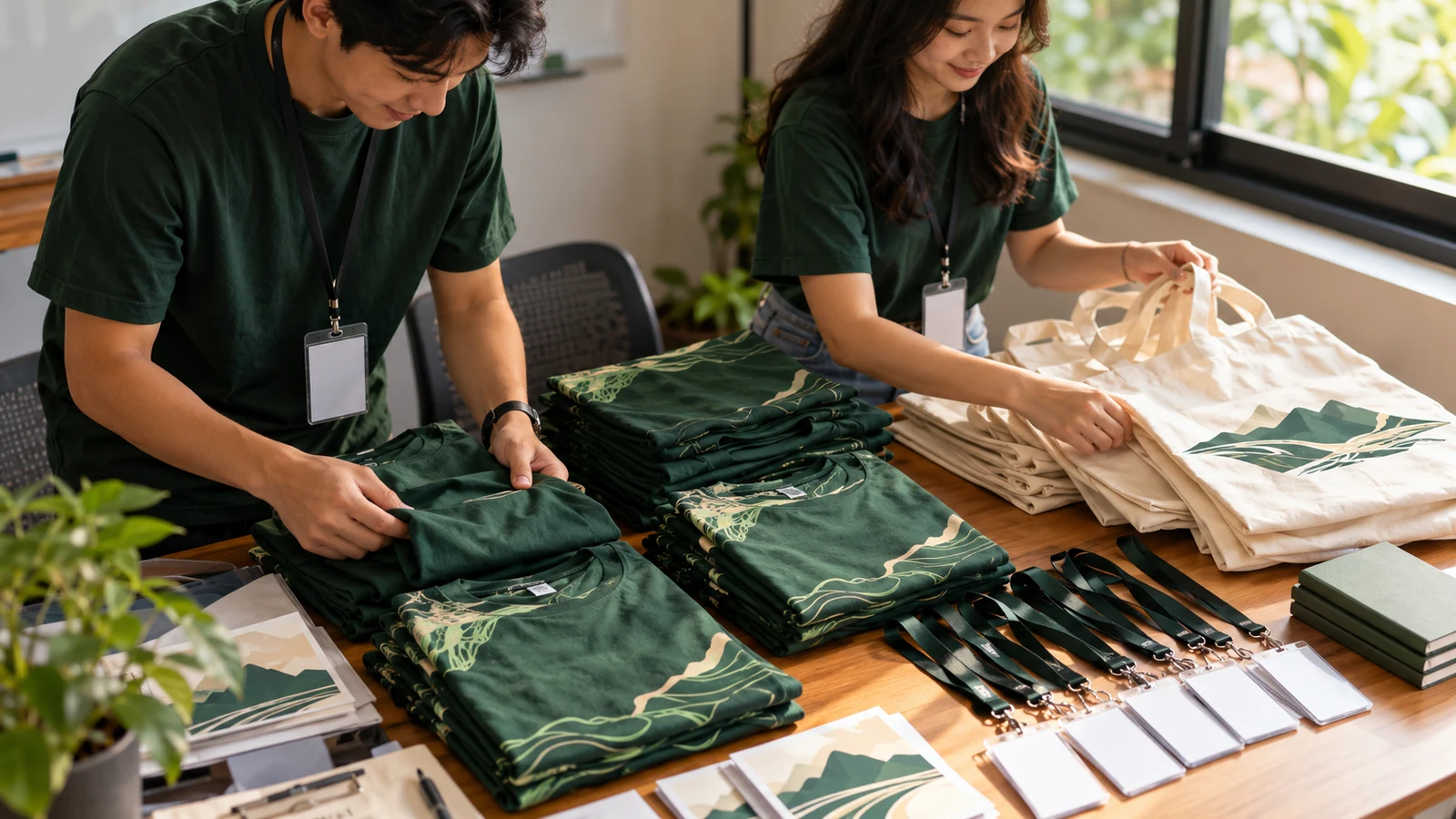
Keep name IDs useful and considerate
A clear name or role identifier helps new participants know whom to approach for assistance. The badge should be readable without forcing someone to lean forward or scrutinise small print. Do not include more personal information than is needed for the activity. Avoid sharp hardware or uncomfortable clips on a badge that students must wear for hours.
Decide whether volunteer and participant IDs have different colours or headings. Leave a simple space to replace details if last-minute changes occur. Ask organisers to confirm pronunciation or preferred display names where relevant. A respectful ID system supports the welcome experience more than adding extra decoration.
Rehearse registration flow and stock control
Lay out a complete kit on a table and walk through how a real attendee will receive it. One volunteer should be able to locate a size, pick the correct pack and note that it has been issued without disrupting the queue. Keep a modest, recorded spare allocation for damaged items or verified late changes. Do not open every bundle at once; loose stock becomes difficult to count.
Before printing begins, share the approved design, size totals, language requirements and collection plan with the supplier. Put one organiser in charge of signing off the final proof. After the programme, compare actual usage against the original estimates. That feedback is useful when the next student cohort arrives.
Make the kit work for a Kota Samarahan campus welcome
UNIMAS is based in Kota Samarahan, where new-student support and orientation needs are part of campus operations. A volunteer serving at a registration table may benefit from a clearly recognisable team shirt and name ID, while a new attendee mainly needs a bag that holds the handouts they receive. These two audiences should not be treated as identical when planning merchandise.
Keep a separate count for organisers, volunteers, facilitators and incoming participants. Colour or small role labels can help a student find the right person without being visually noisy. Plan a simple handoff route: ID verification, shirt or tote collection, programme information and next station. Mock up the table flow before event day; the order of items is often more important than fancy packaging.
A quick decision table
| Situation | Start with | Test or verify |
|---|---|---|
| Volunteers | Distinct shirt and ID | Issue by role and size |
| New participants | Useful tote with programme | Check pack weight |
| Registration team | Clearly labelled stock bundles | Separate spare sizes |
Frequently asked questions
Should volunteer shirts and student shirts match?
They can share a visual theme but should be distinguishable when someone needs help in a crowd.
How should organisers prevent size and pack shortages?
Use counted bundles, written issue records and spare stock based on verified registrations; avoid promising fixed quantities without a checked list.
Local context: Universiti Malaysia Sarawak – Kota Samarahan campus address. Product recommendations in this article are general purchasing considerations, not official requirements from that source.