
Sticker Labels for Chilled Products: Material and Adhesive Decisions That Matter
A label that works on a dry room-temperature box can fail on a chilled bottle or food container. Condensation, cold surfaces, plastic type and application timing all affect whether the sticker stays flat and readable.
In This Article
Direct Answer
A label that works on a dry room-temperature box can fail on a chilled bottle or food container. Condensation, cold surfaces, plastic type and application timing all affect whether the sticker stays flat and readable.
Start With the Surface, Not the Artwork
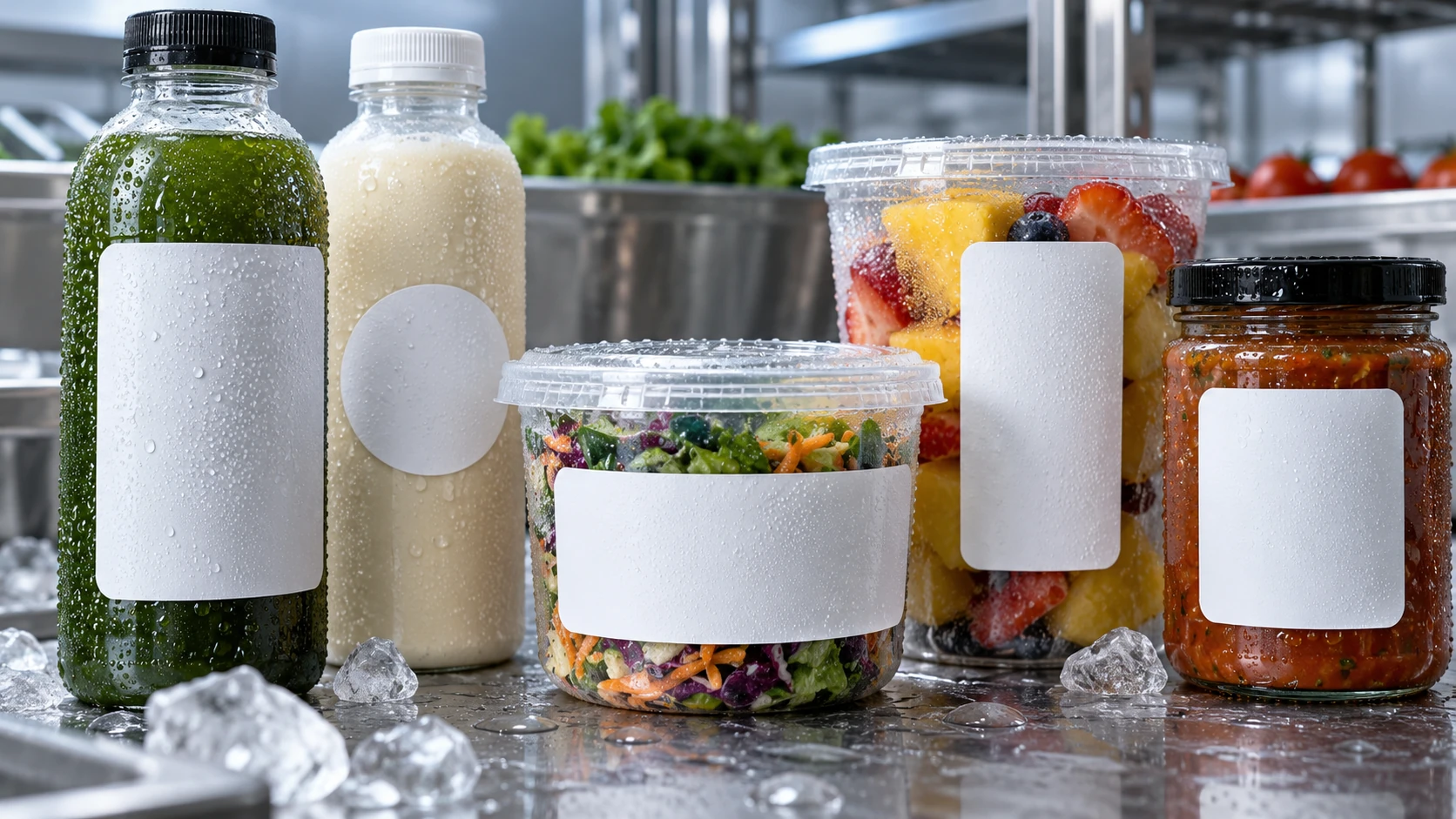
The first specification question is what the label will stick to: PET bottle, PP container, glass jar, coated paper box or another surface. Plastics can have very different surface energy, which changes how easily an adhesive wets and grips the material. A glossy bottle can also be curved, so a stiff label may try to lift at the edges even when the adhesive is otherwise suitable. Record whether the surface is smooth, textured or flexible and whether it will be squeezed during use. A beautiful label on the wrong substrate is still a failed label. Test on the actual packaging rather than a flat sample board.
Condensation Changes the Application Problem
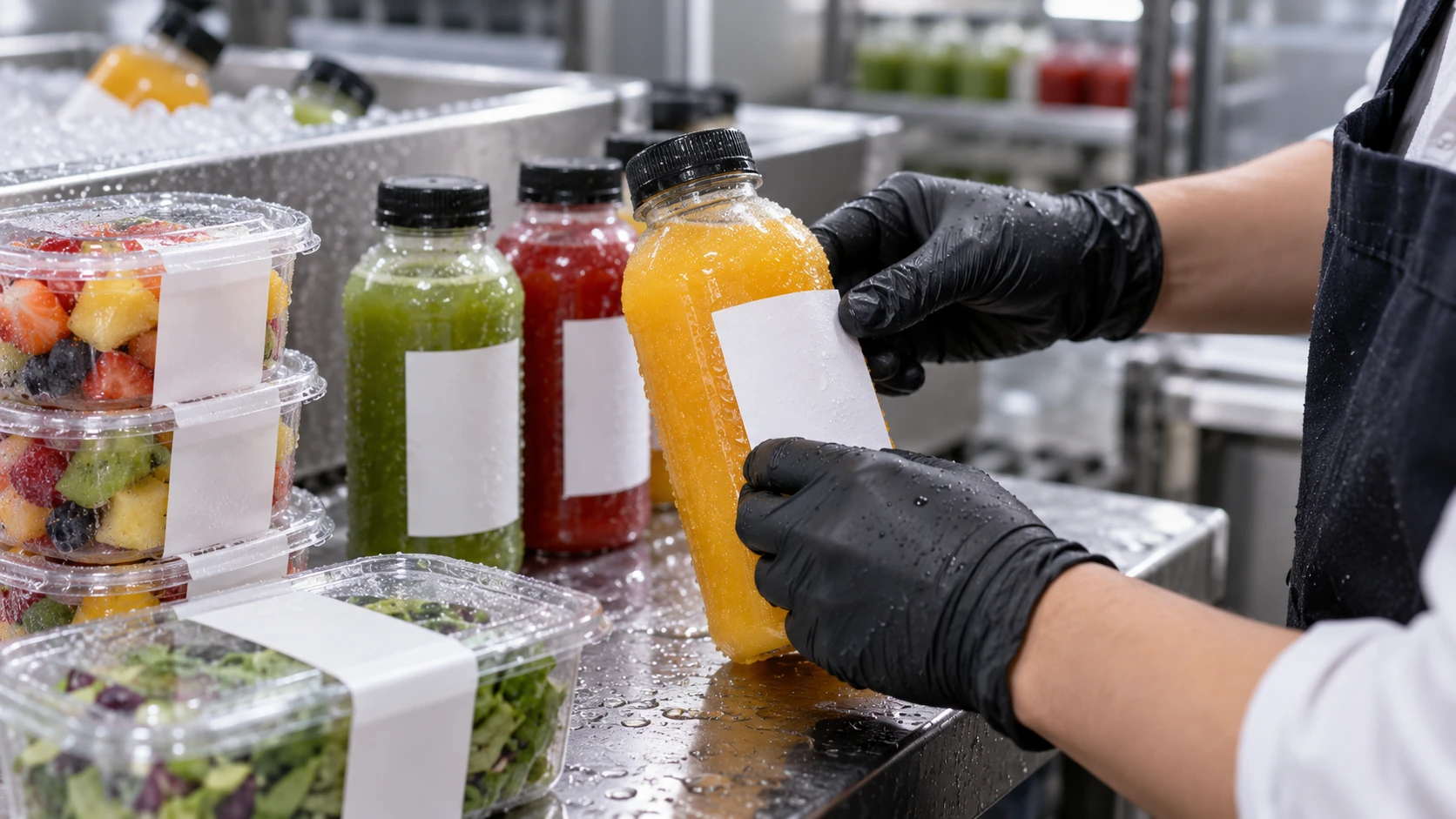
There is a major difference between applying a label to a dry package that will later enter a chiller and applying it to a package that is already cold and wet. Water can sit between the adhesive and container, preventing proper contact. If operations allow it, labelling before chilling is often easier because the adhesive can establish a bond on a clean, dry surface. If labels must be applied cold, the adhesive needs to be selected for that condition and tested under realistic condensation. Staff should also know whether containers are wiped dry before labelling. The application process is part of the label specification, not merely a packing-room detail.
| Condition | Main Risk | Specification Question |
|---|---|---|
| Dry package, chilled later | Moisture after bonding | Will facestock resist condensation? |
| Cold wet package at application | Weak initial bond | Is adhesive designed/tested for wet-cold application? |
| Curved plastic bottle | Edge lift | Is label flexible enough for the radius? |
| Reusable container | Residue | Does required removal conflict with permanent adhesion? |
Paper and Synthetic Facestocks Behave Differently
Paper labels are economical and can look excellent for dry applications, but unprotected paper can absorb moisture, wrinkle or scuff when exposed to condensation. Synthetic films generally handle water better and can suit chilled bottles, takeaway containers or products handled with wet hands. That does not mean synthetic is automatically necessary for every food item. A dry outer carton stored away from moisture may work perfectly with paper. Consider the whole journey: filling, labelling, refrigeration, delivery, customer handling and disposal. Choose the facestock for the harshest realistic condition it must survive.
Adhesive Strength Has to Match Removal Expectations
A label that must stay attached through cold storage needs reliable adhesion, but some packaging also needs clean removal or reuse. Permanent and removable goals can conflict. Stronger is not always better if the customer is expected to peel the label cleanly from a reusable container. Conversely, a low-tack removable label can become a problem if the product sits in condensation for several days. Define the required service life—hours, days or weeks—and what should happen at the end. Then test edge lift, sliding and residue after the full period.
Run a Small Cold-Chain Test Before Bulk Printing
A practical test does not need to be complicated. Apply several labels using the real packing process, chill them for the normal storage period, expose them to the expected handling and inspect the edges, print surface and adhesive bond. Include at least one sample that experiences heavy condensation, because that is often when failures appear. If the product is delivered, include a transport cycle rather than testing only in a stationary refrigerator. Photograph the results and keep the approved material code with the artwork file. This turns future reorders into a controlled specification instead of another round of guessing.
Specify the label around the packaging journey: surface, application temperature, condensation, storage time and removal—not just size and artwork.
Frequently Asked Questions
Are synthetic stickers waterproof?+
Many synthetic facestocks resist water well, but the complete label also depends on ink, laminate and adhesive.
Can labels be applied to wet bottles?+
Some systems can handle difficult conditions, but wet-cold application should be tested specifically rather than assumed.
Should chilled-food labels always be laminated?+
Not always. Lamination depends on abrasion, moisture, print system and the required service life.
Need Production Support?
If this issue affects an upcoming apparel or printing order, JCP can help review the material, artwork and production requirements before bulk production.
Discuss Your Requirements