
Roll-Up Buntings vs PVC Banners: How to Choose a Display That Works
Compare roll-up buntings and PVC banners for shopfronts, service counters and temporary displays, including design, sizing and transport.
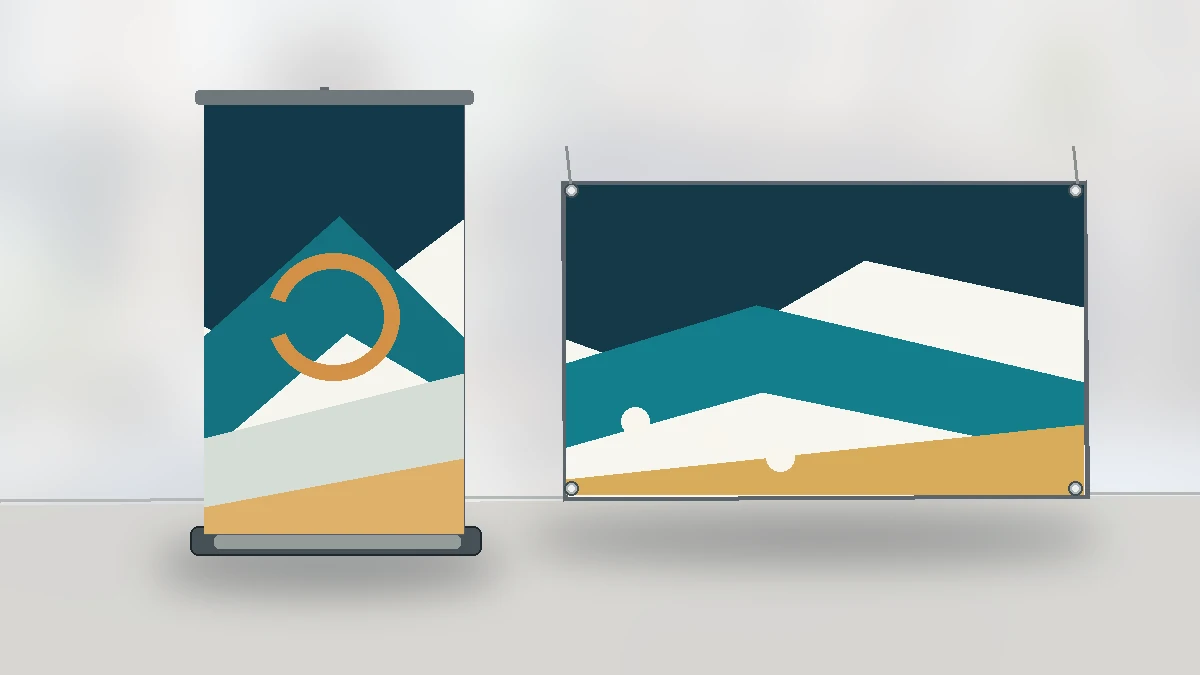
A promotional display has only a moment to explain what a business does. The wrong format can waste that moment: a roll-up stand squeezed into a windy outdoor area may be unstable, while a wide PVC banner hung behind a narrow service counter may be impossible to read. Both formats are useful, but they solve different placement and transport problems, so they should not be selected by print price alone.
For Sarawak businesses planning a shop promotion, product display or multi-branch branding update, start with where people will stand when they see the message. Work out the viewing distance, whether the display must move regularly and how it will be installed. Once those questions are answered, material and size choices become much easier to evaluate.
Understand the two formats
A roll-up bunting is a portable vertical print that retracts into a base, typically supported by an upright pole. It is often suitable for indoor counters, meeting spaces, reception areas and exhibitions where one person needs to set up a display quickly. A PVC banner is a flexible printed sheet that can be produced in wide or custom dimensions and fixed with eyelets, ropes or a suitable frame.
The portability of a roll-up system is a practical advantage, but its stand has a footprint and its image area is limited by the unit. A PVC banner can fill a much wider wall or fence yet needs secure fixing and a planned installation method. JCP’s banner printing service describes both formats; the sensible choice still depends on your actual site conditions.
Decide where the viewer will encounter the display
A customer approaching a retail entrance needs a clear main message that is easy to recognise in motion. A person standing at a registration desk has more time to read a service list or scan a code. Design for that behavioural difference. If the same artwork is reused on a large roadside banner and a narrow roll-up, text that looked balanced in the original may become too small or cramped in the new format.
Mark the intended position on a simple site photograph and note nearby doors, windows, signs and lighting. Check whether the banner blocks emergency signage or access. Where outdoor weather is involved, confirm that the fixing method, substrate and installation meet the location’s practical requirements. A roll-up stand should not be treated as a substitute for a wind-rated outdoor structure.
Keep the message readable at a glance
A strong display usually prioritises one main idea: the company name, a clear benefit and a next step. Trying to fit a brochure’s worth of text onto a roll-up makes the headline less visible. Reserve the top area for the most important brand and message, put supporting content below, and allow space around any QR code. A visitor should not need to stop and squint to work out the purpose.
For a PVC banner viewed from across a street or car park, reduce the number of words further. High contrast, large type and a clear directional cue often do more than extra decorative effects. Test the final design by shrinking it on screen to approximate the viewing experience, then check actual print size before approving. Colours may look different under direct sunlight and indoor lighting, so request a proof when exact brand matching matters.
Compare materials, finish and fixing details
PVC banner material is available in different grades, and the most suitable choice depends on expected display life, weather exposure and how the piece will be mounted. Discuss reinforced edges, eyelet spacing and any wind concerns with the printer and installer. A poorly tensioned print can crease, flap or tear, undermining the message even when the artwork is excellent.
Roll-up units also vary in base quality, print material, cassette design and transport bag. If the team will carry the unit between branches each week, the hardware is just as important as the picture. Ask how easy it is to replace the print later, whether the base can be reused and whether a damaged support part can be serviced. A cheaper unit may cost more if it must be replaced frequently.
Prepare the file at the correct size
Give the printer a final-size artwork file with the appropriate bleed, colour mode and image resolution for the intended viewing distance. Include a clearly indicated safe area so critical text does not disappear into the roll-up cassette or near banner hems and eyelets. Different stands need different allowances; do not guess at the bottom margin from a generic online template.
Photographs must be large enough to remain convincing when printed. A web-resolution image copied from social media may look acceptable on a phone but become visibly soft on a large backdrop. Use original approved artwork and check the spelling of offers, dates and contact details. If a QR code is part of the design, test it on a printed sample at a realistic scanning distance rather than relying solely on the digital file.
Budget for installation and delivery, not only printing
Two quotes with the same printed dimensions can contain very different costs. One may include the roll-up hardware, carrying bag and assembly, while another covers only replacement graphics. For PVC banners, ask whether hems, eyelets or installation are included. Packaging is also important when shipping long display units or folded banners between Peninsular Malaysia and East Malaysia.
A practical order request should describe the destination, indoor or outdoor placement, quantity, finished dimensions, hardware, deadline and delivery address. JCP has published a bunting and roll-up guide covering East Malaysia delivery, which can help buyers frame the questions to ask. Always confirm current lead times and freight charges for the precise delivery location instead of treating general service descriptions as a delivery guarantee.
Reuse is a design decision
A reusable stand becomes more valuable when the message will stay relevant for several months. Avoid printing a short-lived promotion on an expensive display that is intended to travel repeatedly unless the graphic can be replaced. Consider keeping the permanent logo, website and core service information separate from temporary dates or prices that may change. This can reduce the number of replacement prints required.
A banner for a fixed shopfront can sometimes work for a longer period with weather-suitable material and secure installation, but visible fading or damage should trigger replacement. Old pricing, outdated contact numbers and expired campaign dates harm trust. Create a simple review date for each display so someone checks that the artwork remains accurate after the original marketing campaign ends.
Frequently asked questions
Is a roll-up bunting suitable outdoors?
Most standard indoor roll-up stands are not designed for wind exposure. Confirm the specific hardware rating with the supplier. If the display will be outdoors, ask about appropriate outdoor systems or a securely fixed banner instead.
Can I print the same design on both formats?
The brand elements can be shared, but the layout should be adapted for aspect ratio, viewing distance, finishing allowances and the way the display is mounted. Simply stretching the artwork risks unreadable text and awkward cropping.
What should I send for an accurate quotation?
Include dimensions, quantity, intended location, material or hardware preference, design readiness, delivery address and required date. Ask what is included in installation or packing, and check any additional fees for proofing or replacement prints.
Choose a roll-up for fast, repeatable indoor setup and a PVC banner when flexible size and secure mounting matter more. Match the artwork to where it will actually be seen, then confirm the material, hardware and logistics before ordering. A clear message on the right format will outperform a crowded display in the wrong place.