
Ready-Made vs Cut-and-Sew Uniforms for Growing Branch Teams
A growing business may need uniforms for its first showroom today, a second branch next quarter and replacement staff later in the year. The best initial choice is therefore not always the most distinctive garment. Ready-made apparel can make replenishment simpler when a stable stock model is available, while cut-and-sew uniforms offer greater freedom over silhouette, fabric and brand placement. Both routes can work, but their risks change when orders are spread across locations and time.
Define the operational problem before choosing a garment
List the team roles, locations, uniform-wearing frequency and expected staff turnover. A business with changing seasonal headcount may need an easy-to-replenish core shirt. A technical team with specialised pocket needs may benefit from a custom cut. Separate mandatory requirements such as sleeve length or safety visibility from optional preferences such as contrasting collar trim. The more custom details you make compulsory, the more important the production and reorder plan becomes.
Ask branch managers what causes current uniform problems. Wrong sizing, uncomfortable fabric, inconsistent colour and delayed replacements are different issues. A new design does not automatically solve them. Build a short specification that prioritises the root problems and then compare production paths against those priorities. Include an estimated replacement volume so the buyer can discuss both the first batch and future small orders.
Assess what ready-made apparel can provide
Ready-made polos, tees and corporate shirts can be selected from an existing style range, then decorated through a suitable branding method. This can reduce the number of garment construction decisions and make it easier to distribute size samples. But repeat availability is not guaranteed forever; colours, cuts or model codes may change. Ask about stock continuity rather than assuming an item photographed online will remain unchanged for years.
Keep a record of supplier, model code, fabric, colour name, size chart and approved logo placement. If one branch orders independently using only “navy polo,” different shades and fits may arrive. Centralising the garment specification can be more important than centralising every purchase. Consider holding a modest buffer of common sizes only after understanding the actual staff-size distribution and cash-flow impact.
Understand what cut-and-sew changes
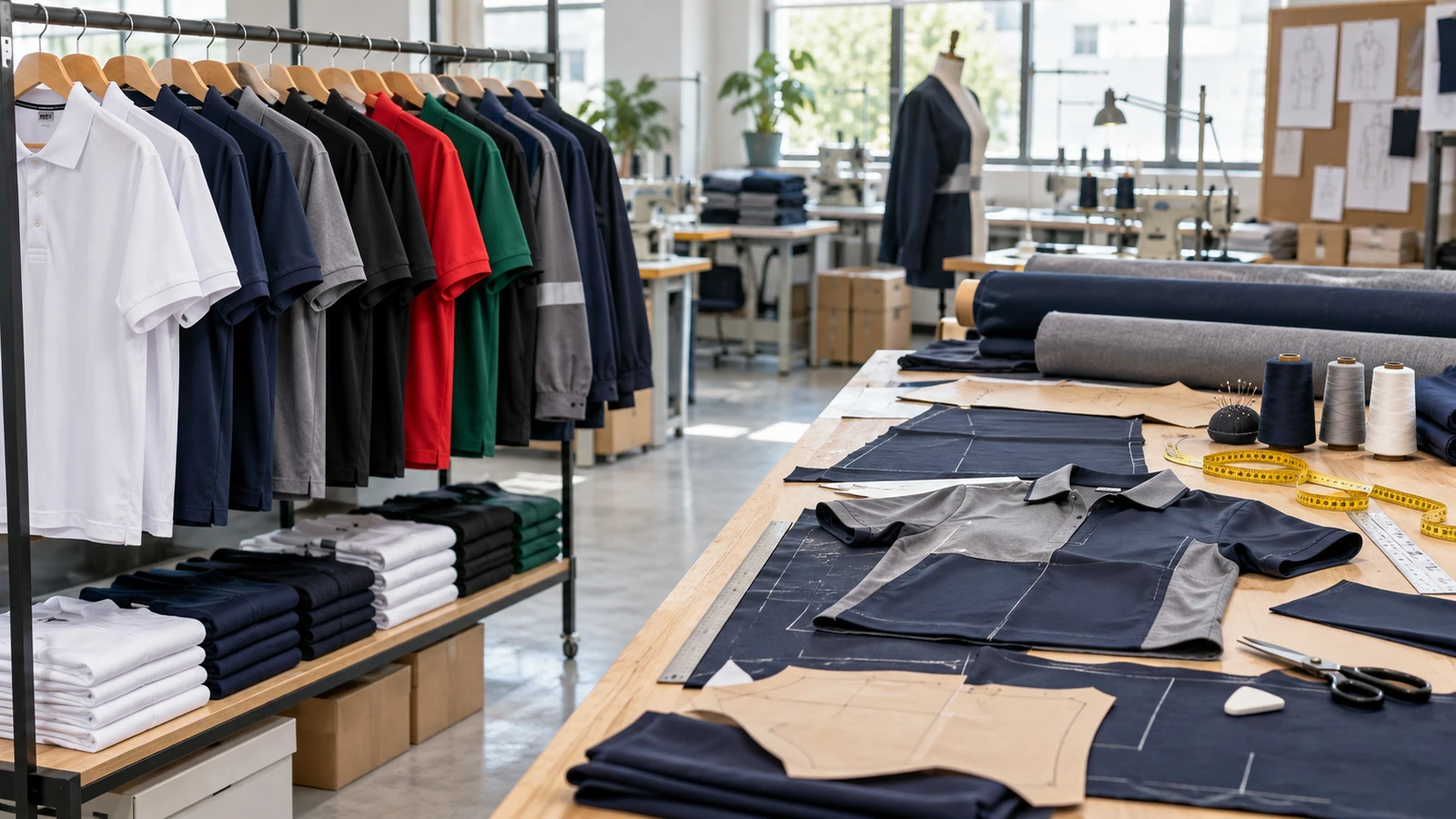
Cut-and-sew offers the ability to make a more tailored construction choice: adjusted pocket layout, fabric panel colours, sleeve details, trims or branding zones. This can help a multi-branch organisation look more distinctive and serve roles for which generic cuts are unsuitable. It also requires more thorough technical approval, including graded sizes, sewing details, sample wear and fabric continuity. A digital mockup cannot establish these construction points.
Custom work can introduce different lead-time, minimum-volume or replacement constraints depending on the producer. Do not assume one standard threshold. Ask what happens if a new employee needs one additional garment after the first batch is completed. A design that works for a large opening order may be awkward to reproduce in tiny quantities. Consider a hybrid system if exact custom replication is not essential for all roles.
Compare full lifecycle cost, not unit price
First-order unit price is only one line in the uniform budget. Include artwork preparation, embroidery or print setup, sampling, size exchanges, spare garments, distribution and likely replacements. A cheaper initial shirt can become costly if colours are unavailable later; a custom shirt can become expensive if every staff change requires a new small run. Build scenarios for branch openings and turnover rather than comparing quotations that only show the same initial quantity.
Different teams may justify different solutions. Front-of-house employees may wear a consistent custom shirt while warehouse staff use a widely available ready-made tee in coordinated colours. The organisation can maintain a common brand mark without forcing every garment into the same construction route. Record how many styles your administration team can realistically manage, since complexity itself creates ordering and stock-control work.
Build one approved size and colour standard
Whichever route is selected, approve fit using actual garments across representative sizes and body shapes. Brand charts are not universal, and a custom pattern needs to be checked after grading. Record garment measurements and wearing preference, not only S, M or L. For branch distribution, prepare a simple fit guide and a process for employees who fall between sizes. This avoids a large pile of unwearable spare stock.
Colour needs a physical standard. Printed mockups and phone photos can distort fabric hues; production batches can vary. Retain an approved swatch or garment sample and record any permitted variance with the supplier. If multiple embroidery or transfer methods are used, the same digital logo colour may appear different across fabrics. Make those expectations explicit before branches start placing replacement orders.
Set a long-term replenishment procedure
The order should end with a repeatable process, not simply a delivered carton. Assign one master spreadsheet for model codes, sizes, approved artwork, stock quantities and branch allocation. Identify who may approve substitutions if a colour becomes unavailable. Create a clear distinction between an exact reorder and a proposed replacement style; the latter needs fresh checking before staff wear it alongside older garments.
JCP's published catalogue includes ready-made corporate apparel, while its cut-and-sew service describes control over fabric, fit and branding. That makes it sensible to request two comparable options against the same business brief. Ask for realistic future-order conditions in writing instead of assuming permanent stock or unlimited one-piece custom production. A controlled specification is what gives expanding teams a consistent appearance.
Frequently asked questions
Is cut-and-sew always more expensive?
Not necessarily in every situation. Design complexity, batch size, material and finishing affect the comparison. Request quotes for the same use case and include replacement scenarios.
Can a ready-made uniform look distinctive?
Yes. Colour selection and appropriate embroidery or print placement can create a coherent identity without custom garment construction.
How should new branches order replacements?
Use a centrally approved model code, colour and artwork record, with a named approver for any substitutions.
What if some employees do not fit the standard size range?
Discuss a fit accommodation or alternative approved style before launching the uniform programme rather than leaving those employees to improvise.
Before you approve the order
A good uniform system supports the second and tenth order as well as the first. Decide on a sustainable mix of ready-made and custom work, preserve real samples and document how branch managers obtain replacements. Consistency comes from disciplined approval and stock records, not solely from a design that looks distinctive on launch day.