
Printed Neck Labels vs Woven Hem Tags for Custom Apparel
Compare neck prints, sewn woven tags and care labels when preparing custom merchandise or organisation apparel.
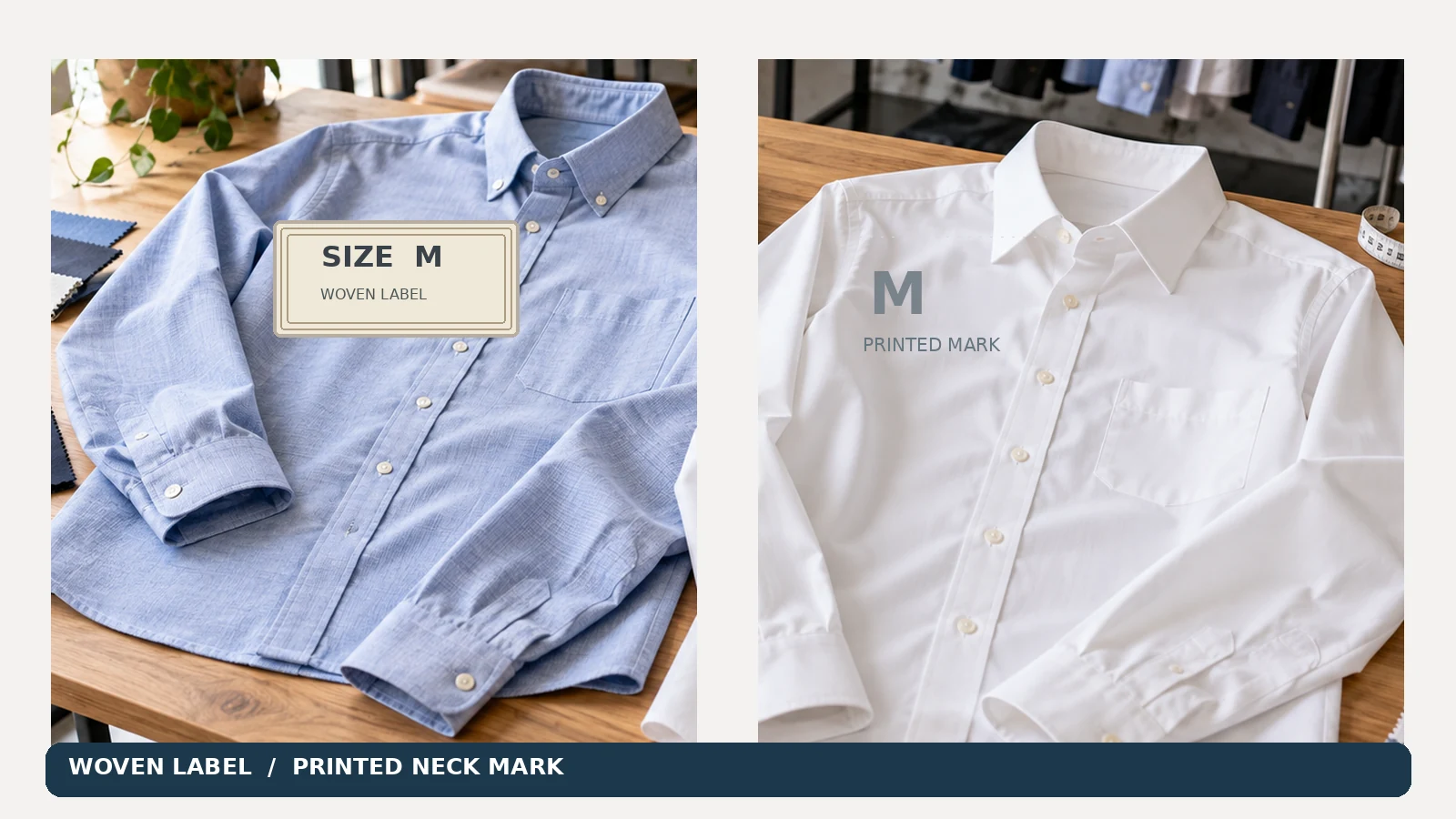
The smallest detail on a garment can determine whether a shirt feels like generic stock or a deliberately finished product. Labels carry practical information and sometimes the brand identity, yet they can also irritate skin, curl after washing or interrupt a clean design. Buyers planning a new merchandise line should decide on labels early rather than at the final packing stage.
Printed neck marks, woven hem tags and ordinary care labels perform different functions. They can be combined, but every addition affects comfort, manufacturing steps and replacement consistency. A clear plan avoids accidental duplication and unnecessary bulk.
Separate branding from legal and care information
A decorative brand label may show a logo or range name, while a care label identifies material composition, washing guidance or manufacturer details where required. One should not automatically replace the other. If the product is intended for retail resale, check applicable local labelling rules before removing an existing care or identification tag.
Prepare a label information map before artwork begins. Put essential care and size details somewhere legible and durable; reserve the decorative elements for areas that will not confuse customers. Never assume a neck transfer alone satisfies every compliance requirement for a particular market.
Consider comfort at the neckline
A heat-transferred neck print can remove the feel of a sewn-in brand label, but heavy decoration or a poorly placed transfer may still irritate some wearers. Woven labels vary in softness, weave density and edge finishing. What looks attractive under magnification may feel quite different against skin during a full working day.
Test a complete sample in a range of sizes, because a placement comfortable on an oversized shirt may sit awkwardly on a tighter collar. Wash it several times before approving the finish. Ask whether any original care tag must remain so the final result does not create two uncomfortable layers.
Choose the tag position carefully
A folded hem label can add a premium touch to retail merchandise and be visible without occupying a large print area. A sleeve tab or side-seam label may work better on garments that already have substantial front artwork. The chosen position should not collide with seam allowances or stretch-sensitive areas.
Hold the garment as a wearer would and inspect the label from front, side and back. On a uniform, prominent external brand tags can compete with the employer’s identity. If decoration is secondary, use a more discreet location and repeat it consistently across sizes.
Make small type readable
Brand names and care symbols often shrink too far when artwork is adapted from an online logo. Fine strokes may become indistinct in woven material, while a tiny transfer can lose clarity on textured fabric. Approve artwork based on the final physical dimensions, not on a zoomed-in screen preview.
Print a paper-size proof, then inspect an actual woven or transferred sample. Use uncomplicated typography and preserve the whitespace around symbols. If one line will not read reliably, move that information to the main care label instead of squeezing it into the brand tag.
Account for production method and quantity
Woven labels commonly involve a separate component and sewing operation. Neck printing requires a compatible method and may add setup or application costs. Minimum quantities and lead times vary by supplier, so request a complete quote covering manufacture, placement, replacement samples and whether garment stock can accept the work.
JCP supplies apparel and decoration services, but exact label formats and sewing arrangements should be confirmed for the intended order. Provide the actual garment SKU, fabric composition and intended label position before assuming a finish that works on one sample will work across the entire range.
Retain a label standard for reorders
Reprinting garments months later can produce a visibly different result if nobody retained the font, tag dimensions, thread or transfer colour. Include labels in the same master specification as the shirt, size chart and main artwork. They are not packaging extras; they are part of the finished garment.
Photograph a finished sample with a ruler beside it and record the approved placement. Keep the original vector artwork plus a photo of the sewn or printed outcome. That small record helps maintain consistent merchandise as sizes and colourways are added later.
A two-stage sampling process
Start by approving the logo and text at physical size on paper. Only then request the actual label or transfer on the intended garment. This separates an artwork problem, such as tiny lettering, from an application problem, such as rough edges or poor positioning. It can also save the cost of repeating a whole garment sample.
Include a wash and fit trial in the second approval. Ask wearers whether a seam or label bothers the skin, and check if the decoration folds naturally with the fabric. Store both the flat artwork and a photo of the fitted garment so each new batch matches the approved standard.
At a glance
| Option | What to consider | Use or action |
|---|---|---|
| Neck print | Low profile when correctly applied | Minimal interior finish |
| Woven hem tab | Visible external branding | Retail-style merchandise |
| Care label | Practical care and material details | Where required by product rules |
Questions buyers often ask
Can I remove the manufacturer label?
Only after checking garment warranty, care and any applicable labelling requirements. Do not replace legally required information with a decorative logo alone.
Which feels softer: a woven tag or a neck print?
Both can be comfortable when correctly made. Compare the exact sample and its placement rather than choosing by production method alone.
Can a label be added after garment production?
Sometimes. It depends on access to seams, fabric compatibility and the selected decoration method, so confirm feasibility on a sample.
A thoughtful label system makes apparel feel finished without distracting from its purpose. Decide what information must remain, test skin comfort and hold a physical proof before a large batch. The most successful label is one that preserves both brand identity and the garment’s everyday usability.
For relevant product specifications and quotation preparation, consult apparel and branding options and printing and decoration services.