
What an Embroidery Test Sew-Out Should Prove Before Bulk Production
A digital embroidery preview cannot show how thread, needle, backing and fabric will behave together. A physical test sew-out is the point where a logo file becomes a production decision.
In This Article
Direct Answer
Approve more than the shape of the logo. A useful sew-out should prove that small details remain readable, the fabric stays flat, thread coverage is appropriate, edges are clean and the chosen backing supports the garment without making it unnecessarily stiff.
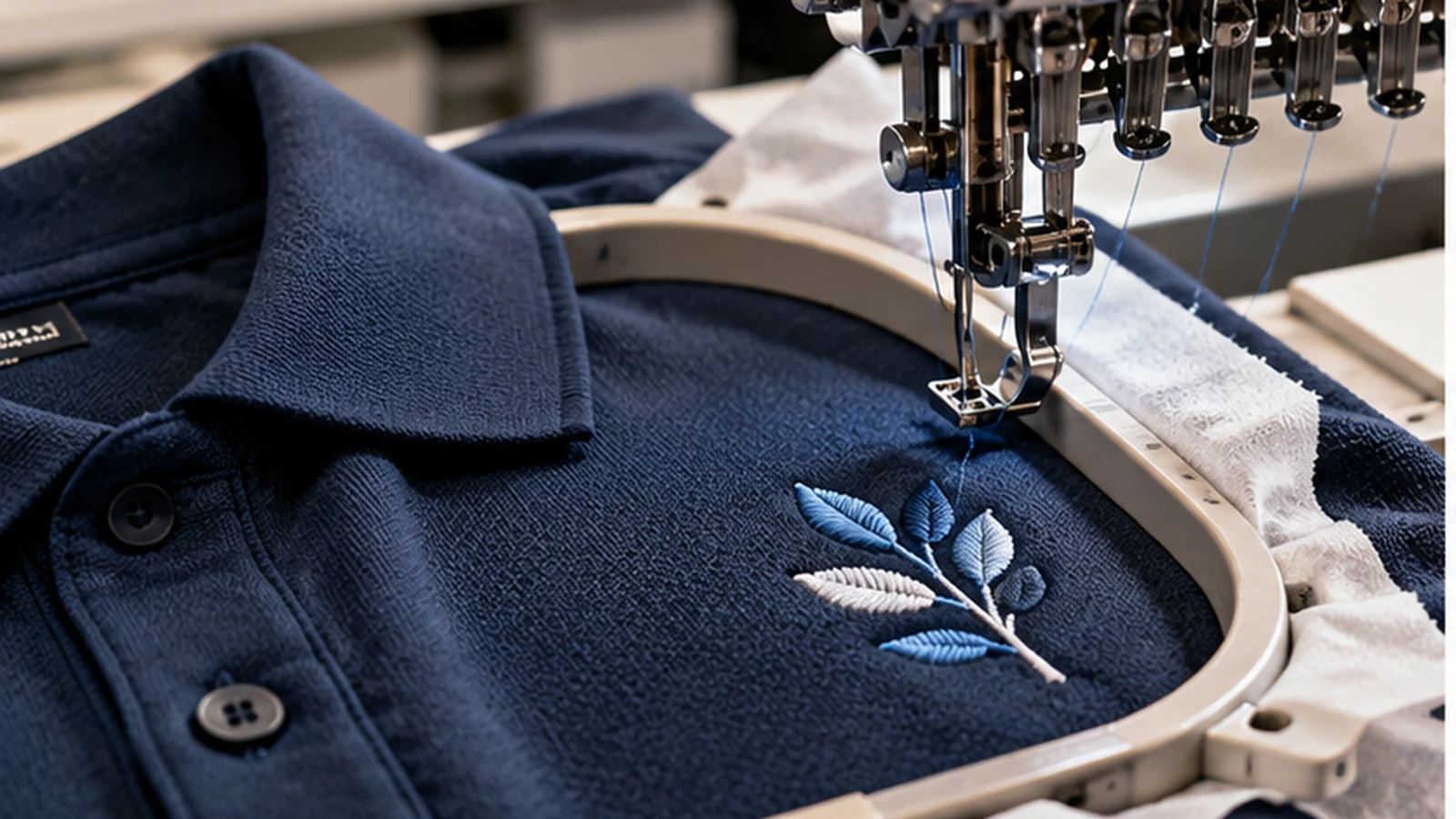
A sew-out tests the embroidery file and the garment together
Embroidery is not simply an image printed with thread. The digitised file tells the machine where stitches travel, in what order, at what density and with which underlay. Those instructions interact with the garment’s knit structure. A dense logo that sits cleanly on a firm woven shirt can pull a lightweight polo inward, while a sparse file may expose fabric through areas that should look solid.
That is why the approval sample should use the intended garment or, at minimum, a genuinely representative fabric. Testing on a random scrap can hide the problem you are trying to detect. The useful question is not “Does the logo look correct on paper?” but “Does this exact stitch plan behave correctly on this material at this size?” A supplier can often adjust density, underlay, pull compensation or stitch direction after the test, but those changes are best made before dozens or hundreds of pieces are embroidered.
Inspect small lettering at normal viewing distance
Tiny lettering is one of the fastest ways to expose an over-ambitious embroidery design. Thread has physical thickness, and satin columns need enough width to form cleanly. When letters become too small, counters close, corners soften and adjacent strokes merge. Increasing stitch count does not necessarily solve this; it can make the area harder and more distorted.
Judge the sample from arm’s length as well as close up. If a department name can only be deciphered by staring at individual stitches, it is not functioning as identification. Consider removing a tagline, enlarging the mark or using a simplified embroidery version of the artwork. A brand can keep a detailed master logo for digital use while maintaining a production-safe embroidery variant for garments.
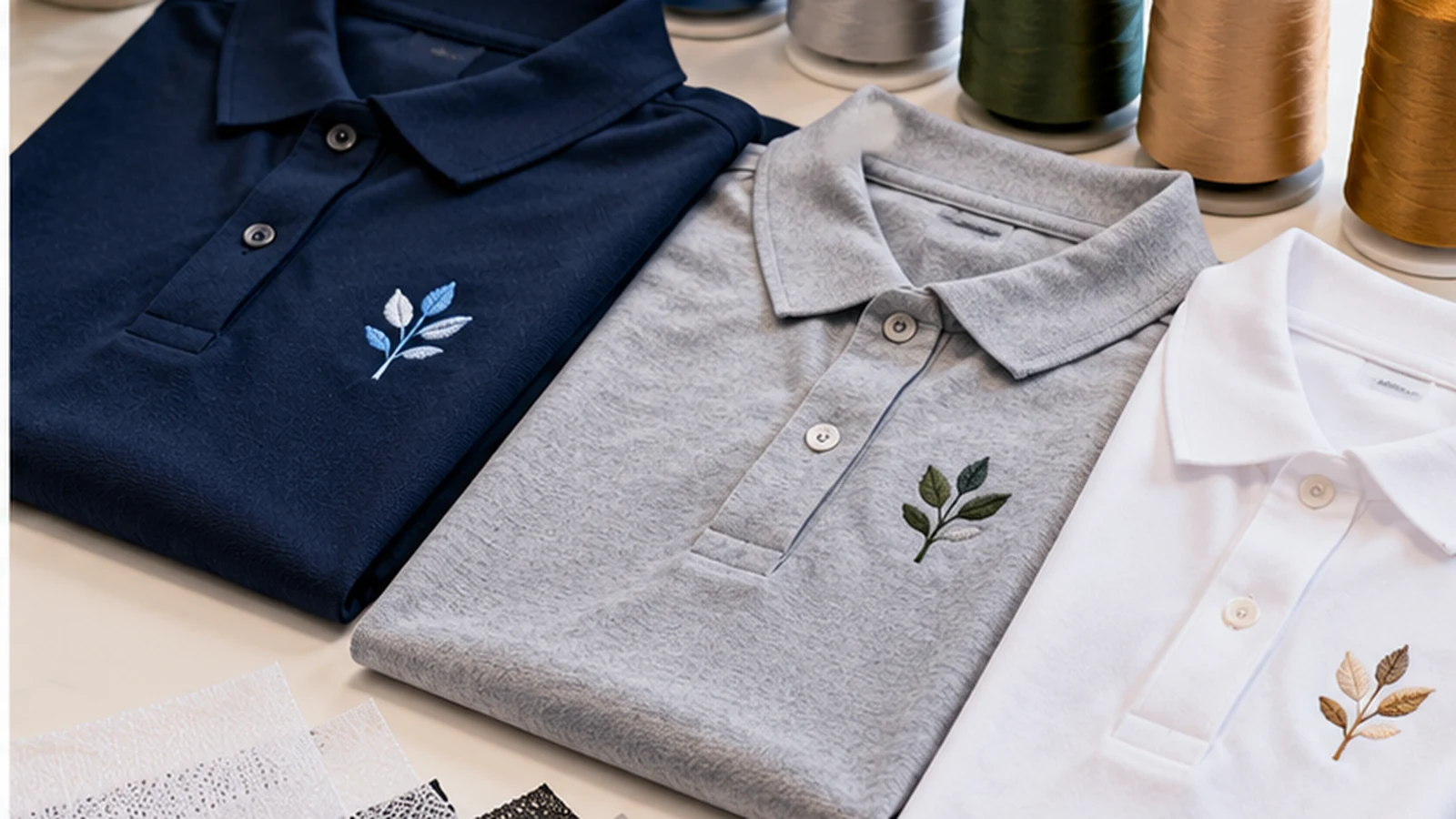
Read the fabric around the logo, not just the logo
Puckering, rippling and visible distortion around the stitched area are production signals. They can come from excessive density, unsuitable stabiliser, poor hooping tension or a stitch sequence that drags the fabric. On lightweight performance knits, the effect can be especially obvious because the fabric has less body to resist concentrated stitching. The logo may look technically complete while the shirt around it looks worse.
Turn the sample over as well. The backing should support the embroidery without creating an oversized, scratchy patch. For uniforms worn directly against skin, comfort matters after several hours, not just during a two-minute approval. Also check whether the embroidery placement interferes with a placket, seam or pocket edge. A technically good sew-out in the wrong physical location is still a bad production result.
| Check | Pass signal | Warning sign | Possible response |
|---|---|---|---|
| Small text | Readable at normal distance | Closed counters or merged strokes | Enlarge or simplify |
| Fabric surface | Flat around stitching | Puckering or ripples | Adjust density, backing or hooping |
| Coverage | Even, intentional fill | Fabric gaps or excessive hardness | Tune density/underlay |
| Placement | Clear of seams/placket | Crowded or visually off-centre | Reset placement guide |
Use a written approval record
Once the sample passes, record the variables that made it pass. Keep the approved garment code and colour, logo dimensions, thread colours, placement measurements and a photo of the physical sew-out. If there are multiple uniform styles, note whether the same embroidery file was tested on each material or whether a modified file is required. This turns approval into a repeatable specification rather than a memory.
For reorders, the record is valuable because the person placing the next order may not be the person who approved the first one. It also helps identify genuine changes: a new polo fabric, a revised logo or a different embroidery size should trigger a fresh check. The test sew-out is therefore not an extra decorative step; it is a small quality-control investment that protects the much larger bulk run.
Approve the behaviour of thread on the actual garment, not merely the appearance of the embroidery file on a screen.
Frequently Asked Questions
Is a digital mock-up enough for embroidery approval?+
It is useful for placement and colour planning, but it cannot reveal puckering, stitch texture or backing behaviour.
Should a sew-out use the final garment?+
Preferably yes, especially for lightweight, stretchy or textured fabrics.
When should a new test be done?+
When the garment material, logo size, artwork or important production settings change.
Need embroidery on staff uniforms?
JCP can prepare and test embroidery for polos, corporate shirts, jackets and other suitable garments before bulk production.
Discuss Embroidery Requirements