
Custom Corporate Calendars: Planning a Useful 2027 Print Run
Plan corporate calendars for 2027 with practical formats, clear branding, reliable date proofing and distribution timing.
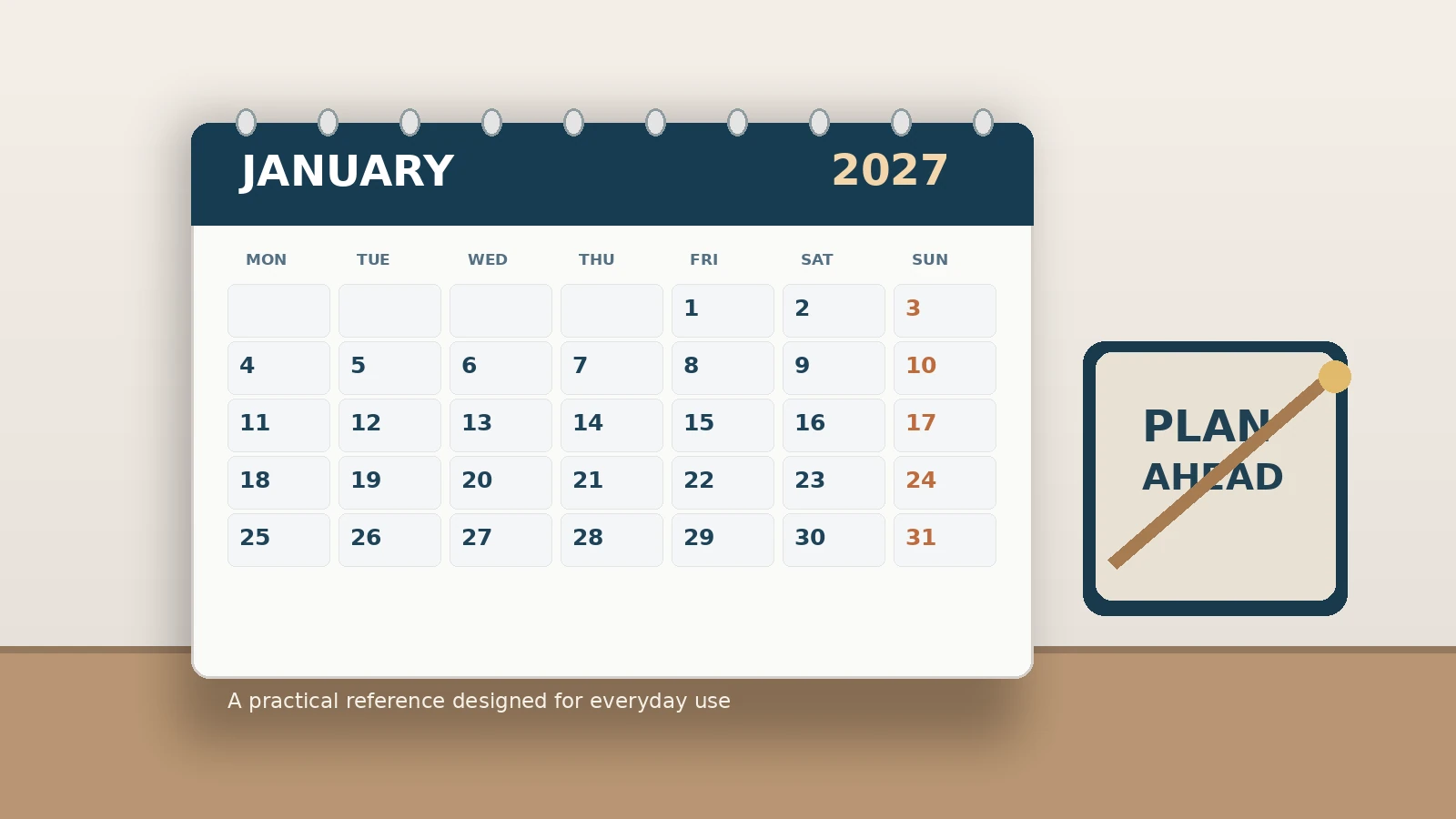
A calendar can remain on a customer’s desk or wall long after an event giveaway has been forgotten. That makes it attractive as a practical branded item, but the benefit depends on whether the calendar is genuinely easy to use. Tiny date boxes, oversize logos and unreadable holiday text turn a useful gift into clutter.
For organisations planning a 2027 print run, the priority is not simply choosing a glossy cover. Format, writing space, date accuracy, paper handling and distribution all deserve attention. Artwork should be finalised with enough time for proofing rather than rushed into production near year-end.
Choose a format around the recipient
Desk calendars suit workstations where staff need a quick reference beside a computer. Wall calendars serve shared offices, workshops and family spaces where dates are read from a greater distance. Pocket-sized formats are easier to distribute but offer little writing space. Begin with the recipient’s normal setting rather than the design team’s preferred dimensions.
If the audience includes office administrators, compare a desk format with generous memo areas against a compact folding format. For retailers and small workshops, a wall planner might be used more consistently. Request an assembled sample so you can judge how it stands, hangs or turns.
Verify the entire date grid
A calendar is an information product, not just a poster with twelve photographs. The day-of-week alignment, month transitions and number of days must be correct. Public holidays can vary by country, state, religion and organisation, and some dates may change by official announcement. Never add a holiday simply because it appeared in an old template.
Assign one person to proof the base 2027 calendar and another to check any local dates against current official references before print approval. If dates are uncertain, avoid speculative markings or use a separate update method. Proof the January–December sequence page by page, not only the attractive cover.
Balance brand visibility with daily use
Your organisation’s logo may be printed for months of visibility, but it should not overpower dates, weekdays and writing areas. A calm brand strip across the top or bottom often works better than repeated watermarking behind every day. Leave enough contrast between text and background, especially if the item will be used under fluorescent lighting.
When offering a calendar to a client, consider whether it could be used in a meeting room without looking like a constant advertisement. Add an unobtrusive website address or contact detail instead of several phone numbers. Practicality is usually the reason a recipient keeps the item.
Specify paper and construction
Paper stiffness affects whether desk calendars curl or bend when flipped; finishing affects whether ink rubs off during handling. Wall calendars need secure binding and a suitable hanging method. Heavy stock is not always better because it may add weight without improving usability. Evaluate the complete assembled item rather than the paper weight alone.
Ask the printer to explain the difference between cover stock and interior pages, the binding method and any coating options. Turn several pages of a sample and look for awkward shadows or hidden dates near the binding. A small prototype is a sensible investment before a large giveaway order.
Use images you actually have permission to print
The visual theme may use product photography, corporate milestones, a simple illustration series or a neutral seasonal design. Check rights to any supplied photographs and obtain consent where recognisable employees appear. AI-generated illustrations should be labelled internally for provenance and reviewed for inaccurate logos or landmarks.
Select twelve images with enough resolution at final trim size. Keep the visual style consistent rather than mixing unrelated clip art with professional photographs. JCP’s paper and office-printing information provides a starting point for discussing formats and proofs, but confirm calendar-specific finishing availability when requesting a quotation.
Plan quantity and distribution
Overordering calendars because the unit price falls with quantity can leave cartons unused in January. Start with the actual recipient list, add a reasonable reserve and confirm which branches or departments will distribute them. Decide whether calendars are hand-delivered, posted or included in year-end gift sets, because packaging can affect both cost and timing.
Build the schedule backwards from the target delivery week. Allow room for artwork confirmation, proofing, production, quality inspection and shipping. Ask recipients which size they used last year rather than assuming every desk needs another bulky item. A useful calendar is successful because people keep it, not because it was printed in large quantities.
Avoid a rushed year-end deadline
Calendar orders often compete with other year-end projects for internal approval. Give the content owner a deadline for dates and holidays, the design team a separate deadline for artwork and the buyer a final date for stock and binding. A single vague launch date can hide all three dependencies.
Build a sample of the busiest month, including the longest holiday names and the smallest writing boxes, before approving the full run. Proofing the hardest page first is an efficient way to find layout problems. Keep one signed-off hardcopy proof as the reference for production.
At a glance
| Option | What to consider | Use or action |
|---|---|---|
| Desk calendar | Individual daily reference | Stability and page turning |
| Wall calendar | Shared, longer-distance viewing | Readable dates and hanging support |
| Pocket calendar | Compact distribution | Limited writing space |
Questions buyers often ask
Can we print state-specific holidays?
Yes, potentially, but verify every date and label against current official sources before sign-off. State-specific versions add proofing and inventory complexity.
Is a desk calendar better than a wall calendar?
Choose by how and where recipients work. Desk versions are personal references; wall versions can serve shared teams and larger spaces.
When should artwork be approved?
As early as practical before intended delivery. Calendar production involves date checking and sometimes complex binding, so leave time for sample approval.
A corporate calendar should earn its space by being accurate, legible and convenient. Decide its audience first, validate every date and approve the complete printed construction—not merely the front artwork. Those choices help a modest printing budget create an item recipients will actually use throughout 2027.
For relevant product specifications and quotation preparation, consult paper and office-printing services and printing enquiry team.