
Aprons for Kuching Waterfront Cafés: Pockets, Straps and Washing
Along Kuching Waterfront, food, heritage and visitor activity sit close together. The apron worn by a café worker there must do more than look coordinated in a photograph; it has to make service comfortable across different jobs. This checklist helps owners compare useful apron features without assuming one design fits everyone.
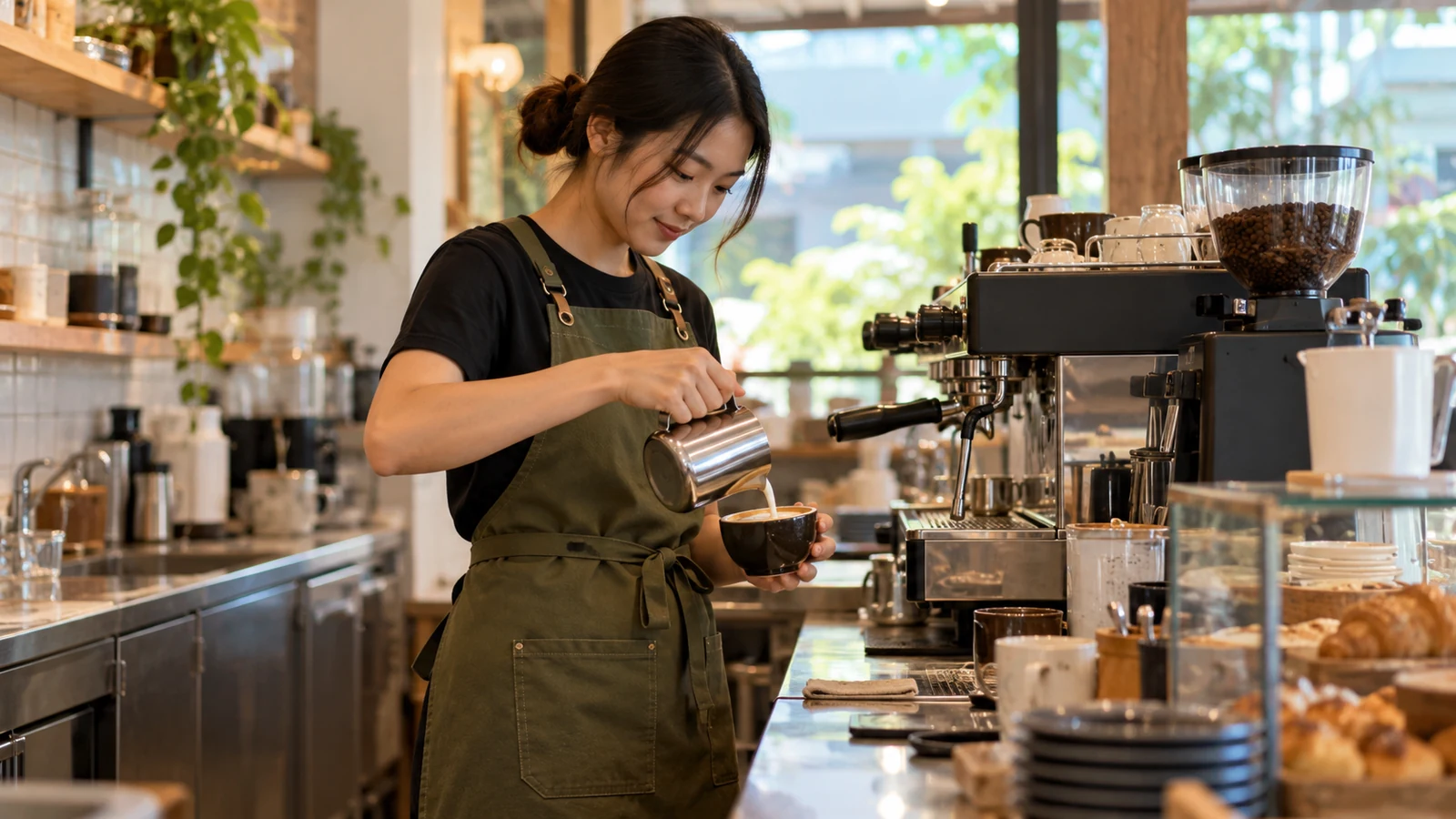
Follow the work, not just the visual style
An apron for the person taking orders does not need the same storage as an apron for the person constantly carrying trays, towels and utensils. Start by watching a normal shift: where do staff keep a pen, order pad, payment terminal or cleaning cloth? A chest-high bib gives more coverage for coffee preparation, while a waist apron can feel less restrictive for a front-of-house host. Test the pocket opening with real objects before agreeing to a bulk design.
Think about which tasks require bending or reaching across a counter. A pocket placed too low can catch on a table edge, and an overfilled front pocket can pull an apron forward. Give employees enough freedom to reach shelves without constantly adjusting the neck strap. A practical sample worn during one actual shift is more useful than judging the apron only while it hangs flat.
For a Kuching café owner, staff may alternate between clearing tables, operating the coffee counter and handling take-away orders. Map those transitions during the trial. Ask each person which pocket is most awkward and whether a side towel loop would be better than a front pocket.
Choose fabric for washing and movement
Canvas has a structured appearance and can hold a tidy shape, but weight and drying time matter on long shifts. A lighter poly-cotton construction may feel easier in a warm service area, provided its durability and hand-feel match the task. Ask to touch the fabric, check whether it shows marks readily and compare how it looks after washing. Dark colours hide some everyday marks but they do not replace proper cleaning.
Check the manufacturer’s care label instead of assuming every apron tolerates hot washing or bleach. Wash a sample using the routine your business actually follows, then look for shrinking, twisted seams and puckering around embroidery. A design that looks premium before first use should still sit neatly after repeated laundering. Include a simple care note when issuing aprons to casual or rotating staff.
When evaluating a proposed apron material in Sarawak, compare how the sample feels at midday, not just in an air-conditioned showroom. A thicker option may look structured but feel unnecessarily heavy. Request the care label for the exact stock item, since two aprons that look similar can wash differently.
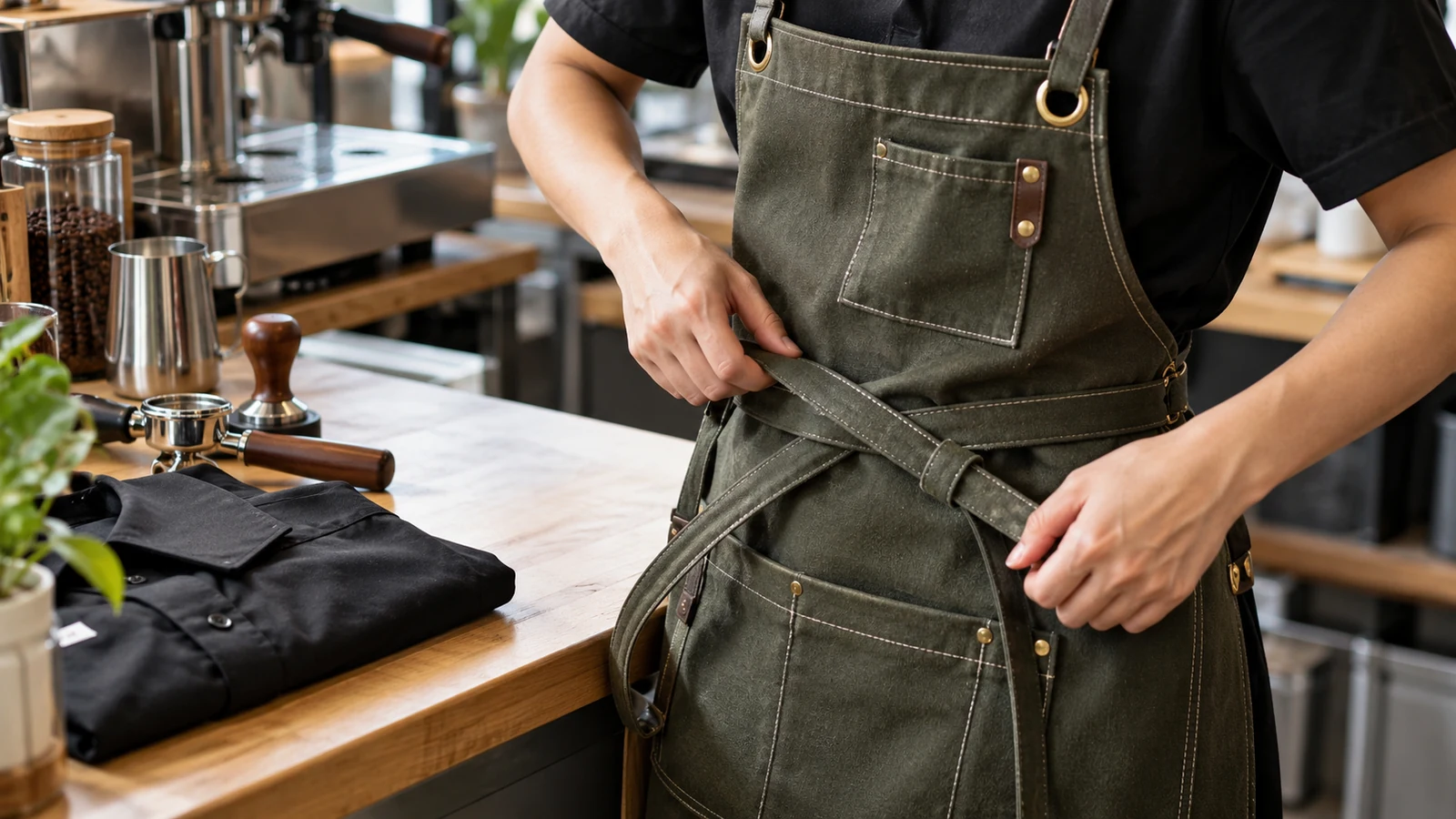
Make straps and pockets do real work
An adjustable neck loop suits teams with different heights, but a cross-back strap may distribute pressure more comfortably for someone wearing an apron for many hours. Examine buckles, ties and reinforced pocket corners as closely as you examine fabric colour. If a staff member handles heavy items, keep sharp tools in an appropriate secured holder rather than a loose fabric pocket. A pocket arrangement that works for one role may be inconvenient for another.
Size ranges should be tested on both shorter and taller team members while they are moving. The bib must not cover a name identification point unintentionally, and the bottom hem should not interfere with stairs. Avoid adding pockets merely because there is blank space on the fabric. Two well-positioned compartments usually serve a clearer purpose than a row of pockets that staff never use.
A shop with frequent staff changes benefits from fast, straightforward apron adjustment. Test whether new team members can secure the straps without help and whether loose ends catch as they walk. If the apron is shared across shifts, make cleaning and reissuing procedures part of the decision.
Place the logo where it remains readable
A small embroidered mark on the upper bib can be effective if the logo has thick enough lines to stitch clearly. Large multi-colour graphics may need a different decoration approach depending on fabric and order volume. Keep artwork away from thick seams and strap hardware, which make accurate application harder. A clean mark with generous surrounding space often outperforms a complex print at a busy counter.
Before production, look at the intended logo from several steps away rather than only in a close-up artwork preview. If staff wear an open jacket over the apron, check whether it hides the branding. A café logo should be legible when a customer speaks to the employee; an oversized visual is not automatically better. Request a placement mock-up on the real apron colour, not a plain white rectangle.
For small cafés with a distinctive identity, restraint in embroidery can make the mark more recognisable. Place the sample on a real staff member and view it from the customer queue. If the logo becomes hidden behind a counter or card terminal, move the mark before approving production.
Match apron layout to Kuching’s varied service settings
Sarawak Tourism describes Kuching Waterfront as a promenade with food, craft activity and historic attractions. In that sort of visitor-facing setting, a front-of-house team may want an approachable look and quick access to order pads, while preparation staff care more about coverage and washable fabric. Choosing two functional cuts in the same brand colour can be more effective than insisting on one identical shape.
If staff rotate between serving visitors and preparation work, spend one trial shift noting which pockets they really use. Consider whether a long bib interferes when climbing steps or handling deliveries. Logos should remain easy to recognise near the upper body, even when the apron is partly covered by the counter. Those local working patterns are more useful than selecting an apron simply because it is popular elsewhere.
A quick decision table
| Situation | Start with | Test or verify |
|---|---|---|
| Coffee station | Coverage and towel access | Check apron after repeated wash cycles |
| Food service | Freedom to walk and bend | Check tie length on different body sizes |
| Visitor-facing counter | Logo clarity | Check visibility from customer side |
Frequently asked questions
Will one apron size suit the whole team?
Adjustability helps, but the sample still needs to be tried by different people. A single nominal size can fit staff very differently.
What should I send with a Sarawak apron quotation enquiry?
Share headcount by role, expected fabric colour, logo artwork and photos showing how staff work. Request advice on available styles and production options.
Local context: Sarawak Tourism Board – Kuching Waterfront. Product recommendations in this article are general purchasing considerations, not official requirements from that source.