
Foamboard, Corrugated Plastic or PVC Board? Choosing a Rigid Display Material
Rigid display boards can look similar in a quotation while behaving very differently in transport and use. The right substrate depends on whether the board sits indoors for a day, travels between events, or stays in a humid or semi-outdoor location.
In This Article
Direct Answer
Choose foamboard for lightweight indoor presentation, corrugated plastic when low weight and moisture tolerance matter, and denser PVC-style board when you need a more durable rigid panel. The actual choice should follow display life, mounting, transport and environment—not thickness alone.
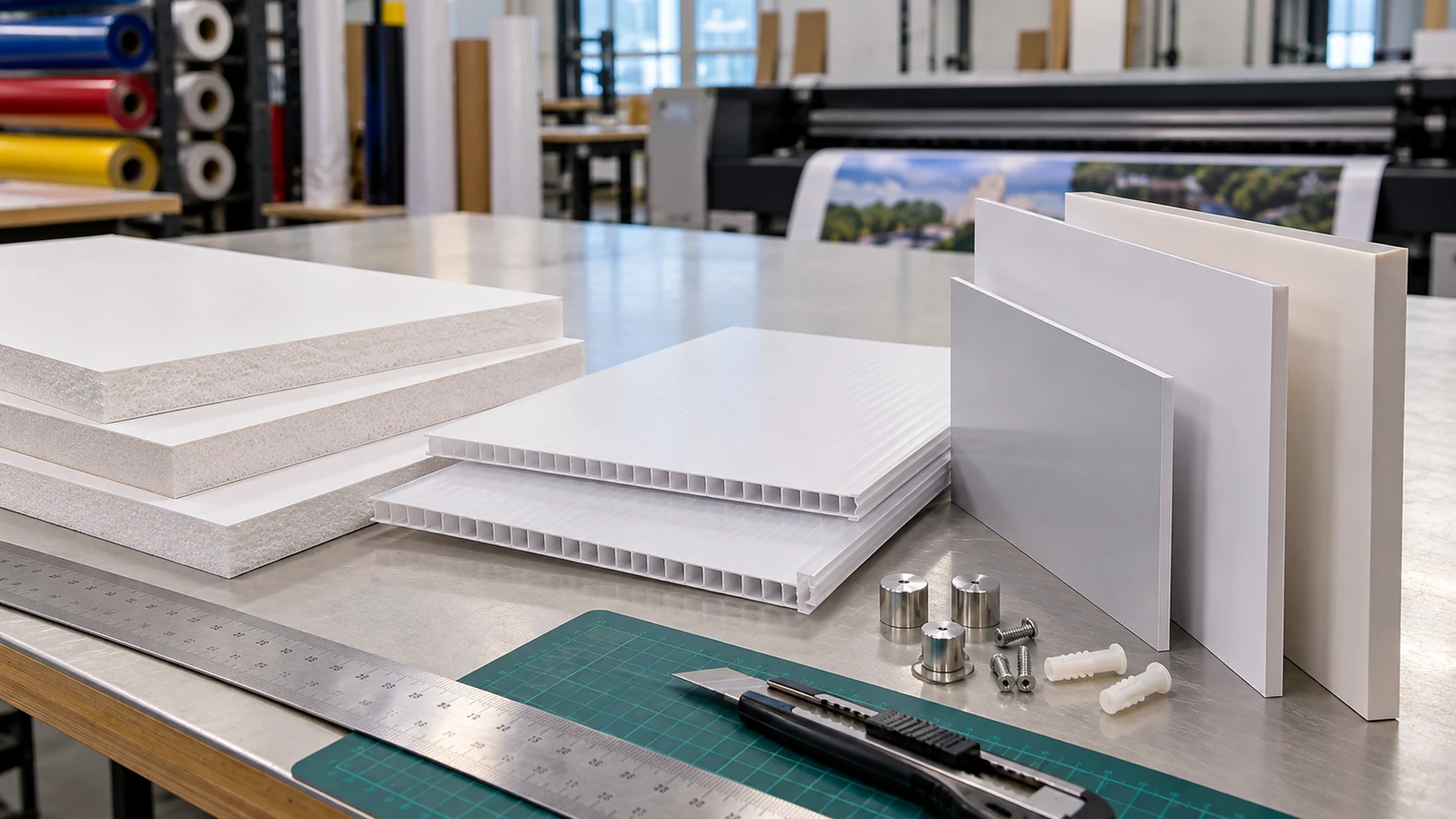
Foamboard is light and clean, but it prefers controlled indoor use
Foamboard is popular for mounted posters, presentation panels and short-term displays because it is lightweight, smooth and easy to handle. That low weight makes it convenient for easels, table displays and temporary walls where heavy fixings are undesirable. The trade-off is edge vulnerability: corners can dent, the surface can crease and prolonged moisture can damage some constructions. If the board will be moved repeatedly, protect the edges during transport rather than treating it like a reusable hard sign. Large unsupported sheets can also bow, so size and mounting method matter. For indoor launches, menus, directional panels and photo boards, foamboard can be economical when the environment is dry and the expected life is short.
Corrugated plastic trades a premium feel for lightness and moisture resistance
Corrugated plastic board uses a fluted internal structure that keeps the sheet light while adding stiffness. It is useful when the panel may encounter humidity, splashes or repeated handling that would be harder on paper-faced board. The flutes can be visible along the edge, so it does not have the same solid presentation as dense PVC board. Direction of the flutes also affects bending stiffness and how stakes or supports interact with the sheet. For temporary directional signage, back-of-house notices or semi-outdoor use, the practical durability can outweigh the less refined edge appearance. Confirm whether the board will be viewed closely before deciding if the visible construction is acceptable.
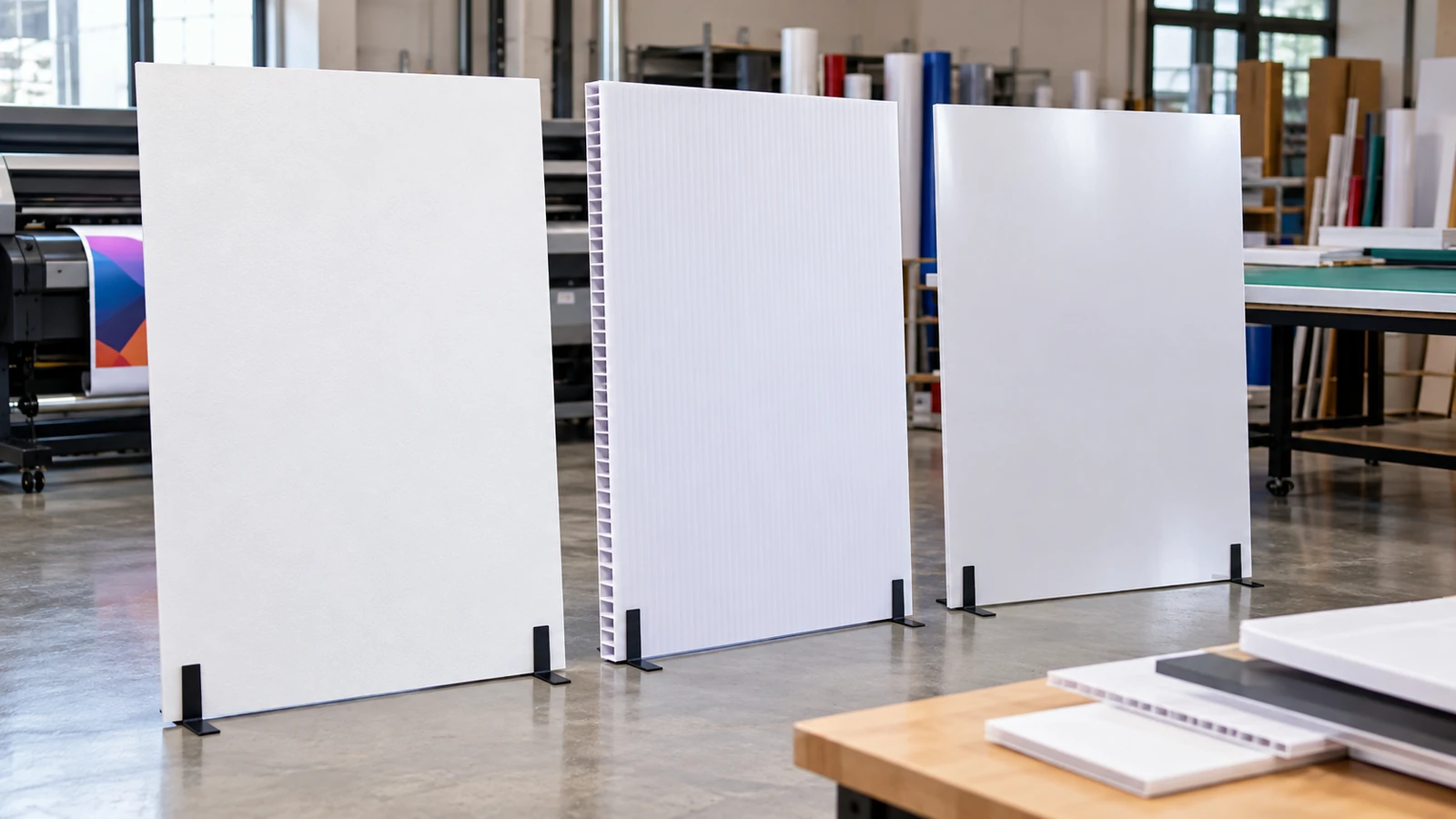
PVC-style rigid board is heavier but more durable
Dense or foamed PVC board offers a more substantial panel with cleaner solid edges and better resistance to incidental moisture. It can suit shop displays, mounted graphics, repeated exhibition use and signage that needs more rigidity than foamboard. The added weight matters: wall fixing, easel capacity and transport become more important as size and thickness increase. A 5 mm rigid panel may feel manageable at A3 size but becomes a very different object at one metre wide. Ask how the board will be mounted and who will move it before specifying the heaviest option. Durability is useful only when the installation method can support it safely.
Calculate life-cycle cost instead of comparing sheet price
If a display is used once for two days, the cheapest suitable indoor board may be rational. If the same graphic travels to six branches, replacement risk and transport damage become part of the cost. Suppose a foamboard panel costs less but is replaced twice after edge damage, while a more durable rigid panel survives the entire campaign. The higher unit price can then produce a lower cost per use. Conversely, paying for long-life material makes little sense when prices or campaign artwork change every week. Match the substrate to the content life as well as the physical environment. That is the difference between buying material and planning a display system.
Specify mounting and finishing before artwork is final
A tabletop stand, wall adhesive, screw fixing, easel and hanging system each place different demands on the board. Drill holes, stand-offs or cut shapes may need safe areas around critical artwork. If a board will slot into a base, confirm the slot width and panel thickness before production. Rounded corners can reduce edge damage on frequently handled panels, while flush square edges may suit formal wall displays. Tell the printer whether the board will be carried through public spaces, stored between uses or exposed to rain. The finished graphic should be designed around the physical support rather than chosen independently from it.
| Material | Best fit | Watch for |
|---|---|---|
| Foamboard | Short-term indoor panels and presentations | Dented corners, moisture, large-sheet bowing |
| Corrugated plastic | Lightweight temporary or semi-outdoor signs | Visible fluted edges, directional stiffness |
| PVC-style rigid board | Reusable rigid panels and sturdier displays | Higher weight and mounting demands |
The best rigid board is the lightest, simplest material that can survive the intended environment and number of uses.
Frequently Asked Questions
Is foamboard waterproof?+
Do not assume it is. Many foamboards are intended mainly for dry indoor use.
Is corrugated plastic suitable for premium retail displays?+
It can be practical, but visible fluted edges may be less refined when customers view the board closely.
Does thicker board always mean better?+
No. Thickness adds stiffness and weight; the correct choice depends on size, mounting and use.
Plan the Production Before You Order
When requesting rigid signage, include finished size, location, mounting method and expected reuse so the substrate can be matched to the job.
Contact Us