
Thick Brochure Covers Cracking at the Fold: When Creasing Matters
A brochure can print beautifully and still look poor after folding if the cover stock cracks along the spine or panel fold. The risk rises when the sheet is thick, coated, heavily inked or folded against the paper grain.
In This Article
Direct Answer
Creasing creates a controlled channel before the sheet is folded, helping thicker stock bend where intended instead of forcing the surface to stretch unpredictably. If the design uses a dark flood colour or a stiff cover stock, approve a folded production sample rather than judging the flat print alone.

Why the Printed Surface Can Crack
Paper is a network of fibres, and folding forces the outer side of the sheet to stretch. On heavier or stiffer stocks, that bend is more severe. A dense printed or coated surface may show pale lines because the ink, toner, coating or top fibre layer cannot stretch cleanly across the fold.
The visual problem is most obvious on dark navy, black, red or other solid colours because exposed paper fibres contrast sharply with the printed area. A white or lightly printed cover can still crack, but the damage may be less visible.
What Creasing Changes
A crease compresses and reshapes the paper along a planned line before folding. Instead of asking the entire sheet to bend sharply at once, the crease gives the fold a controlled hinge. This is particularly useful for covers, presentation pieces and heavier stocks where a simple knife fold may be too aggressive.
Creasing does not make every paper immune to damage. The stock, print process, grain direction and amount of ink still matter. It simply reduces one major source of mechanical stress at the fold.
| Condition | Cracking Risk | Useful Check |
|---|---|---|
| Heavy or stiff cover | Higher mechanical stress at fold | Crease and folded sample |
| Dark solid ink across fold | Cracks are visually obvious | Inspect finished fold |
| Fold against grain | Harder bend on many stocks | Discuss imposition/grain |
| Thin uncoated leaflet | Often lower risk | Standard folding may be sufficient |
Paper Grain Direction Can Affect the Result
Paper fibres tend to align more strongly in one direction during manufacture. Folding parallel to that grain is generally easier than forcing a heavy sheet across it. When a brochure format allows several imposition options, the printer may be able to orient the job so the critical fold behaves more cleanly.
This is a production decision that is difficult to see in a design file. If a premium folded piece uses heavy stock, ask the printer whether grain direction and finishing method have been considered together.
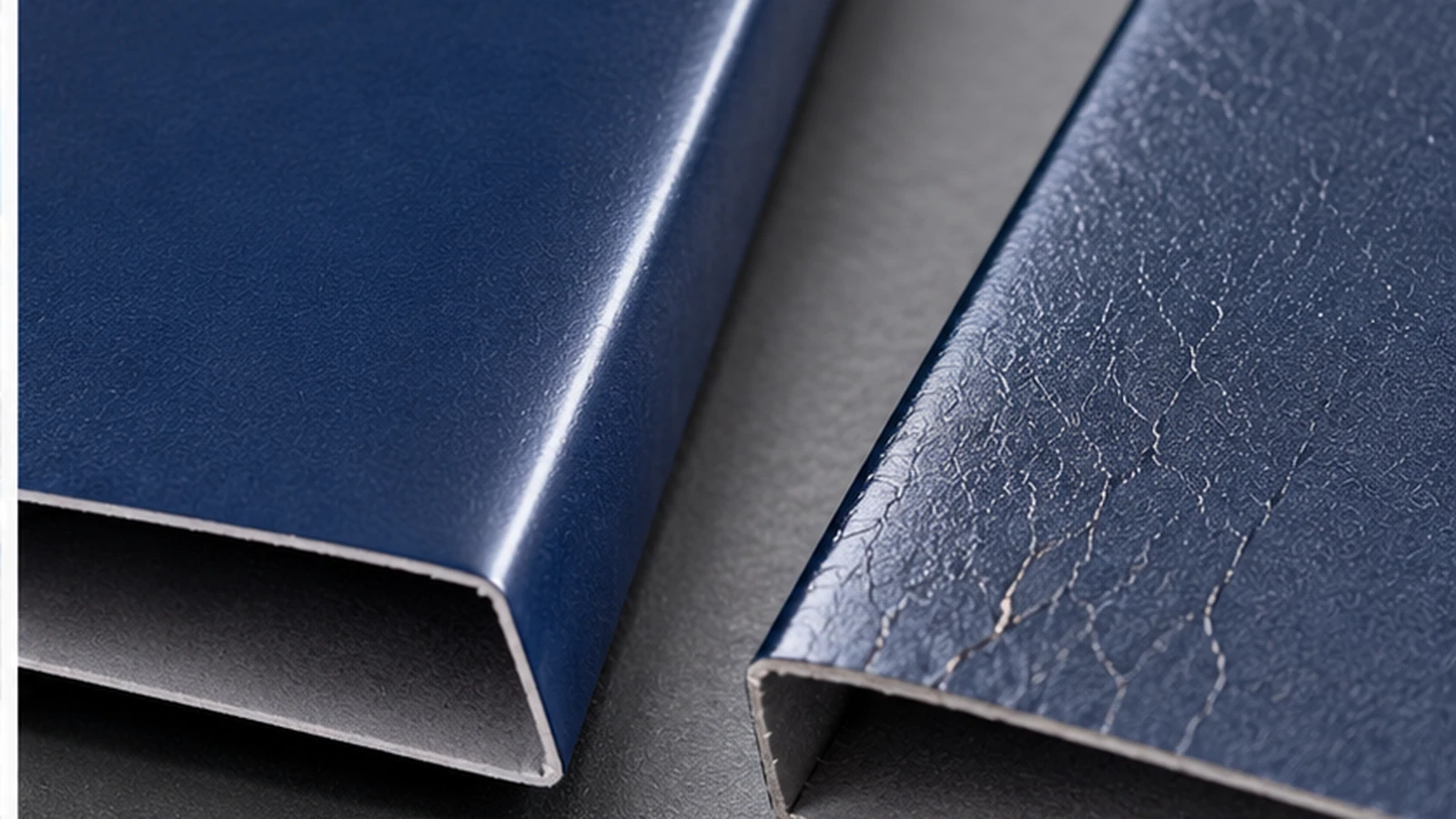
Dark Coverage at the Fold Deserves Extra Attention
A design with a full dark background crossing the spine leaves very little room for visible fibre exposure. Moving a pale border or lighter visual element onto the fold can sometimes make minor wear less obvious, but design should not be used to hide a finishing problem that can be solved properly in production.
Where the dark field is essential, keep the artwork as intended and specify a folded proof or sample. The buyer then approves the finished object rather than a flat sheet that has not yet faced the mechanical stress of folding.
Approve the Folded Sample at Final Stock and Finish
A dummy made from ordinary office paper can confirm reading sequence but cannot predict cracking on a laminated or heavy cover. Use the actual or equivalent stock, print coverage and finishing combination for approval. Open and close the sample several times and inspect the fold under normal light.
If cracking remains excessive, the solution may involve a deeper or wider crease, another paper stock, a change in grain orientation or a different finish. The right correction is a production decision, not a blanket instruction to “add more lamination.”
Approve a folded brochure as a folded object. A perfect flat print can still fail at the finishing stage.
Frequently Asked Questions
Is scoring the same as creasing?+
The terms are sometimes used loosely, but production methods can differ. Ask the printer which finishing method is being used for the selected stock.
Does lamination prevent fold cracking?+
Not automatically. A laminated surface can still show stress if the stock and fold are not prepared correctly.
Should every brochure be creased?+
No. The need depends on stock thickness, stiffness, print coverage and fold construction.
Printing a Premium Folded Brochure?
JCP can review the stock, print coverage and finishing plan before the brochure is produced in bulk.