
Corporate Rain Jackets: Choosing Breathability, Seams and Logo Positions
A corporate jacket may look waterproof on a catalogue page but behave quite differently during a hot, wet working day. Fabric coating, seam construction, hood design, ventilation and fit all affect the experience. A jacket that blocks a brief shower can still leave the wearer damp with trapped sweat, while a heavily branded back panel may interfere with seams or pocket function. Choosing practical rainwear requires a realistic weather-use brief and a trial sample, not an assumption that every polyester windbreaker offers identical protection.
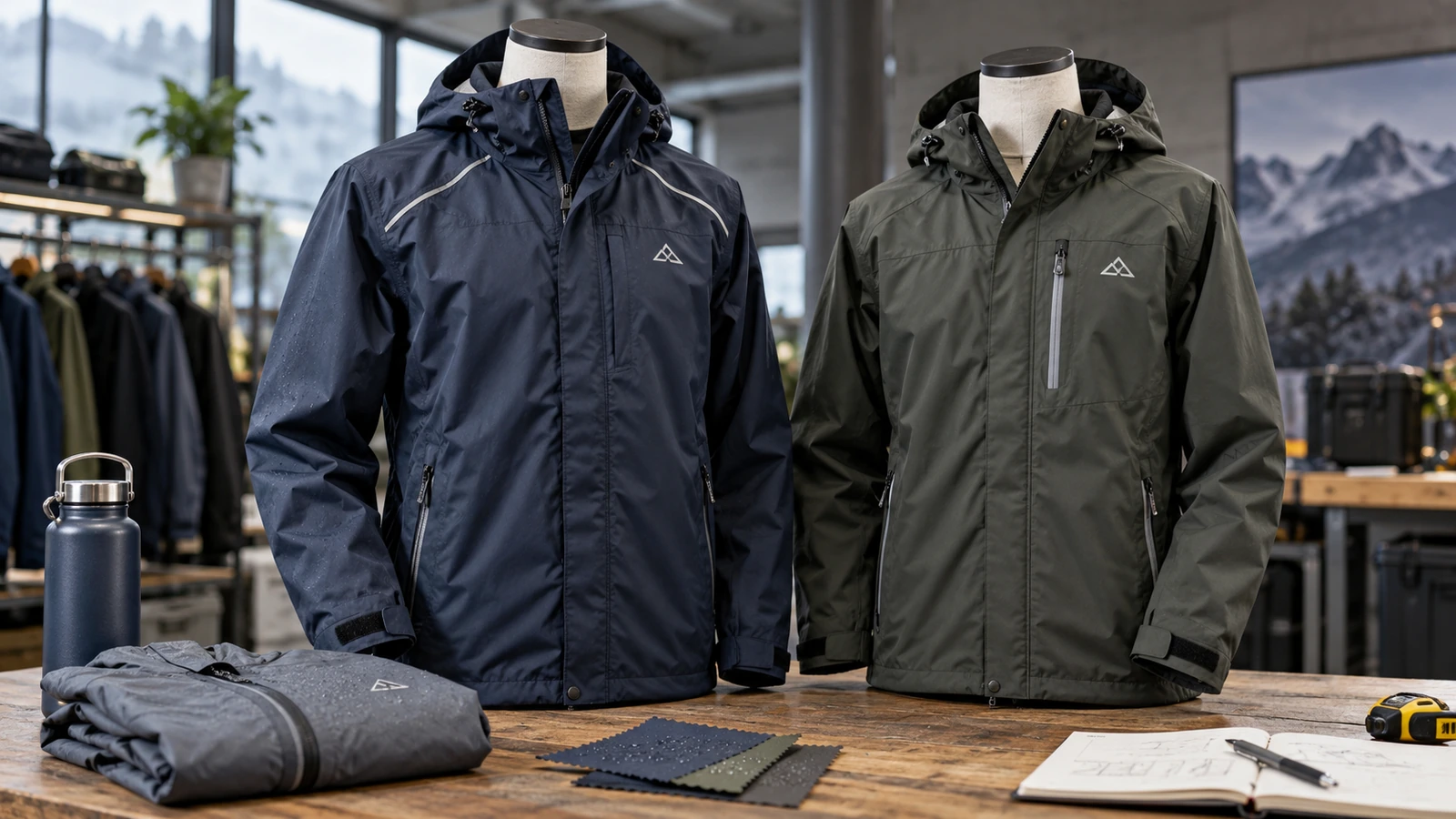
Define the weather exposure and working intensity
A staff member walking between buildings needs different protection from a crew member standing in sustained rain. Decide how long the jacket is expected to be worn, whether workers remain outdoors and how physically active they are. This influences the balance between rain protection and breathability. A lightweight coated shell can be convenient to store, but may feel humid when worn over a warm uniform during active work.
List essential features such as hood, covered zipper, secure pockets, adjustable cuffs and reflective visibility where appropriate. Avoid treating a promotional jacket as certified protective equipment without independent verification. If workers face a safety requirement, obtain the relevant specification from the employer's safety team. A garment's marketing description alone is not evidence that it meets workplace protective standards.
Understand water resistance and seam leakage
Water-resistant fabric can repel light rain for a time, but water may enter through stitching, zippers or openings. Waterproof performance depends on more than the outer material; seam sealing and garment construction matter. Ask the supplier what testing or specification supports any protection claim. Avoid using the words waterproof and water-resistant interchangeably, and do not promise a specific exposure duration without documented testing.
Inspect inside seams and vulnerable points around shoulders, sleeves, pockets and hood. A seam-taped interior may help reduce water entry if designed correctly. Check the zipper closure and whether wind-driven rain can reach it. When the jacket includes a decorative panel seam, confirm that it does not create a new leak path. A basic water-spray demonstration can reveal obvious concerns but does not replace a formal performance test.
Keep breathability and comfort in the decision
A shell that keeps external water out can also slow moisture escape from inside. Active staff may become uncomfortably warm, especially when wearing a shirt underneath. Consider underarm ventilation, a breathable membrane or a loose enough cut for airflow, depending on the product. There is a trade-off: open vents can compromise protection if placed badly. Ask for real garment construction details instead of assuming a fabric label describes the whole jacket's comfort.
Test a sample during a short active walk in a realistic climate. Check whether condensation gathers inside, whether the collar rubs and whether sleeves allow reaching. A jacket that feels fine in an air-conditioned showroom may behave differently outdoors. If it will be shared between shifts, consider drying time and care instructions. Comfort is a practical factor in whether employees will wear the uniform as intended.
Examine the hood, cuffs and pocket design
A hood should move with the head enough to preserve awareness and visibility. A hood that falls across the eyes can be inconvenient or unsafe. Adjustable cuffs help reduce water entry, but must remain usable when employees handle tools. Pockets should allow access without letting contents get wet or slip out. Place a radio or identification clip thoughtfully so it does not interfere with closures and seams.
Check the jacket over the exact inner uniform. Layering changes chest ease, sleeve length and hem movement. Ask employees to bend, turn and reach. If the garment is expected to be worn over a polo or thicker sweatshirt, choose sizing accordingly. Avoid solving a too-tight fit by increasing every dimension indiscriminately; oversized sleeves can be awkward during practical work.
Choose a logo method compatible with the shell
Embroidery, transfer and other decoration processes interact differently with coated fabrics. Needle holes may compromise a water-resistant area, and heat application may affect certain coatings or laminations. Do not assume a method suitable for a cotton polo will work on a rain jacket. Ask the decoration provider to test the actual fabric and placement, including the backing or reinforcement needed for any stitched design.
Keep logos clear of seam tape, high-stress folds, pocket openings and hood adjustments. A small chest mark can be more practical than a large heavy print on a highly flexible panel. If visibility is important, consider a contrasting logo that does not interfere with reflective materials. Approve a decorated sample after the heat or stitching process, because a good blank jacket can be damaged by an unsuitable decoration step.
Check durability, care and reordering
Read the care label before approving the uniform. Aggressive washing or high heat can affect some water-repellent coatings, while poor drying can leave garments unpleasant for the next shift. Explain to staff how to clean and store the outerwear. Check whether the jacket can be packed into a small bag without creasing the decoration or damaging its surface. A robust care routine supports longer use but cannot substitute for the right base construction.
JCP lists outerwear and windbreakers alongside its apparel range, including an Oren Sport windbreaker model. Verify the exact fabric, protection claim and decoration compatibility for the specific product being quoted. Preserve the approved style code and a physical sample for future staff replacements. When comparing options, include comfort, visibility, care and service life rather than selecting solely by the cheapest jacket price.
Frequently asked questions
Are polyester windbreakers automatically waterproof?
No. Fibre type alone does not establish waterproof performance. Coating, seams, closures and tested construction all matter.
Can a rain jacket be embroidered?
Sometimes, but needle holes and backing can affect weather resistance. Confirm compatibility and test the exact fabric and position first.
Why can a jacket feel wet inside when rain stays out?
Perspiration may condense when moisture cannot escape fast enough. Ventilation, activity level and garment breathability affect this.
Should the jacket be sized over a polo shirt?
Yes, test it over the actual inner uniform and likely layers. A size selected over a thin sample may not work over a warmer shirt.
Before you approve the order
An effective corporate rain jacket fits the job, not just the company colour palette. Approve the actual shell construction, hood, pocket access, layer fit, protection claims and decoration method together. If the supplier cannot support a waterproof claim, describe the jacket more conservatively and choose another garment when the work requires tested rain protection.