
Choosing Lightweight Staff Jackets for Miri Field Teams
For teams travelling between Miri offices, client premises and outdoor appointments, a common jacket can simplify staff identification. Yet a jacket chosen from a catalogue is not automatically appropriate for rain, heat or industrial worksites. This buyer’s checklist focuses on the features that should be verified before any logo is applied.
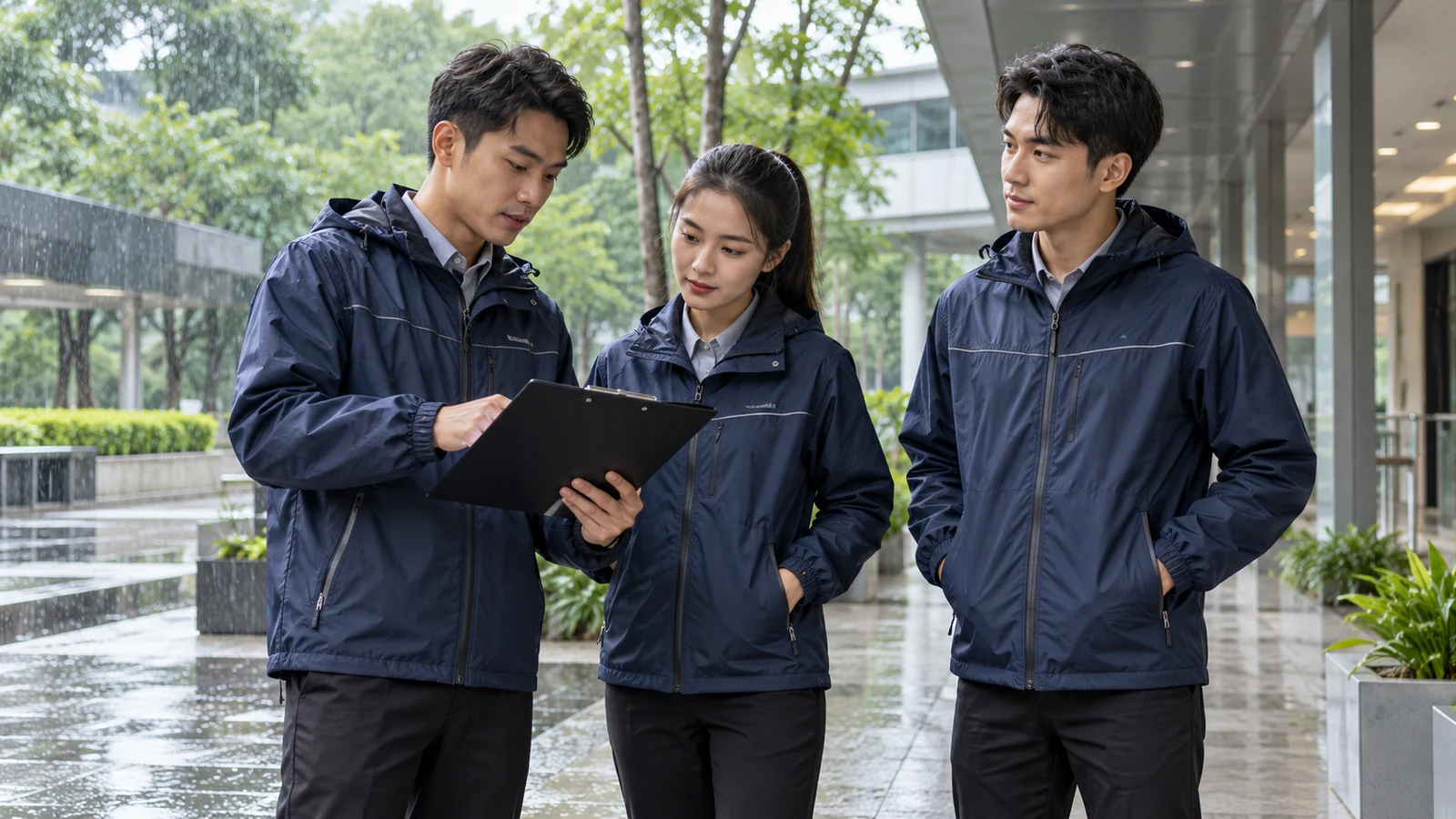
Choose the jacket for the real shift
A lightweight zip jacket can be useful between an air-conditioned office and a wet outdoor route, but “jacket” is not one performance category. Clarify whether the priority is wind protection, temporary shower resistance, warmth or simply a coordinated team appearance. Thin woven shells can pack easily, while lined jackets may feel more substantial. Match the design to work conditions before discussing logo size or colour.
Ask staff to try the jacket over their usual uniform, including any equipment they carry. Test sitting, lifting arms and reaching into a bag while the jacket is zipped. A garment that looks smart while standing still may ride up or tighten across the shoulders during work. If the activity involves a hazardous environment, separately identify the certified protective clothing and safety equipment requirements.
In Miri, compare an office-to-client travel day against a long outdoor assignment rather than using one blanket description for every employee. A light brand jacket can meet appearance needs without meeting specific industrial or weather requirements. Put those different jobs into the buying brief so the quote remains realistic.
Look closely at seams, closures and comfort
Collars, cuff construction, pocket openings and zip quality determine how a jacket feels in everyday use. A high collar may offer extra cover on a windy route, but staff should be able to turn their head comfortably. Zippered pockets keep small items more secure than open pockets when moving. Examine whether the fabric makes noise or traps heat during warm and humid conditions.
Do not equate a water-repellent finish with a fully waterproof rain garment. Stitch lines, taped seams, hood coverage and fabric ratings are separate questions to check with the manufacturer. Test in the actual weather or request documented performance information before making promises to staff. For ordinary brand jackets, the most defensible message is that features and protection vary by the specific model.
Give field staff a chance to examine whether pockets remain accessible while wearing a bag strap or seat belt. An awkward cuff or raised collar becomes noticeable during repeated travel. These small fit checks are easier before applying decoration to a full batch of garments.
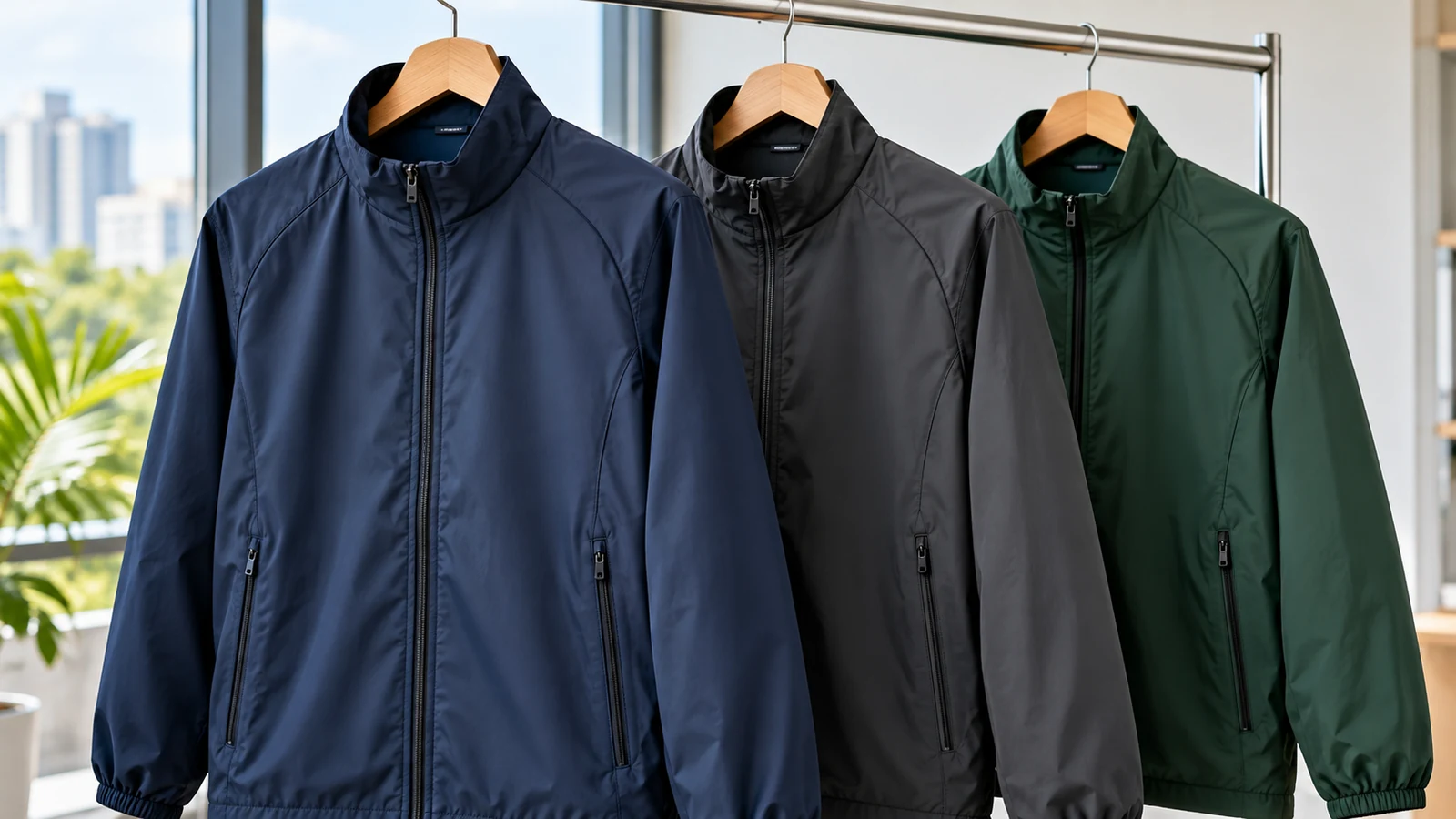
Keep logos visible without damaging the garment
A restrained logo on a front chest usually gives a neat appearance and remains visible when colleagues speak face to face. A larger rear mark may help identify a team moving through a public site. Placement should avoid zipper seams, highly curved panels and pocket openings. Embroidery, transfer or other decoration methods should be approved for the actual jacket fabric.
Technical coatings and membranes can be affected by heat or needle holes. Ask the supplier to advise on feasible methods rather than assuming the same decoration used on a cotton polo will work on every shell. Test visibility over the dark and light options offered to staff. Consistent branding needs a placement diagram with measurements, not just a mock-up shared in a messaging app.
If a jacket will be used during wet-weather appointments, ask specifically how the chosen decoration method affects its surface and seams. Do not advertise water protection that has not been documented. A professional-looking mark means little if applying it undermines the reason the team chose that shell.
Create a sensible size and issuing process
Order sizes based on fit checks over the normal base layer, not only a shirt-size spreadsheet. Jackets need enough space for movement without so much bulk that sleeves snag at work. Keep a record of staff names, sizes and the garment model for repeat orders. Different models with the same nominal size may fit differently, especially across men’s, women’s and unisex cuts.
Collect feedback during the first week rather than waiting for an annual uniform replacement. Problems such as cuffs rubbing against a desk or a missing internal pocket are easier to fix before a larger reorder. Include care instructions and inspect decorated areas after sample laundering. Clear decisions now make replacement purchases more predictable later.
For Sarawak teams split between fieldwork and office duty, a simple issue record helps avoid double ordering or missing sizes. Note the garment model, approved logo position and wearer feedback. Keep a clean sample for comparison because catalogue colours and replacement styles may change over time.
Plan for a mixed indoor and outdoor Miri workday
Many field roles involve a change of environment within the same working day: air-conditioned reception, vehicle travel and exposed walkways. A compact shell may work for routine business visits, but staff could need more specialised weather or safety clothing for other assignments. Check the site requirement rather than assuming one jacket protects against every condition.
For warm conditions, ventilation and the ability to remove a layer quickly can matter as much as coverage. Ask a sample wearer to walk, reach and carry usual work items to see whether the shoulders pull. If jackets will be issued across branches, record the approved cut and sizing instructions. That practical information prevents a repeat order from becoming a guessing exercise.
A quick decision table
| Situation | Start with | Test or verify |
|---|---|---|
| Routine appointments | Packable lightweight shell | Check ventilation and fit |
| Frequent rain exposure | Documented suitable rain garment | Verify seams and waterproof claims |
| Industrial visits | Site-approved protective wear | Confirm safety requirements |
Frequently asked questions
Will the same jacket work for all Miri staff?
Only if their work conditions are similar. Separate ordinary branded outerwear from job-specific safety clothing.
What information helps with a jacket quote?
Provide team size breakdown, work setting, artwork, preferred features and whether weather or safety performance is required.
Local context: Sarawak Tourism Board – Miri travel information. Product recommendations in this article are general purchasing considerations, not official requirements from that source.