
Batik-Inspired Sublimation for Corporate Shirts: Pattern Scale and Motif Permission
A batik-inspired corporate shirt can express a local visual identity without being a traditional batik textile. In Sarawak, that distinction matters because some familiar textile motifs belong to living craft traditions and can carry cultural significance. A responsible sublimation brief needs both design discipline and clarity about where its pattern comes from.
In This Article
Direct Answer
Use an original or properly licensed pattern, confirm any culturally specific motif with its creator or rights holder, and test the repeat scale on a sewn shirt before ordering. Sublimation prints colour into suitable polyester; it does not reproduce the resist-dye craft process of traditional batik.
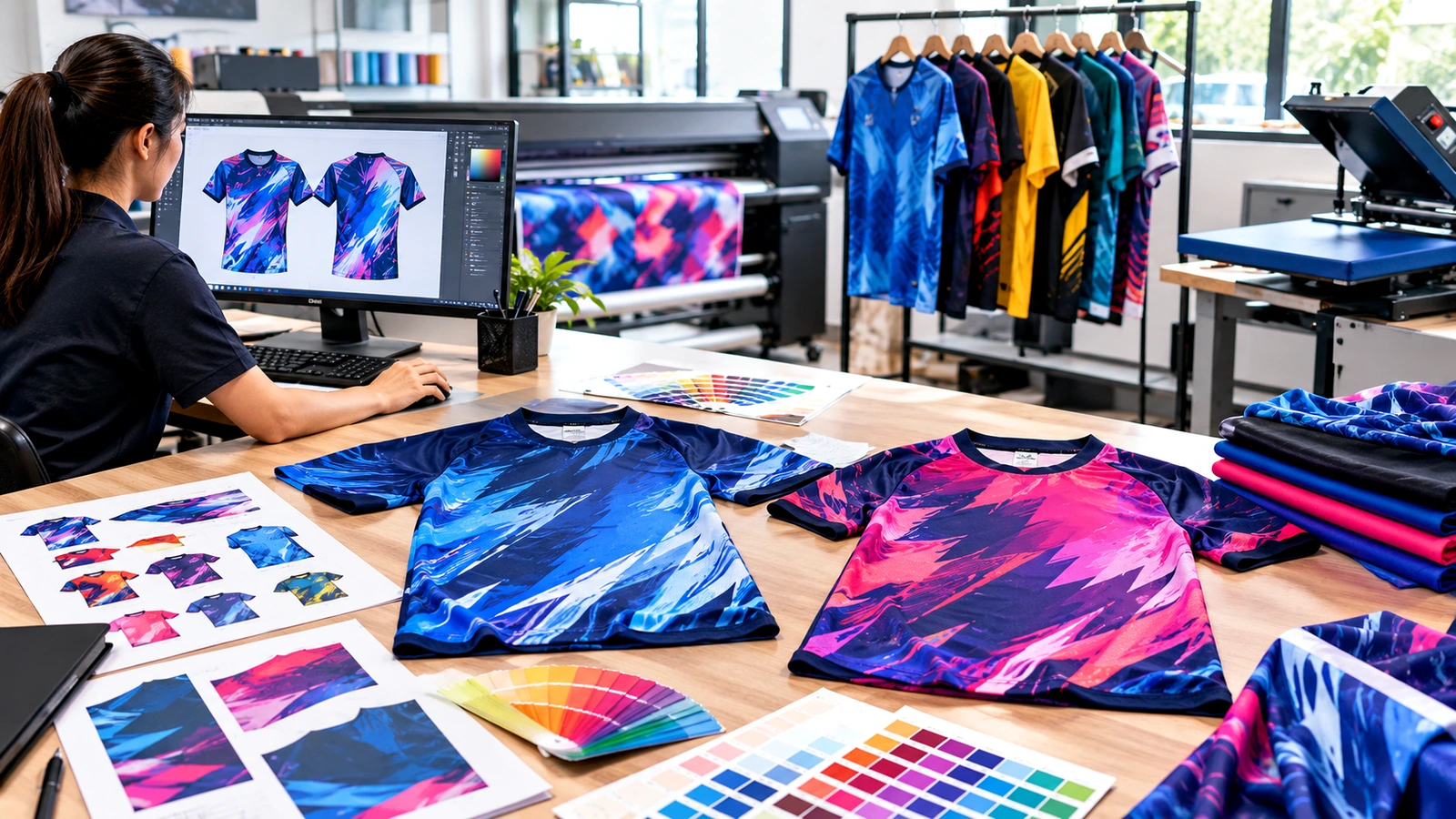
Begin with motif provenance, not a screenshot
Sarawak has diverse textile traditions, including Iban pua kumbu weaving. The Sarawak Museum Department describes motifs and symbols in those traditions, while the Sarawak Tourism Board encourages visitors to support local artisans who produce traditional woven work. These sources establish that the designs are part of a living cultural context; they do not grant a blanket licence to copy a motif from a museum image, social post or purchased cloth.
For a corporate shirt, the safest starting point is an original pattern created for the brand or a commissioned collaboration with an artist whose permissions are documented. Ask whether the pattern is a general geometric design, a contemporary interpretation or a reproduction of a named cultural motif. Keep creator credits and licensing terms in the project record. This sourcing decision should be made before layout work because replacing a motif late can alter the whole repeat system.
Set repeat scale on the garment, not only on the screen
A pattern tile can look refined at 100% zoom and become visually noisy when repeated across a full torso. Print a full-size section on the intended fabric and view it from conversational distance. Large motifs create clear rhythm but can look accidental if only one fragment appears on a sleeve; tiny motifs can merge into texture and compete with embroidered or printed company branding.
Choose one dominant scale, then decide whether a secondary texture is needed at all. For a short-sleeve corporate shirt, inspect the repeat across the chest, shoulder and sleeve area, where the body bends and cloth changes direction. Avoid placing a recognisable focal motif at a point likely to be obscured by a placket or pocket. Record tile dimensions in millimetres so the repeat is not resized unpredictably during production.
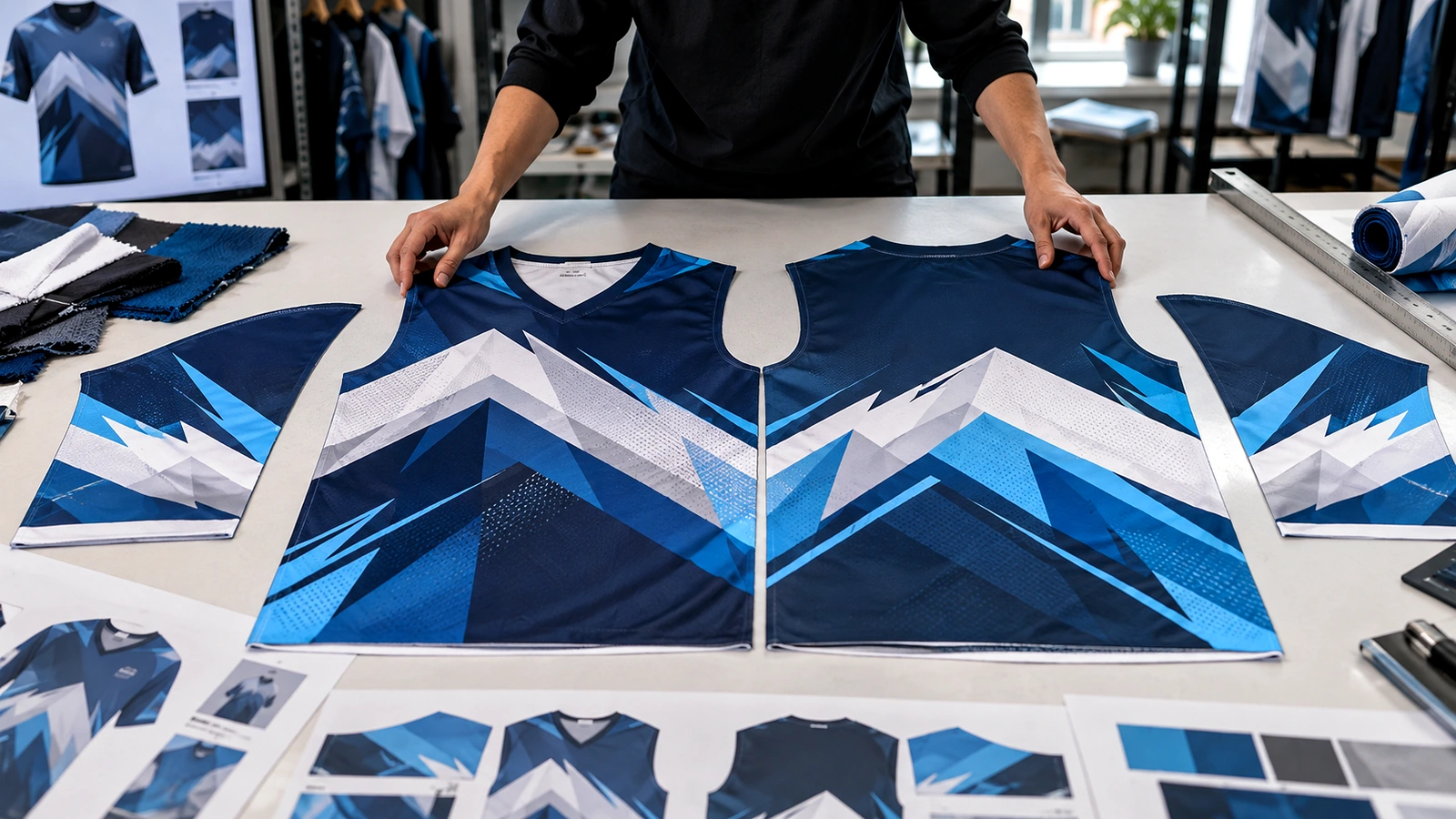
Create a quiet zone for the company identity
A corporate shirt often needs a readable logo as well as a decorative pattern. Put the logo over a controlled low-detail area or use a deliberately framed brand panel, rather than allowing high-contrast motifs to pass directly through small lettering. Test the smallest actual logo size, not an enlarged mock-up.
If the logo will be embroidered onto the finished shirt, confirm that the stitch area does not land on a strong visual feature that distracts from the mark. If it will be incorporated into the sublimated artwork, preserve its colour and spacing separately from the repeat pattern. A team can still use rich burgundy, green or gold palettes while giving the corporate identity its own visual hierarchy. Approve the garment from a few metres away and at conversational distance because both impressions matter in a customer-facing role.
| Design route | What it offers | Approval requirement |
|---|---|---|
| Original abstract pattern | Clear ownership and flexible scaling | Document source artwork |
| Commissioned cultural interpretation | Artist collaboration and local specificity | Written scope, credits and permission |
| Copied traditional motif | Potential heritage and rights concerns | Do not proceed without proper authorisation |
Distinguish sublimation from traditional batik
Traditional batik is made through resist-dye methods, while sublimation transfers dye into suitable polyester under controlled heat and pressure. A digitally printed batik-inspired pattern should therefore be described as batik-inspired sublimation or a sublimated batik-style corporate shirt, not presented as hand-made batik. The production method affects how artwork is prepared: digital repeat files, colour profiles, garment panels and heat transfer settings replace the hand-resist stages of traditional craft. Sublimation can reproduce complex repeat patterns consistently, but it does not confer the craft provenance of a hand-produced textile. Fabric choice also matters; standard dye-sublimation is designed for polyester-compatible materials and generally works most predictably on light bases. Ask the supplier for a fabric sample and sewn sample before approving a large corporate run.
Approve one shirt, then protect the repeat master
A useful approval sample includes the actual collar, placket, sleeve and branding treatment, not only a flat fabric swatch. Inspect whether the pattern scale feels balanced across sizes and whether focal motifs are unintentionally clipped by construction. Check the colour under indoor lighting and daylight, noting that a digital screen cannot guarantee a fabric match.
Save the repeat tile, approved colour references, pattern placement notes and motif permission records together. For a Sarawak organisation with staff in different offices, one master specification reduces the chance that separate reorders drift in pattern scale or colour. If sizes are graded or a garment pattern changes, request a revised mock-up of the affected panels before reprinting. The result is a corporate design that can be reproduced responsibly and consistently.
A culturally informed sublimated shirt starts with responsible motif sourcing, then succeeds through repeat scale and garment-level testing.
Frequently Asked Questions
Is a sublimated batik-style shirt traditional batik?+
No. It uses digital dye-sublimation rather than the traditional resist-dye craft process.
Can we use a pua kumbu motif found online?+
Do not assume it is free to copy. Confirm the source, cultural context and applicable permissions.
Should the repeat size change between shirt sizes?+
Only under a deliberate grading rule. Review a sample of the smallest and largest sizes.
Sources and Further Reading
Sarawak Museum Department — Textile
Discuss Your Print or Apparel Requirements
For a Sarawak corporate batik-inspired shirt, prepare the motif source, brand requirements and intended garment before the first sublimation sample.