
Restaurant Menu Print Finishes: Match the Surface to Cleaning, Turnover and Reprints
A menu is wiped, bent, stacked, exposed to condensation and sometimes replaced whenever prices change. The right print finish depends on that operating cycle, not on which sample feels most premium.
In This Article
Direct Answer
Choose construction from two variables: how often the surface must survive cleaning and how often the content changes. A heavily protected menu suits stable content; replaceable inserts can be better when prices or dishes change frequently.
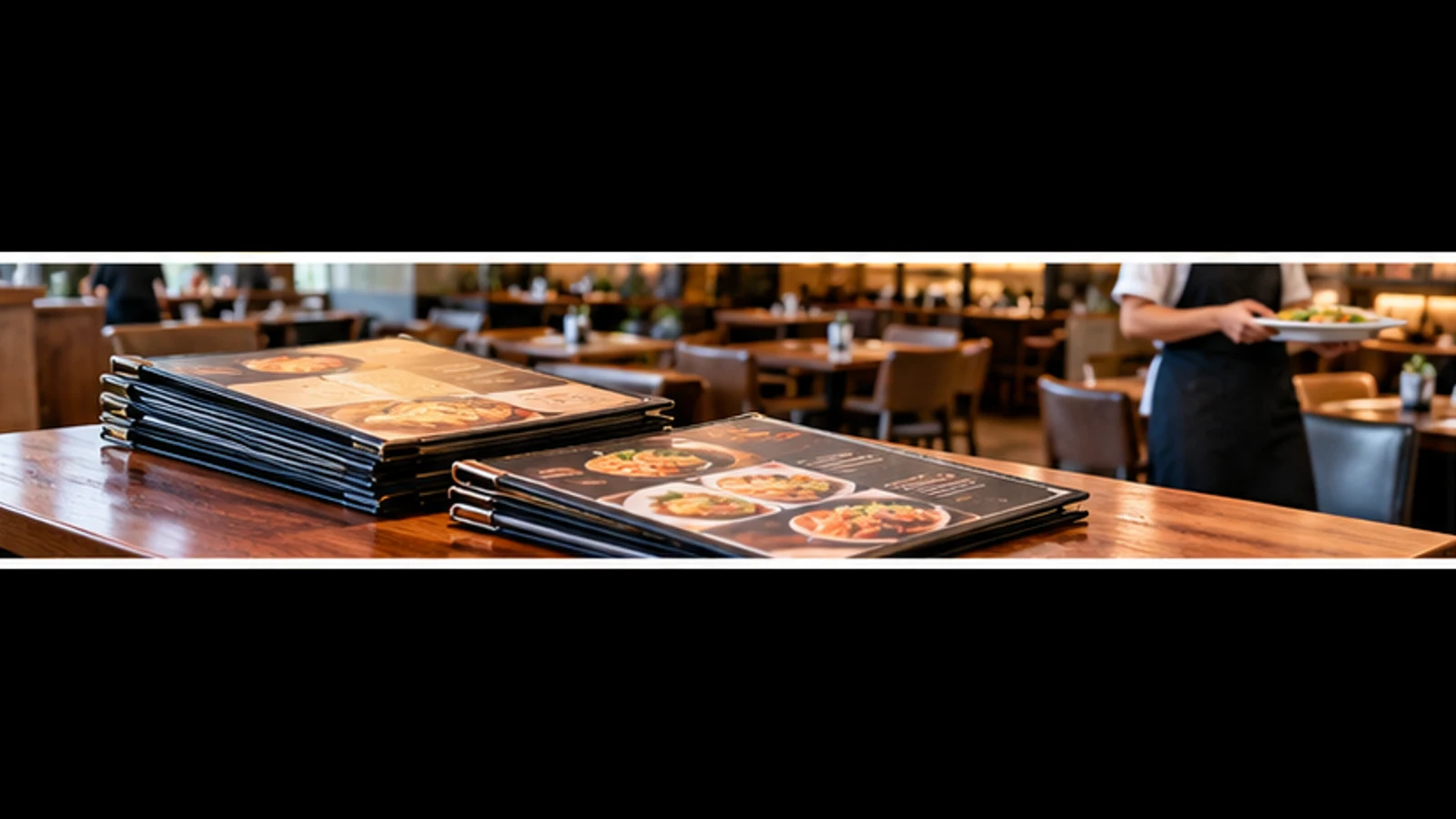
Map the menu’s physical life cycle
Observe what happens from opening to closing. Menus may be carried in stacks, left on outdoor tables, wiped after each customer or stored near beverage stations. A finish that looks premium in a sample book can fail if edges absorb moisture or surfaces scratch under repeated wiping. Record how often content changes too. A restaurant revising prices twice a year has a different cost equation from a café changing specials monthly. Durability and editability pull in opposite directions, so the first print price is only part of the decision.
Understand what lamination solves
Lamination protects printed paper from routine moisture and handling, but it changes feel and glare. Gloss can make photography punchier yet reflect overhead lights. Matte reduces glare and fingerprints but some matte surfaces show scuffing. Edge sealing matters as well: if trimming exposes the paper core, repeated wiping can drive moisture into the sheet. Inspect the finished edge and corner treatment, not only the face. Match protection to actual cleaning rather than assuming more lamination is automatically better.
Use modular construction for frequent changes
A reusable cover with replaceable inner sheets separates the durable part from the frequently changing part. That lets a restaurant invest in a stronger cover while printing economical inserts for price or seasonal updates. It also reduces temporary price stickers. Very short menus may still work best as a single wipe-clean card. Calculate expected reprints over a year rather than comparing only first-run cost. Four inexpensive updates may be operationally cleaner than one permanent menu that becomes wrong after two months.
Test cleaning and lighting
Ask for a production sample and test it in the real restaurant. View it under the same pendant lights or daylight customers see. Wipe it repeatedly with the normal cleaning method, then inspect haze, scratches, corner lift and colour change. Hand it to service staff too. They notice problems designers miss: slippery stacking, awkward page size or dark surfaces that show fingerprints. Menu printing succeeds when the physical object survives service, not when the PDF merely looks attractive.
| Planning area | What to verify |
|---|---|
| Map the menu’s physical life cycle | Decision rule and operational check |
| Understand what lamination solves | Failure mode and control |
| Use modular construction for frequent changes | Decision rule and operational check |
| Test cleaning and lighting | Failure mode and control |
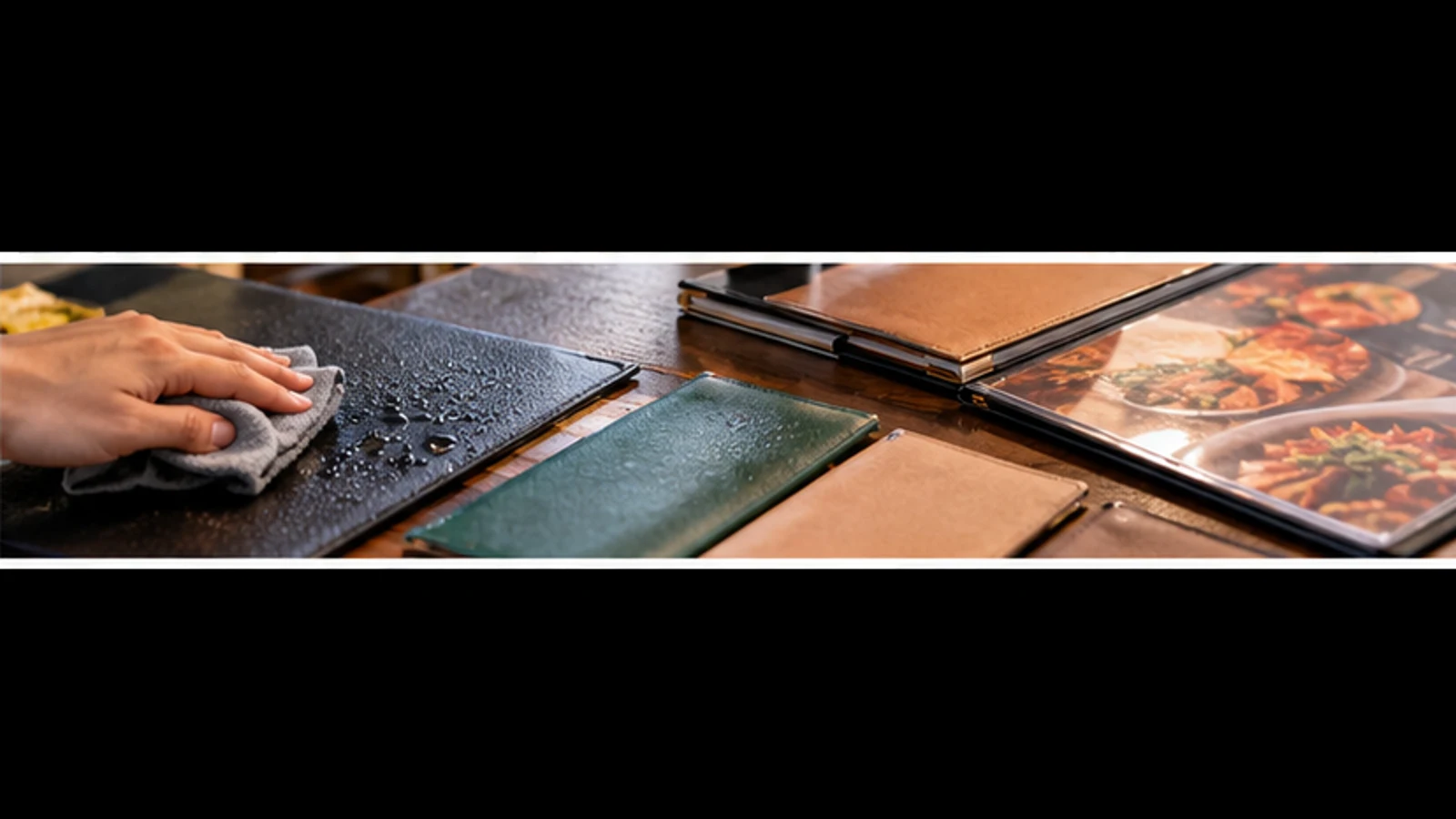
Make the specification measurable, test it in the real operating environment, and keep the approved reference for the next reorder.
Frequently Asked Questions
Should we test before a full run?+
Yes. A production-size sample exposes fit, handling, adhesion or durability problems that are easy to miss on screen.
What should be kept for reorders?+
Keep the approved specification, artwork version, supplier reference and a physical control sample where practical.
Is the lowest unit price the best buying decision?+
Not necessarily. Include replacement risk, obsolete stock, reprint frequency and operational failure in the total cost.
Need Help With the Production Specification?
JCP can help with relevant garment, print, label or business-print production when you are ready to turn the specification into an order.
Discuss Your Requirements