
First Packaging Print Run for a New Brand: A Sarawak Youth StartUp 2026 Checklist
Sarawak Youth StartUp Cohort 3 is scheduled in Sibu in October 2026 and its official curriculum includes branding and packaging. For a new product business, the useful next step is not ordering the largest possible quantity—it is building a packaging system that can survive the first real market test.
In This Article
Direct Answer
For a first packaging print run, keep permanent branding separate from information likely to change, order enough to test real sales without locking in months of obsolete stock, and prove every label, bag or box on the actual product before volume printing.
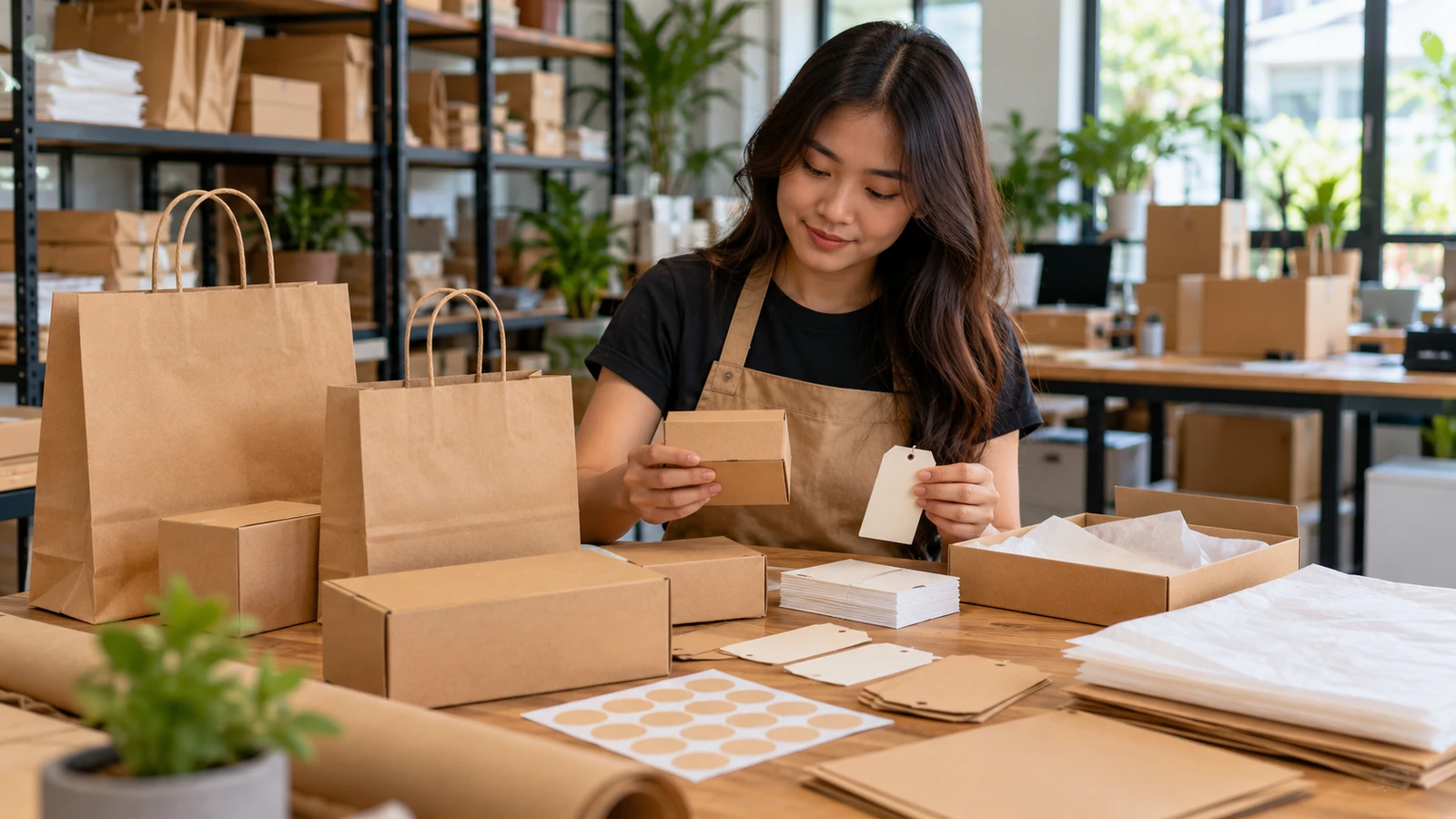
Begin with the smallest packaging system that can sell the product properly
A startup often sees packaging as one finished object, but the first version works better when it is broken into components. The primary container or pouch protects the product. A sticker, sleeve or printed card can carry branding and product information. A paper bag or outer box may be needed only for certain sales channels. Separating these jobs makes the first run more flexible because one component can change without scrapping everything else. If the product is still being tested, avoid committing to fully printed custom packaging simply because the unit price looks attractive at a large quantity. The first goal is to learn what customers buy, what retailers ask for and which information actually stays stable.
Classify information as permanent, semi-stable or temporary
Permanent information includes the core brand name, visual identity and product family marks that are unlikely to change after every sales test. Semi-stable information may include product variant, pack size or approved claims. Temporary information includes prices, promotional bundles, event messages and some distributor-specific details. Put temporary content on the easiest and cheapest piece to replace. That might mean a small price card at the sales table instead of printing the price directly on every bag. The same logic helps when a product moves from direct sales to a retailer and the price structure changes. Good packaging design gives changeable information somewhere to live without forcing a full reprint.
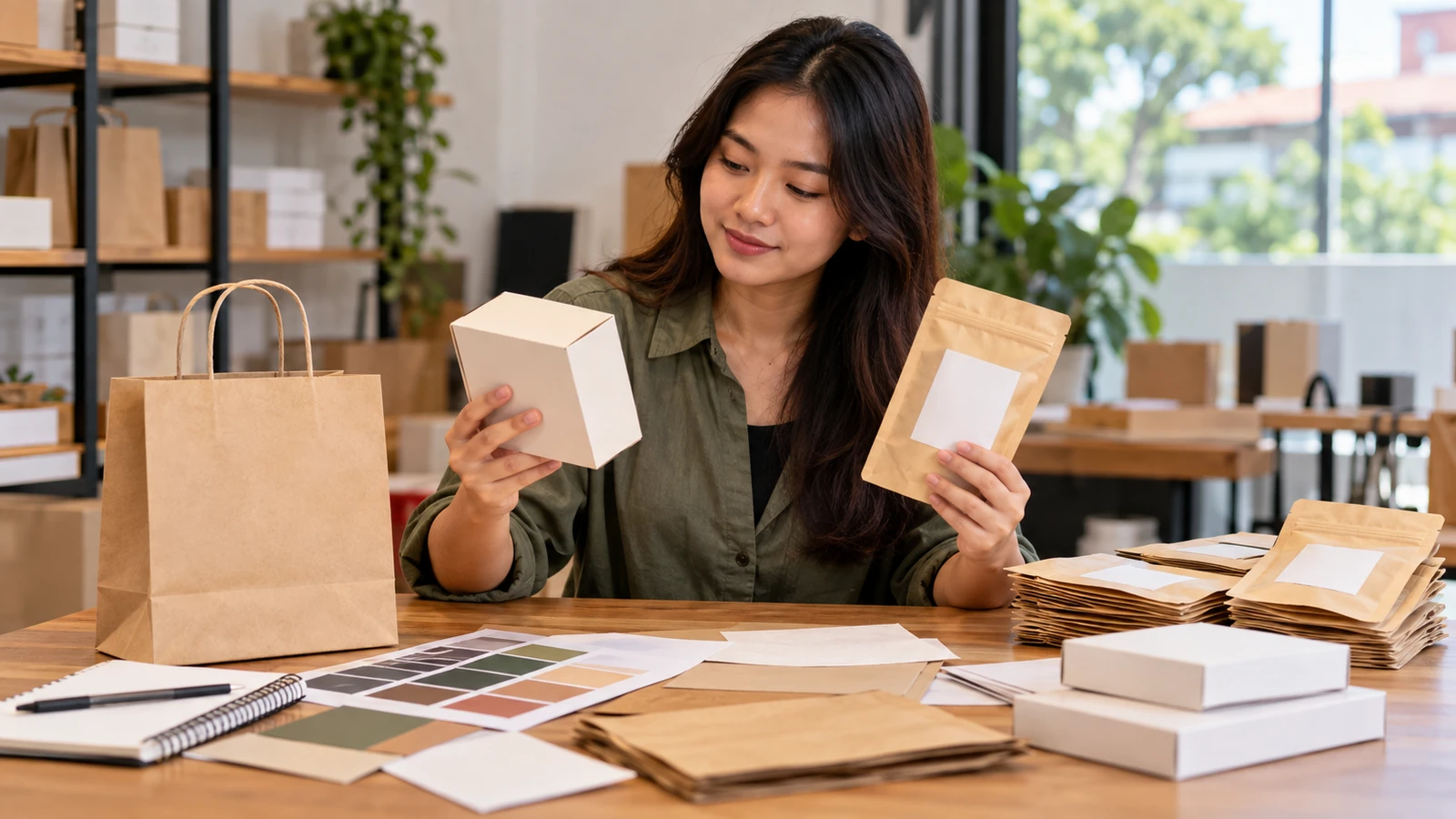
Estimate quantity from the next test period, not the dream volume
Suppose a new snack brand expects to sell 35 packs per week during the next eight weeks. Base demand is 280 labels or pouches. Adding a 15 percent operating buffer gives about 322 units, so a practical first order might be rounded to 350 or 400 depending on the printer’s production unit. Ordering 2,000 because the unit price falls may appear cheaper per piece, but it becomes expensive if the recipe, pack weight, contact details or brand presentation changes after the first two months. New businesses should compare the saving from a larger run with the cost of scrapping unused stock. Once sell-through and product information stabilise, the next order can move to a more economical quantity with better evidence.
Prototype the real pack before approving artwork
Print labels at actual size, apply them to the real pouch or box and fill the package with the real product where practical. A flat digital mock-up cannot show whether a sticker wrinkles around a gusset, whether a box lid covers part of the artwork or whether a small label feels lost on a large bag. Check how the package looks upright on a shelf and lying flat for transport. If the product is oily, chilled or handled frequently, include those conditions in the test because the surface and adhesive must survive them. For paper bags and boxes, inspect where folds, handles and closures interrupt the printable area. Approve the assembled object rather than the design screen.
Create a version rule before the business grows
Sarawak’s Ministry of Youth, Sports and Entrepreneur Development says the October 2026 Youth StartUp Cohort 3 in Sibu covers branding and packaging among its entrepreneurship topics. That makes version control a timely practical extension of the programme: every approved packaging file should have a clear product, size and revision identifier. Avoid folders filled with names such as final, final2 and final-new because the wrong file can return during a rushed reorder. Keep old versions in an archive and maintain one live production master per SKU. Record which printer file matches which physical package. These habits feel unnecessary when a business has one product, but they become valuable the moment a second flavour, size or sales channel is added.
| First-run decision | Practical rule | Why it helps |
|---|---|---|
| Packaging structure | Separate container, branding and temporary information | Changes do not force a total reprint |
| Quantity | Cover the next test period + modest buffer | Limits obsolete stock |
| Physical proof | Test the real product and pack | Reveals fit and handling problems |
| Version control | One live master per SKU and revision | Prevents old artwork from returning |
Current Sarawak reference
The local context comes from the Ministry of Youth, Sports and Entrepreneur Development Sarawak announcement for Sarawak Youth StartUp Cohort 3, scheduled in Sibu in October 2026 and listing branding and packaging among the curriculum topics. Read the official MYSED announcement.
The first packaging run should buy learning as well as inventory: enough stock to sell properly, but not so much that the brand cannot change.
Frequently Asked Questions
Why reference Sarawak Youth StartUp Cohort 3?+
MYSED lists the October 2026 Sibu programme and includes branding and packaging in the curriculum, making it a current local context for first-run production decisions.
Should a startup order the largest quantity for the lowest unit price?+
Not automatically. Early products often change, so obsolete stock can cost more than the unit-price saving.
What should be tested physically?+
The actual label or printed component on the real pouch, box, bottle or bag under normal handling conditions.
Plan the First Production Run
For a first packaging run, prepare the actual pack dimensions, expected eight-to-twelve-week quantity and the approved artwork version before requesting production.
Contact Us