
DTF vs Embroidery for Polo Chest Logos: Which Option Fits Your Order?
A small chest logo looks simple, but it changes how a polo performs, how premium it feels and how much reordering friction your team creates later. Many buyers only compare price per piece, then discover that the chosen method does not suit the logo detail, the fabric or the expected use.
DTF and embroidery are both useful, but they solve different problems. If you are ordering corporate polos, retail staff polos or event teamwear in Singapore, it helps to decide based on logo shape, quantity, fabric behaviour and the image you want the uniform to project, not on habit alone.
In This Article
Direct Answer
Use embroidery when you want a classic, durable and premium chest mark, especially for simple or moderate-detail logos on stable polo fabrics. Use DTF when the artwork has fine lines, colour blends or small details that would become bulky, expensive or unclear in thread. The best choice depends on how the logo is built, how the polo will be worn and whether you are prioritising prestige, colour accuracy or budget control.
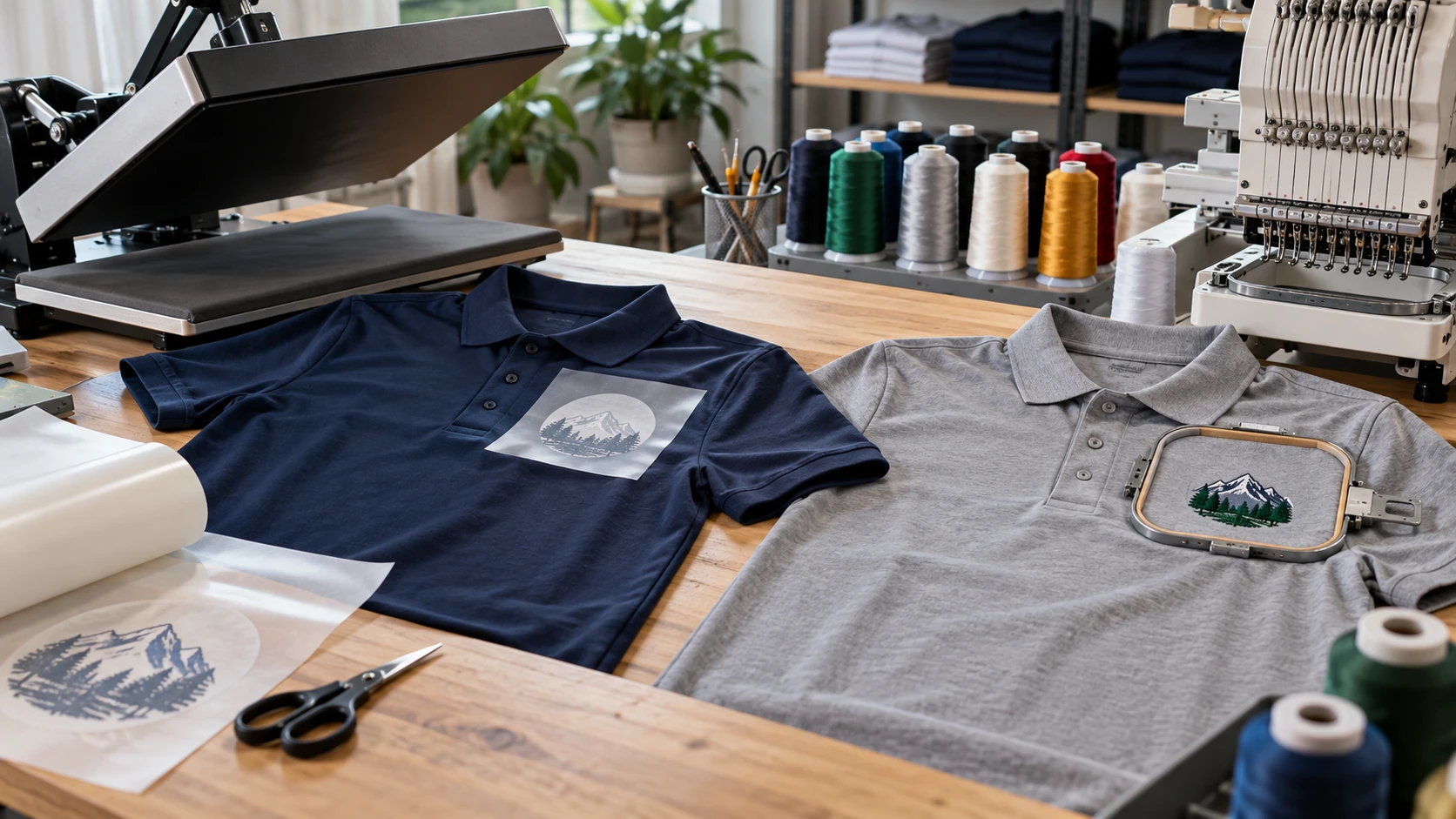
Start with the logo, not the machine
The most common mistake is beginning with “we always do embroidery” or “print is cheaper” instead of looking at the logo itself. A solid one-colour symbol with bold edges usually translates well to thread, especially at the left chest size. A logo that depends on tiny typography, thin outlines, gradients or several close colour shifts often performs better as a DTF transfer because the image can stay clean without turning into a dense stitch block.
Size matters as well. A chest logo is usually small, which means even a technically beautiful logo can become hard to read when reduced. If the smallest elements are critical to brand recognition, DTF can preserve them more accurately. If the logo is a simpler emblem or icon and the company wants a more established, tactile finish, embroidery often gives the better visual result.
How fabric and wear conditions change the answer
Polo shirts are not identical. Some use cotton piqué, some are blended, and many staff uniforms in Singapore use quick-dry or performance knits. Embroidery adds weight and needle penetration, so the stabiliser choice and the knit structure matter. On light or stretchy fabric, a large dense embroidery can distort the cloth, which is why chest logos should be digitised carefully and kept proportionate.
DTF sits on the surface instead. That helps on logos with detail, but it also means the logo feels flatter and more graphic. For polos worn in air-conditioned offices, indoor retail or light hospitality duty, that surface finish is usually fine. For buyers who want the traditional corporate-uniform feel, embroidery still signals permanence and polish in a way many companies prefer.
Also think about repeated laundering. Both methods can last well when produced properly, but the failure mode is different. Poor embroidery can pucker or feel too dense. Poor DTF can crack, edge-lift or look overly plastic if the film, pressing temperature or artwork size are wrong.
Where cost usually shifts
There is no universal “embroidered is always more expensive” rule. A simple logo with a stable stitch count may be very reasonable on a medium run of polos. But once the logo becomes complex, the embroidery time and thread changes increase, and cost rises quickly. DTF is often more economical when the art has multiple colours because adding colours does not multiply thread changes in the same way.
Another hidden cost is setup friction. Embroidery usually needs digitising. DTF may need artwork cleanup and colour checking. If you reorder regularly, the more important question is which setup can be standardised. A method that costs slightly more up front can still be the better operational choice if it creates consistent repeat orders with fewer corrections.
What to lock down before production
Ask to approve four things before the full run starts: actual logo size, exact placement from placket or shoulder reference points, sample fabric compatibility and a real visual proof of the decoration method. This is where many ordering problems disappear. A chest mark that looks balanced on one polo size can sit too high or too far inward if the placement standard is vague.
If you are ordering for several departments, decide whether every unit truly needs the same decoration method. For example, management polos may suit embroidery while campaign polos or short-run activation staff polos may be more practical with DTF. A mixed-method system can be more sensible than forcing one method across every use case.
| Decision factor | DTF | Embroidery |
|---|---|---|
| Fine detail | Handles thin lines and multi-colour detail well. | Can simplify or lose very small details. |
| Feel and image | Smooth, graphic, flatter surface look. | Textured, tactile, more classic corporate feel. |
| Suitability for simple logos | Good, but may be visually less premium for some brands. | Excellent when the logo is bold and compact. |
| Fabric stress | Less needle stress on the garment. | Needs correct stabilising on stretch or lighter knits. |
| Best use case | Detailed logos, short campaigns, colour-sensitive branding. | Corporate uniforms, long-term use, premium presentation. |
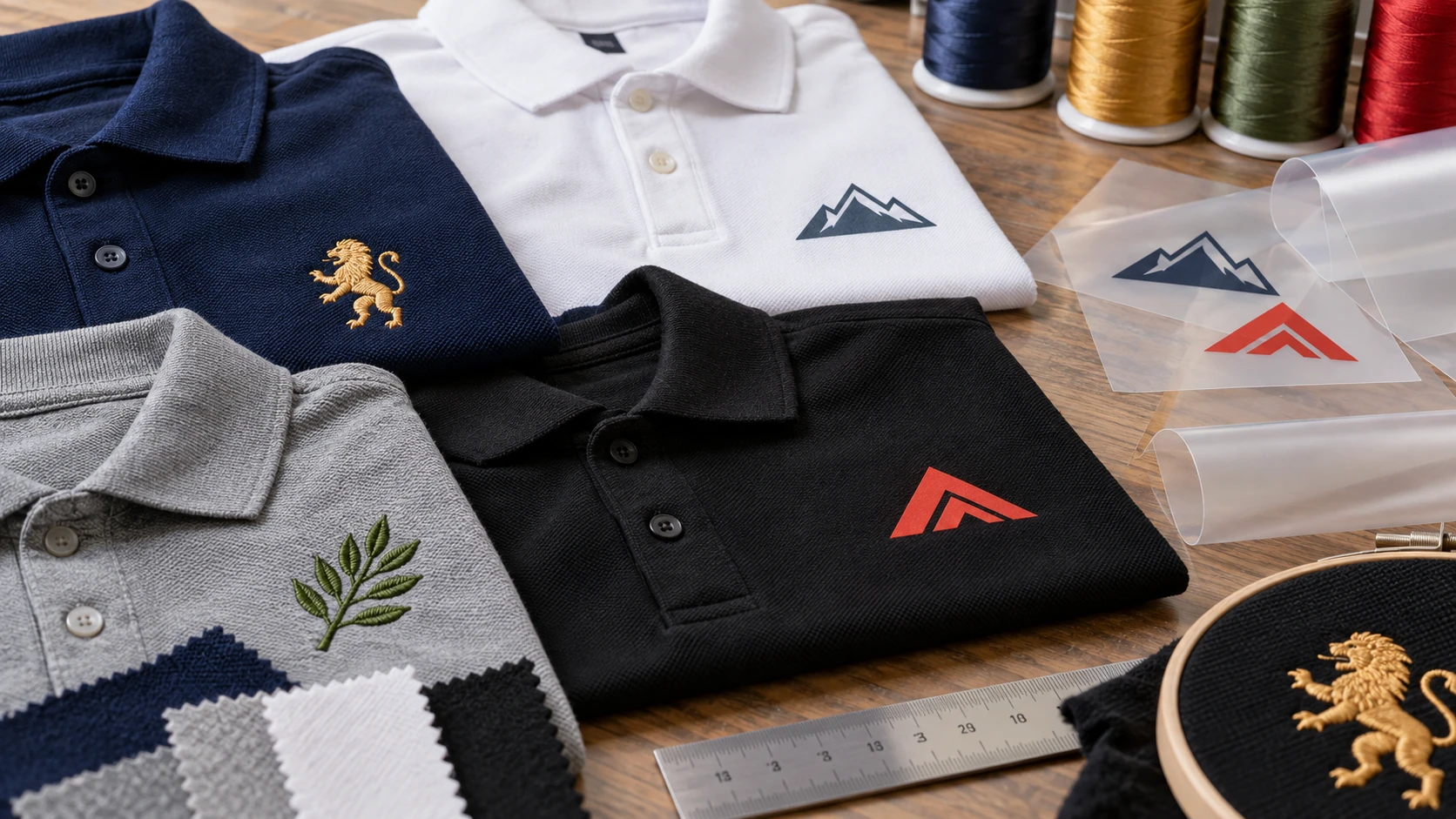
Key Takeaway
Ask one practical question: if someone stands two metres away, what must they recognise first — the textured premium feel of the mark, or the exact artwork detail? That question usually points you to embroidery or DTF faster than price alone.
FAQ
Is DTF suitable for polo shirts?
Yes, especially for polos that need detailed artwork or small multi-colour marks. The key is proper application and choosing a logo size that still looks natural on the fabric.
Does embroidery last longer than DTF?
Embroidery often feels longer-lasting because it is stitched into the garment, but both methods can perform well when the file preparation, machine settings and garment choice are appropriate.
Can one order mix DTF and embroidery?
Yes. Many buyers use embroidery on premium staff polos and DTF on event or campaign polos to balance image, detail and budget.
Need help choosing the right polo logo method?
If you already have the logo file and garment idea, we can review the artwork and suggest the more practical method before production.
Contact Us