
Corporate Shirts or Polo Shirts? Match the Garment to the Workday
A formal-looking shirt is not automatically more useful than a polo, and a polo is not automatically the more comfortable choice. The right uniform depends on what staff do during a shift, how often they move, the customer-facing setting and how the garment will be maintained.
In This Article
Direct Answer
Start with tasks rather than job titles: choose a shirt when a structured collar and presentation matter, a polo when a less formal silhouette and easier movement suit the role, and test both when the workday combines meetings with physical activity.
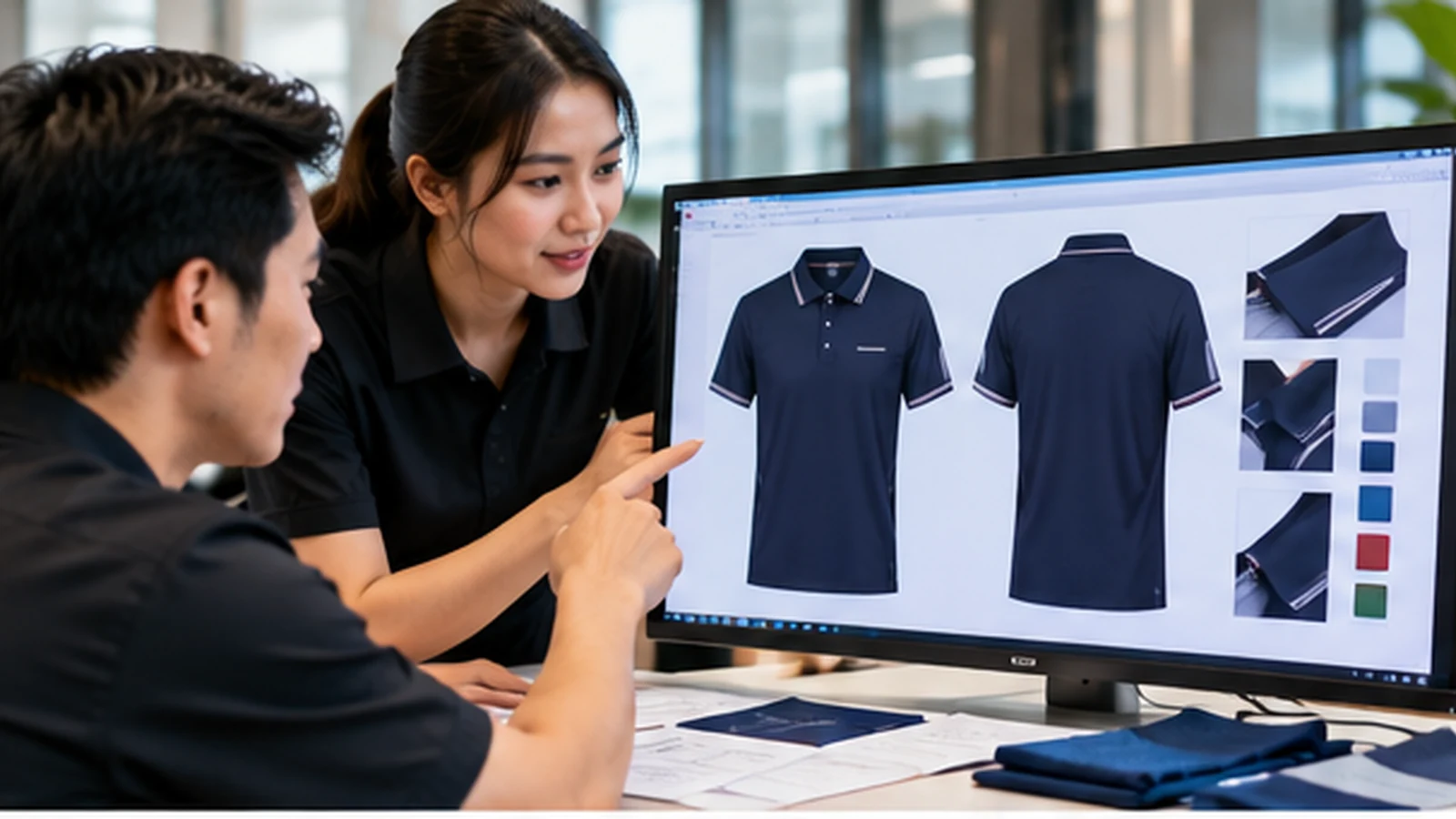
Observe the real shift
List the actions a wearer repeats: sitting at a reception desk, lifting cartons, bending over a counter, travelling between client sites or standing outdoors. These expose different problems from a brief showroom fitting. A corporate shirt may look tidy while seated but pull at the shoulders during reaching; a polo can be comfortable in movement yet look too casual in a formal meeting room.
For a mixed-role team, do not make the decision from the company name or industry alone. Observe at least one representative shift and ask staff where their existing garment restricts them.
Compare fit and fabric together
A woven corporate shirt generally has a more structured appearance; its ease depends on the cut and whether stretch has been incorporated. A knit polo usually has more inherent give, although collar weight, placket construction and fabric composition can make one polo feel quite different from another.
Check shoulder movement, chest ease and body length on the actual sample. In Singapore’s warm and humid conditions, consider the wearer’s time outdoors, ventilation and access to air-conditioning rather than assuming one fibre or one garment category solves comfort for everyone.
| Scenario | Consideration | Practical Check |
|---|---|---|
| Mainly desk / formal client contact | Structured corporate shirt | Check crease and tuck-in expectations |
| Mixed service and movement | Polo or stretch corporate shirt | Test reach and end-of-shift appearance |
| Frequent lifting / outdoor duties | Movement-focused garment | Test mobility and comfort during actual shift |
Set an appearance standard
The required look may be different for a reception team, a sales consultant and warehouse staff. Write down observable criteria such as collar appearance after washing, acceptable creasing, whether the shirt must be tucked in and whether branding should be restrained. This makes the selection easier to repeat when staff join later.
If a single garment is required across roles, choose a model that passes the most demanding practical task and still meets the minimum customer-facing standard. Do not solve an appearance mismatch only by adding a larger logo.

Run a small wear trial
Issue two candidate garments to a few representative staff and ask them to wear each during normal duties. Capture three things: mobility, end-of-shift appearance and laundry effort. Compare photographs after several wash cycles using the same care instructions.
For example, if a team spends four hours at a counter and four hours moving stock, a shirt that looks excellent at 9 a.m. but restricts movement by noon is not an equivalent choice. A short trial makes that trade-off visible before the bulk order.
Specify the selected model
Record the approved garment model, colour, fabric composition, size chart and logo placement together. A later purchase labelled only “navy polo” can quietly change fit and appearance even when the colour name matches. Keep one physical approved sample when practical.
If different roles genuinely need different garments, a shared colour and restrained branding can still create a coherent identity without forcing everyone into an unsuitable cut.
Choose from the movement and presentation demands of a real shift—not from a catalogue category.
Frequently Asked Questions
Is a polo always cooler than a corporate shirt?+
No. Fabric, construction, fit and the working environment all affect comfort.
Can one uniform work across all departments?+
Sometimes; test the most physically demanding role before standardising.
Should both styles use identical logo placement?+
Review each garment separately because pocket, placket and panel dimensions differ.
Discuss Your Corporate Uniform Project
Share your actual usage, samples and quantities with JCP so the production specification can be checked before ordering.
Request a Quotation