Sports Jersey Kits: Fabric, Panels and Match-Day Practicalities
Plan coordinated sports jerseys with comfortable fabric, visible contrast, correct numbers, fit and realistic replacement arrangements.
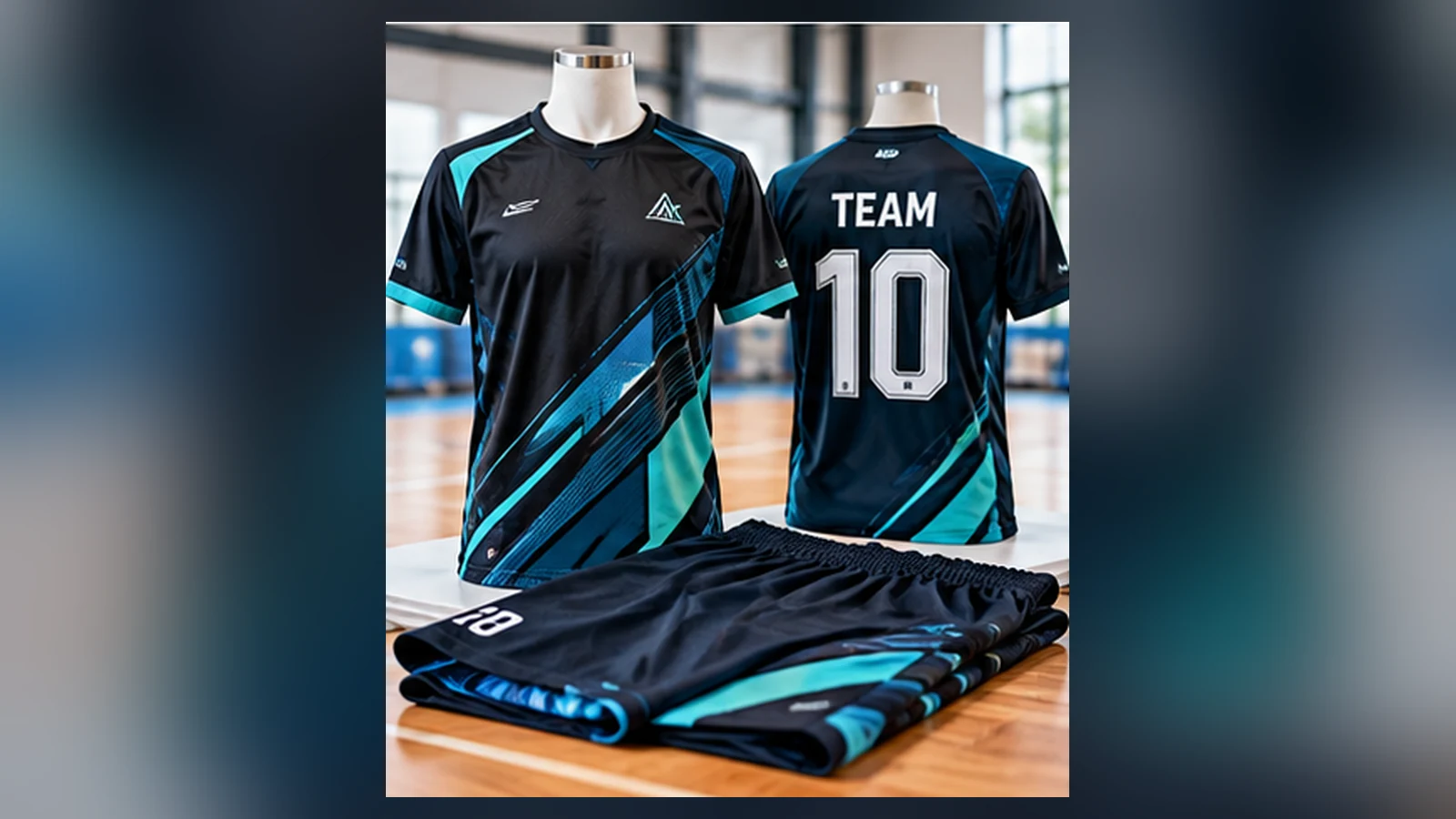
A coordinated sports kit is more than a colourful team graphic. Players need shirts that allow movement, organisers need clear numbers, and managers need enough spare sizes to cover substitutions. A good design also needs to survive repeated wearing and washing. For sports clubs and company recreation groups in Sarawak, practical details should be resolved before deciding that a bold visual mockup is ready for production.
Many teams start with a striking full-colour design and realise later that numbers are difficult to read, sponsors compete for attention or the collar is uncomfortable during exercise. The simplest way to avoid that problem is to evaluate the kit in layers: garment fit, material, number readability, artwork placement and future replacements. Those are separate decisions, and solving them in order improves the result.
Put movement and comfort first
Sportswear often uses polyester or other performance fabrics that dry differently from everyday cotton. However, the label “quick dry” does not guarantee that every garment feels cool to every wearer. Knit structure, fabric weight, body fit and ventilation matter, especially when a team trains outdoors. Ask for a fabric sample and try it during movement rather than relying only on a catalogue description.
Test shoulder reach, running movement and shirt length. A jersey that rises excessively when arms lift may distract players; one that clings too tightly may feel uncomfortable during warm sessions. Consider women's and youth sizing separately if applicable. A coherent team appearance is easier to achieve when the garment patterns fit different body shapes instead of forcing everyone into the same unisex size expectation.
Design panels around real seams
A digital jersey template is flat, but the finished shirt wraps around a moving body. Artwork crossing from front to side to back needs careful alignment, particularly near sleeves, underarms and collars. Strong diagonal shapes can look impressive on the screen but create awkward discontinuities once panels are sewn. Ask to see the front, back and sleeve layouts together before signing off.
Sublimation is useful for polyester-based full-colour artwork because dye is introduced into appropriate fibres instead of forming a thick surface layer. It still depends on material compatibility and production technique. The JCP sublimation service guide provides context for all-over sportswear, while a physical print sample remains the best way to assess whether the proposed colours and small details work at actual size.
Make team numbers legible from a distance
Large numbers need strong contrast against the underlying design. Avoid placing white numbers over light gradient areas or dark numbers across black shapes without a clear boundary. Names need to remain readable when the wearer moves and sweat changes the way fabric drapes. Sponsors and crest placement should support, not overpower, the player identifier.
Create one approval sheet that lists each name, spelling, player number, size and garment cut. Someone should verify it against the team roster before production. A typo can require a remake, particularly when the name is printed within a fully customised panel. If late roster changes are common, ask what replacement or supplementary printing process is available after the first order.
Work backward from the first match
Allow time for artwork approval, size collection, sample testing, production and distribution. Do not treat a verbal deadline as a guaranteed lead time. Quantities, personal names and artwork complexity can affect scheduling. Build a buffer for checking goods and dealing with missing sizes, then set a clear cutoff for roster amendments rather than accepting last-minute edits without a production review.
The same planning applies to training tops and shorts. A simple spare-kit policy prevents the team from arriving with one player in an unmatched replacement shirt. Record the approved colour reference and final print files. You can begin a teamwear enquiry through Uniform Sarawak while reviewing the wider JCP sportswear and apparel catalogue for suitable base items and alternatives.
Team-kit approval checklist
- Number of players, substitutes and spare garments by size.
- Fabric composition, fit preference and intended training conditions.
- Approved front, back, sleeves, names and numbering system.
- Contrast checks at a natural viewing distance.
- Deadline, roster cutoff and future replacement arrangements.
Plan the appearance under actual playing conditions
A jersey photographed in a quiet studio may appear very different during a match. Creases, perspiration and rapid movement can obscure fine lines or small text, while intense sunlight can affect perceived colour contrast. Try a sample outdoors where the kit will be used. Ask someone to read the player number from a reasonable viewing distance and observe whether the front emblem remains clear in motion.
Also consider shorts, socks and any required underlayers. A strong graphic may work well on the shirt but clash with the rest of the kit. Decide which parts of the uniform should share the main colour and which should remain neutral. This often produces a more readable and more professional team identity than covering every item in the same complex pattern.
Maintain the kit after the initial delivery
Give the team a short care guide based on the actual garment label. Avoid adding generic temperatures or detergent advice that has not been confirmed for the material. Arrange a check when the first order arrives, including names, numbers, sizes and quantities. Errors are easier to resolve before uniforms are distributed to individuals and worn for training.
Keep one spare sample and the final artwork files in a shared team record. Note the printer's approved colour references and the exact garment style. For a future new player, a matching shirt is easier to reproduce when the artwork and size information are available. Where the original fabric is discontinued, communicate that a near match may not be identical before promising visual consistency.
Common questions
Will sublimation work on pure cotton jerseys?
Conventional dye sublimation is designed primarily for suitable polyester or polymer-coated materials. Ask the supplier for another decoration method if the chosen base fabric is cotton.
Can every player have a different name and number?
Personalisation is possible with suitable production planning, but the roster and artwork data should be verified carefully before manufacturing.
Is a digital mockup enough to approve the colour?
No. Screens, print profiles and fabric surfaces can change colour appearance. Use an appropriate physical sample when exact colour matching matters.