
Polo Collar Construction: Rib-Knit vs Self-Fabric for Daily Staff Wear
The collar changes how a polo looks after washing, how formal it feels and how much maintenance staff need. Rib-knit and self-fabric collars are both common, but they behave differently enough that the choice should be made from the job and care routine rather than appearance alone.
In This Article
Direct Answer
A rib-knit collar is usually softer and more forgiving, while a self-fabric collar creates a cleaner shirt-like edge. For daily uniform use, compare recovery after washing, resistance to curling, ironing expectations and the formality you actually need. The best choice is the one that still looks intentional after repeated wear.
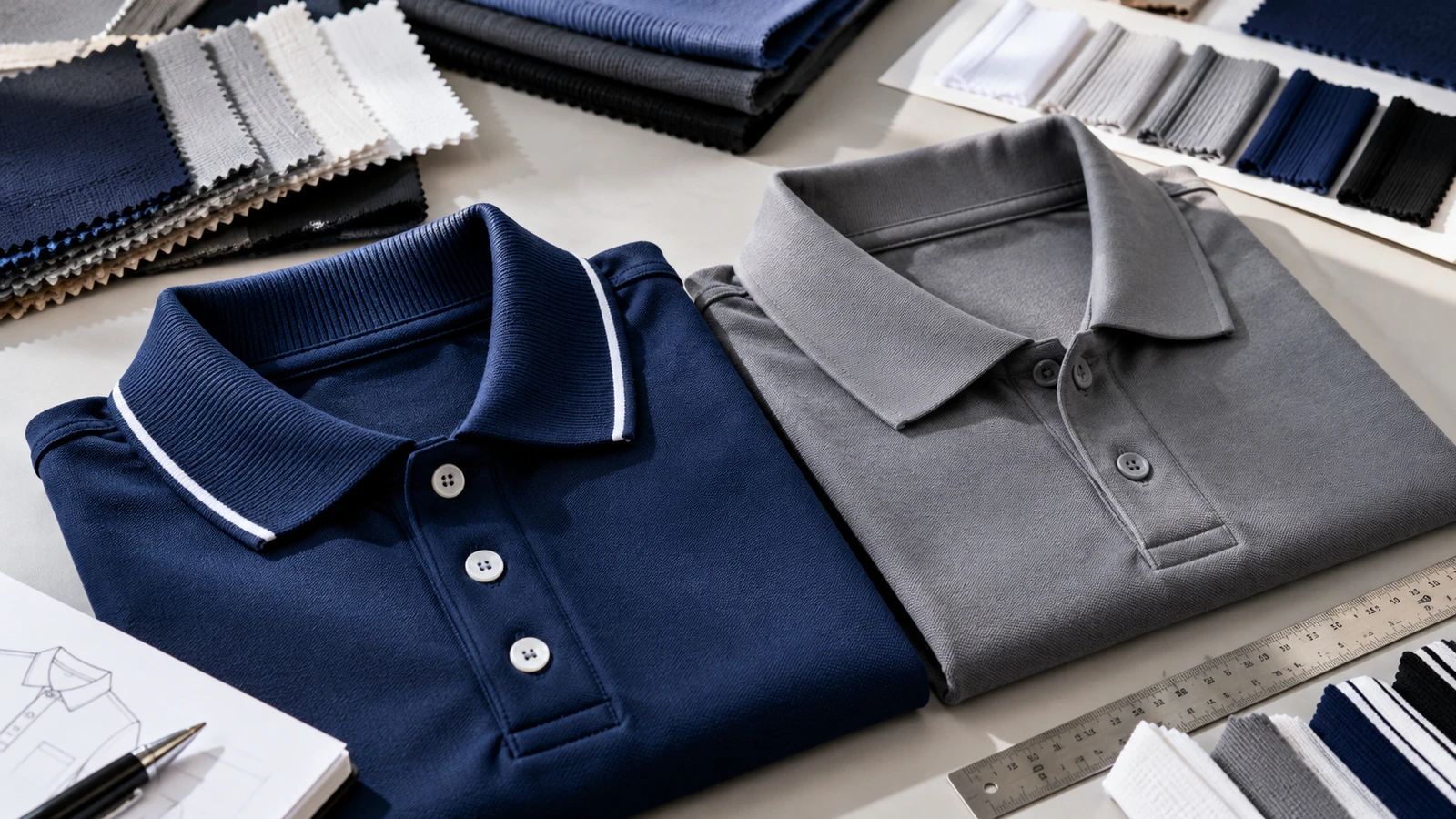
The two collars are built differently
A rib-knit collar is produced from a knitted trim that has more natural stretch and recovery than the body fabric. It can flex around the neck and often sits comfortably without needing a sharply pressed edge. Because the knit structure is different from the polo body, it can also react differently to heat, detergent and drying. Some rib collars keep their shape very well; others can soften or roll if the trim is light or the care routine is aggressive. The important point is that the collar is a separate component with its own behaviour.
A self-fabric collar is cut from fabric similar to the shirt body and constructed more like a soft shirt collar. It tends to give a flatter, neater outline and can look more formal in office or front-of-house settings. However, its structure depends on the fabric, interlining and sewing method. If the fabric is very soft, the collar may collapse rather than stay crisp. If it is heavily pressed, the edge can become too flat or shiny over time.
Decide how polished the collar must look at 4 pm, not 9 am
A new sample can make both collar types look equally tidy, so the more useful comparison is how they look late in a workday and after several washes. Rib-knit collars usually tolerate movement and repeated turning of the head well because the trim stretches with the wearer. Self-fabric collars can give a sharper line under a jacket or corporate outer layer, but they may need more deliberate pressing or shaping after laundry.
For staff who move between office and customer-facing areas, a self-fabric collar may support a more formal image. For retail, operations or service teams who prioritise low-maintenance wear, a stable rib collar can be easier to live with. Neither is automatically more premium; the construction quality and the care process matter more than the label.
| Decision factor | Rib-knit collar | Self-fabric collar |
|---|---|---|
| Feel | More flexible and forgiving | More structured and shirt-like |
| Care | Often easy to reshape | May benefit from more deliberate pressing |
| Look | Sportier / classic polo | Cleaner / more formal |
| Test | Watch for rolling or softening | Watch for collapse or uneven pressing |
Use the laundry routine as part of the specification
Uniform buyers often discuss fabric weight and colour but forget to ask how the collar will be washed and dried. High heat can change the relationship between the collar and neckline if the two components shrink differently. Overloading a washer or leaving polos crushed while damp can also encourage distortion. If staff uniforms are washed individually at home, assume the care process will vary from person to person.
A useful test is to wash two or three samples using the real routine, then compare collar width, edge shape and how easily each one returns to a presentable position. Do this before a large reorder, not after several hundred pieces are already in circulation.
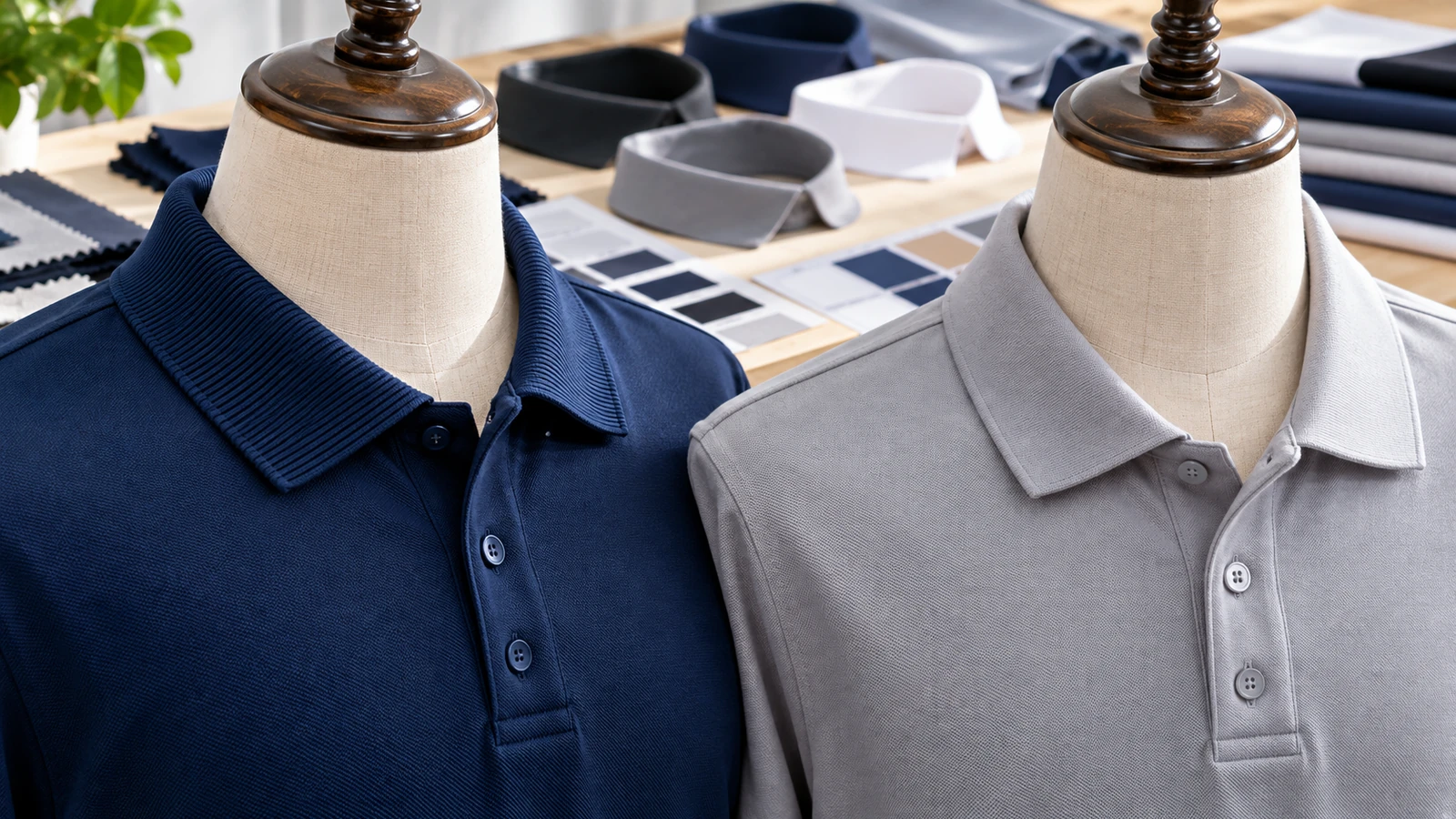
Check collar behaviour across more than one size
The same collar can appear balanced on a medium shirt and disproportionately wide or narrow on a much larger size. When a size range extends from XS to 4XL or beyond, check at least one small, one middle and one large sample. This is especially important if the collar has contrast tipping or a bold stripe because the trim becomes a visible design feature, not just a functional edge.
Ask whether the collar opening still feels comfortable when fully buttoned and whether the placket sits flat when worn open. A collar that looks good only on a flat sample is not enough.
A practical rule for choosing
Choose rib-knit when comfort, easy recovery and low-maintenance daily wear matter most. Choose self-fabric when a cleaner shirt-like outline supports the role and the team can maintain that shape through normal care. If staff wear jackets frequently, test the collar under the actual jacket because bulk and stiffness can change the result.
Whichever option you select, keep one approved reference polo and repeat the same wash test when changing garment model or supplier. That protects the uniform standard better than relying on the words “rib collar” or “self-fabric collar” alone.
Judge the collar after real washing and a full workday; the fresh sample is only the starting point.
Frequently Asked Questions
Which collar is more durable?+
Durability depends on the trim, body fabric, construction and care. Collar type alone does not decide it.
Can a rib collar look corporate?+
Yes. A well-constructed rib collar in a clean colour can look professional, especially with restrained tipping or no contrast.
Should we iron self-fabric collars?+
Follow the garment care label. Some self-fabric collars benefit from light shaping, but excessive heat can damage fabric or finish.
Comparing Polo Models for Staff Wear?
JCP can help you review ready-made polo options, collar construction, sizing and branding before a bulk order.