
Work Trousers: Measuring Rise, Seat and Thigh Before Choosing Sizes
A trouser can match a staff member’s waist measurement and still feel wrong when they sit, squat or carry items. Rise, seat and thigh room determine whether a pair of chinos or work trousers remains comfortable through a full shift. A measurement-based fit test avoids treating every complaint as a waist-size problem.
In This Article
Direct Answer
Compare the garment’s rise, seat and thigh measurements with a comfortable reference pair, then test the actual work movements. A correct waist is necessary but not sufficient for work-trouser fit.
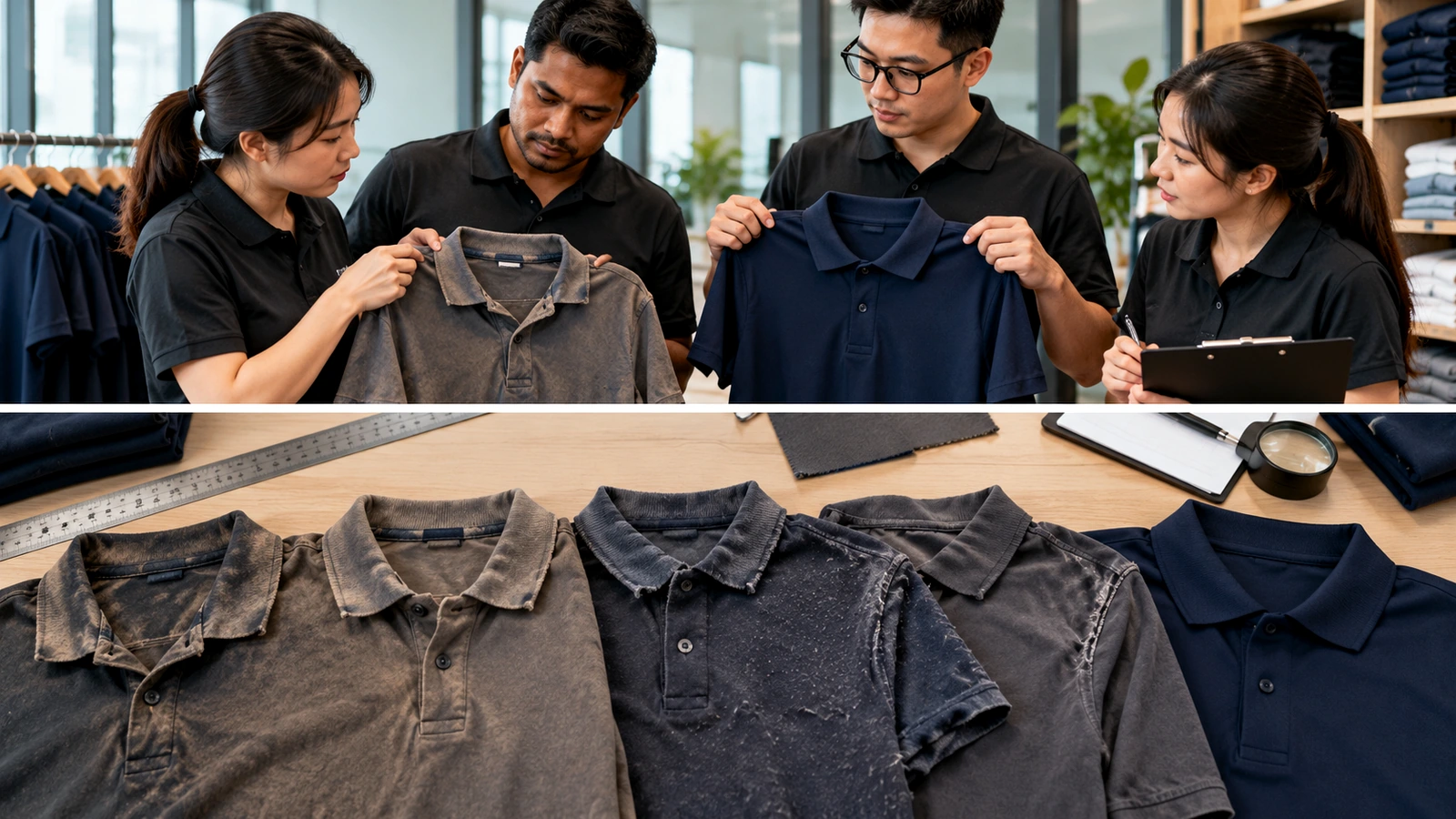
Distinguish body measurements from garment measurements
A person’s waist or hip circumference is not the same as the finished measurement of a pair of trousers. The garment needs some allowance, often called ease, so the wearer can move and sit. Different brands may use the same nominal size but provide different ease in the seat and thigh.
Start with the supplier’s garment measurement chart and confirm whether waist values are flat widths, full circumferences or labelled sizes. If a flat waistband measures 40 cm across, its approximate circumference is 80 cm before accounting for stretch or waistband construction; confusing the two doubles the apparent size. Measure a comfortable existing pair laid flat using the same method as the supplier. A comparison made from two different measurement conventions can be more misleading than no chart at all.
Rise determines where the waistband sits
Front rise is generally measured from the crotch seam to the top of the front waistband, while back rise is measured along the back seam. A short rise can pull when the wearer sits or bends; a longer rise can feel loose or create excess fabric when standing. Body proportions matter, so a single rise specification will not suit everyone equally. Have staff try the trousers with the shirts they actually wear, because a tucked-in corporate shirt and an untucked polo change the perceived waistband position. Ask them to sit on a normal chair and bend forward, then note whether the waistband digs in or exposes the back. If the waist fits but the rise is clearly uncomfortable, simply increasing the waist size may introduce bagginess without fixing the problem.

Seat and thigh room are movement measurements
The seat measurement describes the room around the fullest hip area, while thigh width describes space around the upper leg. For service, warehouse or retail work, these dimensions can matter more during movement than they do in a mirror fitting. Ask wearers to walk, step onto a low platform, squat partway and sit, using only safe movements relevant to their job. Watch for horizontal strain lines, pockets that pull open and fabric that becomes tight across the upper leg. A slim cut may look tidy when standing but restrict repeated bending; a regular cut may provide better movement without requiring an oversized waist. Compare how the cloth recovers after sitting, because some stretch fabrics relax or bag at the knees over time.
| Fit issue | Likely measurement to check | Better next step |
|---|---|---|
| Waist fits, sitting pulls | Front/back rise and seat | Try a different cut |
| Pocket openings flare | Seat and upper thigh | Compare wider seat/thigh |
| Waist loose, thighs tight | Cut balance | Avoid sizing up blindly |
Run a small fit matrix instead of guessing sizes
Choose a few representative wearers across the size range and test two nearby sizes or cuts for each. Record waist comfort, rise comfort, seat ease, thigh movement and leg length separately rather than writing only “fits” or “does not fit”. A simple five-point scale is useful if every tester understands the same anchors. For example, a wearer might score the waist 5/5 but the thigh 2/5; that points toward a different cut, not necessarily a larger waist. Include staff who spend most of the day seated and those who spend most of it walking, because their fit complaints often differ. Once a model is approved, retain its exact SKU and measurement chart; “black work trousers” is not a repeatable specification.
Plan alterations and reorders with clear boundaries
Hem length is usually easier to alter than rise or seat construction, so decide which measurements must fit off the shelf. If hems will be shortened, measure inseam after the wearer has chosen the shoes normally worn at work. For a mixed workforce, consider offering two approved cuts rather than forcing every person into one silhouette. Keep records by approved model, size and alteration rather than relying on memory during onboarding. When a supplier changes a trouser pattern, recheck the critical measurements before assuming the old size chart still applies. A small pilot order can prevent a large quantity of trousers that technically match waist labels but are uncomfortable in daily use.
A comfortable work trouser must pass the sitting and movement test, not just the standing waist test.
Frequently Asked Questions
Should staff size up for more thigh room?+
Sometimes, but a different cut may provide thigh room without an oversized waist.
Is rise the same as inseam?+
No. Rise describes crotch-to-waist height; inseam runs from crotch to hem.
Can trousers be altered after purchase?+
Hems are often straightforward, while major rise or seat alterations are less practical.
Discuss Your Print or Apparel Requirements
For a repeat uniform programme, compare approved trouser cuts and measurements before fixing the size run.