
Corporate Jackets: Zippers, Cuffs and Lining Checks Before Branding
A corporate jacket is more than a large surface for a logo. Zipper behaviour, cuff construction, lining, pocket placement and fabric recovery determine whether the garment still feels professional after months of daily use.
In This Article
Direct Answer
Inspect the jacket as a garment before approving branding. Check the main zipper repeatedly, confirm cuffs recover after stretching, look for lining that does not twist or catch, and make sure chest branding will not collide with pockets, seam lines or internal structure.
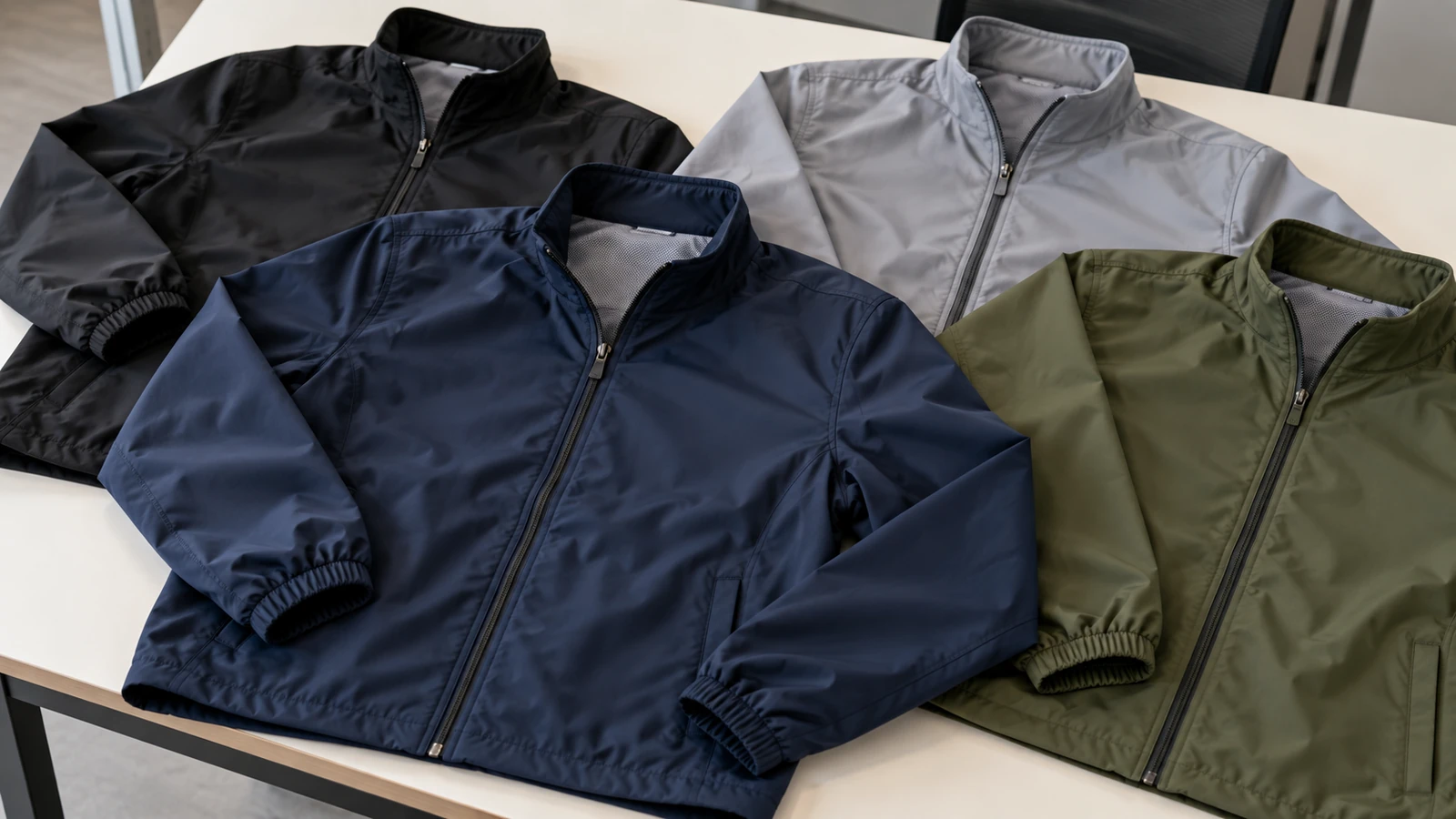
Start with the zipper because it is the highest-use component
A front zipper is opened and closed far more often than most decorative elements on a uniform, so a weak zipper can make an otherwise good jacket unusable. Run the slider through the full track several times on the sample and feel for points where it catches, twists or separates under light tension. Check whether the bottom insertion pin seats cleanly; staff should not need to fight the jacket every morning. If the zipper is exposed, compare how the teeth and tape sit against the fabric after the jacket is zipped because waves along the front can make the garment look cheap. For two-way zippers or covered plackets, confirm that the extra construction still works easily with one hand. The key buying question is not whether the zipper looks premium on a table, but whether it behaves predictably after repeated use.
Cuffs and hem control how the jacket sits during movement
Elastic cuffs, rib cuffs and adjustable tabs each create a different balance of comfort and structure. Stretch an elastic cuff several times and check whether it returns close to its original size rather than staying loose. Rib cuffs should lie flat without twisting, while hook-and-loop tabs need enough adjustment range to work over bare wrists and light layers. The hem matters too: an elastic hem keeps a short jacket close to the body, while a straight hem gives a cleaner office look but can ride up during lifting or driving. Ask wearers to raise their arms and sit down in the sample because problems that are invisible on a hanger appear quickly during movement. If the team works between air-conditioned offices and outdoor areas, a cuff that can be opened or adjusted may be more useful than the most formal-looking option.
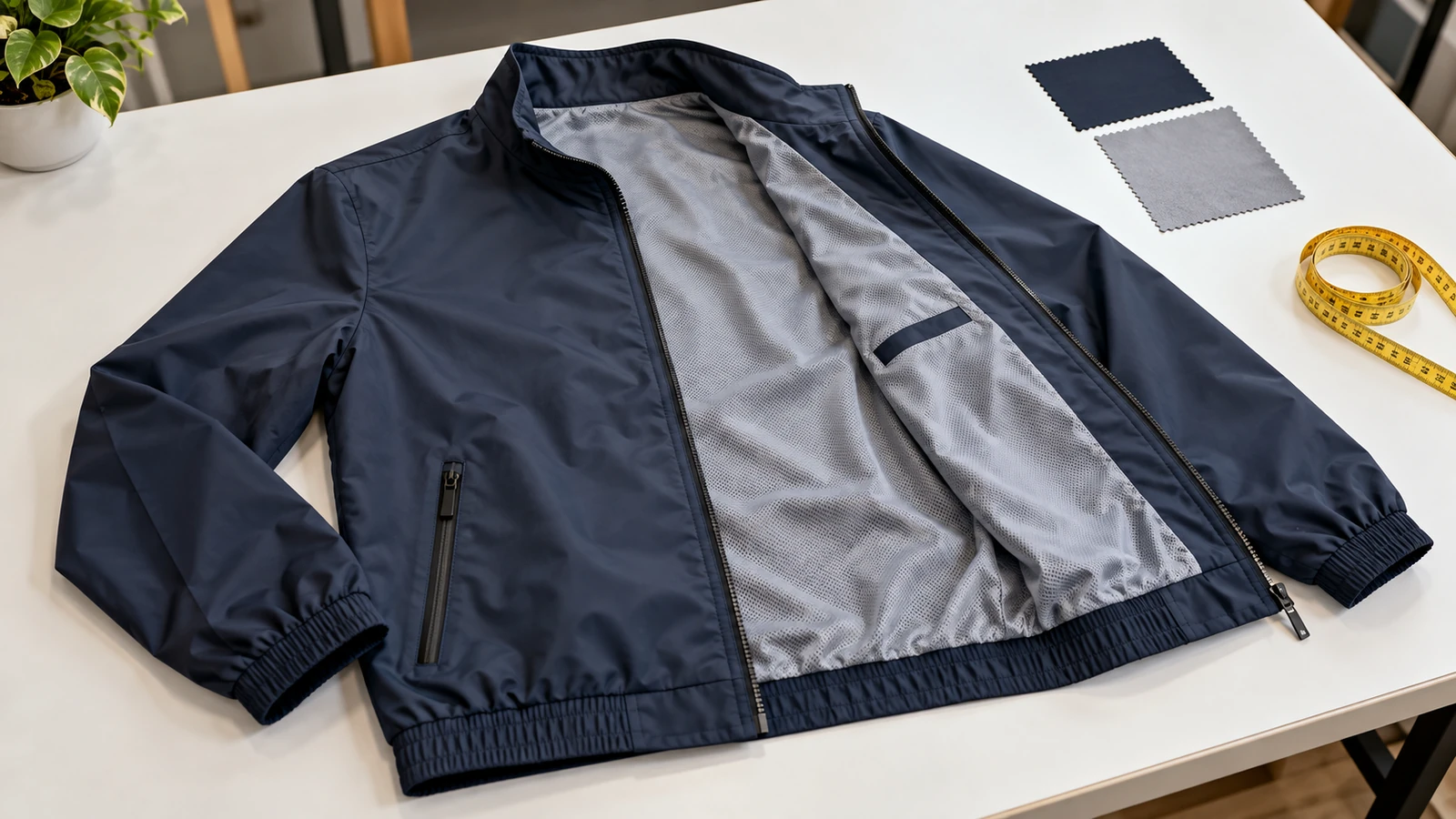
Lining changes comfort, breathability and embroidery access
Mesh lining can improve separation between the shell and the body, while smooth woven lining may make the jacket easier to slide over a shirt. A lining that is too loose can bunch near the zipper or pocket openings, and a lining that is too tight can pull when the wearer reaches forward. Turn the sample inside out and check whether the lining is anchored cleanly at key seams rather than floating unpredictably. If chest embroidery is planned, ask how the machine will access the outer shell without permanently trapping or damaging the lining. Some jackets include access openings specifically for decoration; others may require a different branding method or position. Approving the jacket and decoration together prevents a late discovery that the most attractive logo placement is difficult to produce cleanly.
Pocket construction affects both function and branding placement
A chest pocket, vertical hand pocket or hidden inner pocket changes the usable branding area. Measure the intended logo position on the actual jacket instead of copying the coordinates from a polo. A left-chest embroidery that looks balanced on a plain shell can appear crowded if it sits just above a zipper pocket or seam. Ask staff what they really carry—phone, keys, access card, small tools—because pocket depth and closure matter more than decorative pocket count. Test whether a loaded pocket drags the front panel out of shape. For repeat orders, photograph the approved pocket layout and logo position so a substitute jacket model is not accepted merely because the colour is similar.
Build a small wear test before a large issue
Give two or three sample jackets to people who represent different roles and body sizes for several working days. Ask them to report zipper problems, cuff tightness, heat build-up, pocket access and whether the jacket layers comfortably over the normal uniform. One wearer may expose a problem that a showroom fitting misses, such as the lining catching on a watch or the hem rising while driving. Wash or clean the sample according to the recommended care instructions and inspect whether the shell wrinkles, the lining twists or the cuffs lose recovery. Document the approved garment code and construction details before branding hundreds of pieces. A short real-use trial is cheaper than discovering that the team avoids wearing the jacket after issue.
| Component | What to check | Failure that matters |
|---|---|---|
| Main zipper | Smooth travel, clean engagement, flat front | Catching, separation or wavy front |
| Cuffs | Recovery and comfort through movement | Loose, twisted or overly tight cuffs |
| Lining | No bunching; suitable decoration access | Pulling, snagging or trapped embroidery area |
| Pockets | Useful depth and clear logo zone | Bulky load or branding collision |
Approve a corporate jacket as a working garment first and a branding surface second.
Frequently Asked Questions
Is a lined jacket always better?+
No. Lining can improve comfort and finish, but it also changes heat, weight and decoration access.
Can a jacket use the same logo placement as a polo?+
Not automatically. Pockets, zippers, seams and panel shapes can shift the visually balanced position.
Should jackets be wear-tested before bulk branding?+
For larger staff issues, a short trial across representative roles is a practical way to catch construction problems.
Plan the Production Before You Order
If you are comparing ready-made jackets for staff, bring the intended logo position and use conditions into the garment selection before decoration begins.
Contact Us