
Ordering Café Aprons for Staff: What to Check Before You Confirm the Run
Aprons are often treated like a minor accessory, yet they take daily abuse from coffee splashes, food prep, repeated washing and constant movement across the counter. A café can spend well on shirts and then undermine the whole uniform system with aprons that are uncomfortable, impractical or impossible to keep looking neat.
The better approach is to treat the apron as a work tool. Good apron decisions come from workflow: who carries order pads, who clears tables, who steams milk, who handles cashier duties and how often the team needs a fresh change during the day.
In This Article
Direct Answer
Before approving a café apron order, confirm four things: the right apron shape for the role, a fabric that can survive frequent cleaning, pocket placement that matches the staff workflow and strap construction that remains comfortable for long shifts. If any of those are guessed rather than tested, the apron may look good on day one but become frustrating in service.

Choose the silhouette from the job flow
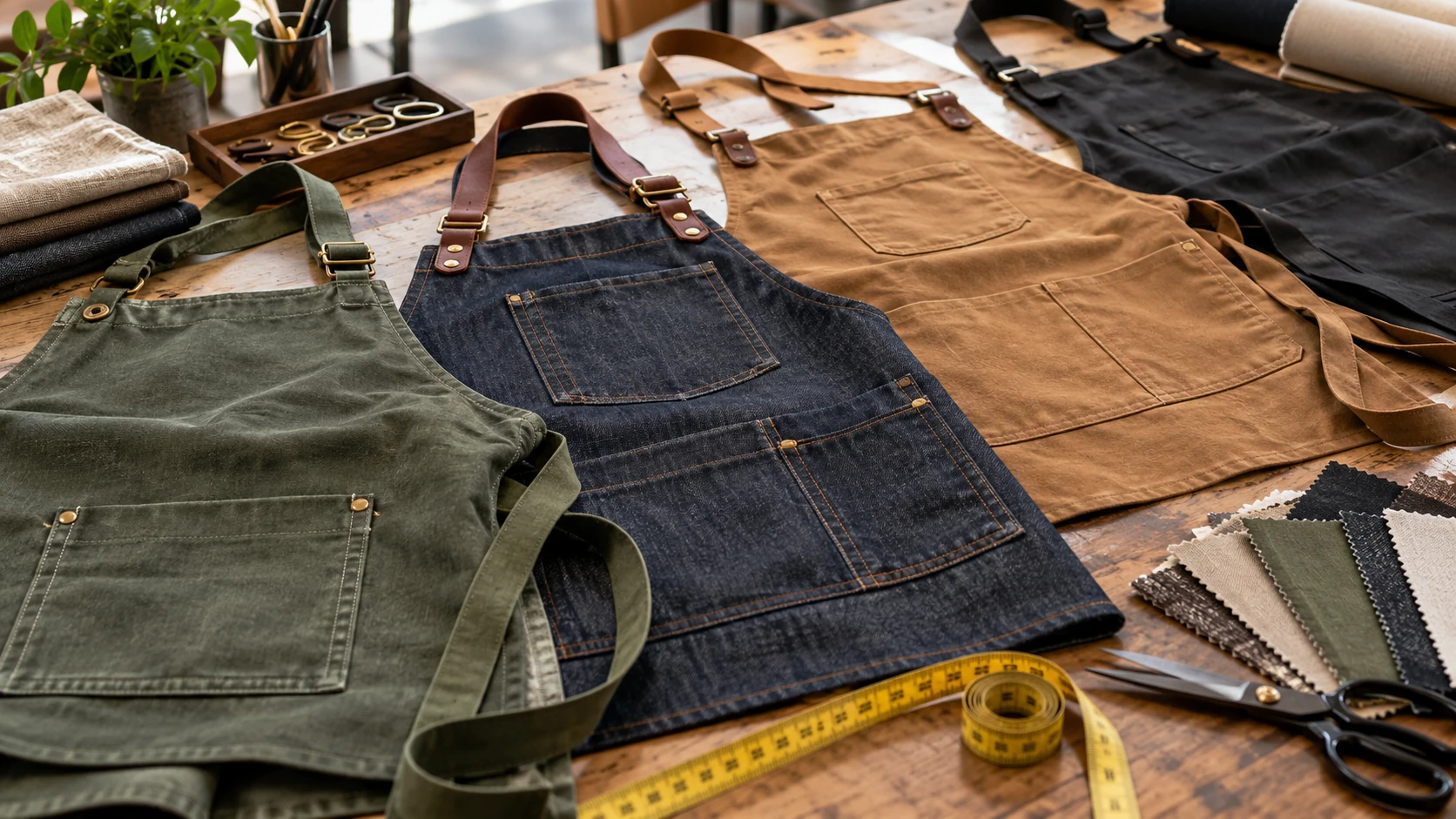
A bib apron gives more upper-body coverage, which is useful for baristas, front-counter staff and anyone handling drinks, syrups or food plating. It also becomes part of the visible brand image because it covers more of the shirt. Waist aprons are lighter and faster to move in, but they make more sense when the role is mostly table service, order-taking or floor operations rather than beverage production.
Some cafés need both. A front espresso station may justify bib aprons with more coverage, while floor staff prefer shorter aprons that reduce heat build-up and leg restriction. That is often a better system than forcing one design onto every team member just to simplify procurement.
Fabric decisions that affect cleaning and comfort
Apron fabric should be judged on three realities: stain visibility, washing frequency and how heavy it feels over a full shift. Heavier canvas or denim can look premium and hold structure well, but it also feels warmer and takes longer to dry. Lighter poly-cotton blends are easier to maintain and often more practical when the aprons need frequent rotation.
Think about the menu too. A coffee-and-pastry concept faces different staining than a sauce-heavy kitchen or dessert counter. Darker colours hide daily marks better, but very dark aprons can show lint or flour dust. The best answer is usually a colour and fabric pairing that suits the business environment rather than a purely aesthetic choice.
Pocket placement is an operations issue
Pockets look attractive in a sketch, but the wrong pockets create clutter and discomfort. A chest pocket may be useful for a small notepad, yet useless for a bulky device. Lower patch pockets can help with order pads, thermometers or cloths, but overly deep pockets become dumping zones and distort the apron shape. The point is not to maximise storage. The point is to support the items the staff genuinely need to reach quickly.
Straps deserve the same attention. Thin neck straps may dig in during long shifts, while poorly adjusted cross-back systems can twist. If the café runs long hours, comfort affects posture and staff satisfaction more than most buyers expect. One physical wear test often reveals more than a full moodboard presentation.
A short approval checklist before ordering
Before confirming production, have one or two staff members wear the sample through a realistic task sequence: steaming milk, carrying plates, wiping tables and bending to reach under-counter storage. Watch what happens at the pocket openings, side ties and upper chest. Check whether the apron bunches, whether the straps loosen and whether the lower edge catches against counters or chair backs.
Then review cleaning logistics. How many aprons per staff member are needed to support wash cycles? Will the café keep spares on site? If the apron is branded, do you want embroidery, DTF or a plain undecorated look? The best apron order is rarely just about design; it is usually the one that is easiest to run for six months after opening.
| Question | What to look for | Why it matters |
|---|---|---|
| Bib or waist apron? | Match the shape to beverage prep, kitchen support or floor service. | Reduces unnecessary heat, bulk or poor coverage. |
| Fabric weight | Balance structure against heat and wash turnaround. | Too heavy becomes tiring; too light may look flimsy. |
| Pocket layout | Carry only the items staff genuinely use. | Improves movement and keeps the apron tidy. |
| Strap system | Check adjustability and comfort over a real shift. | Prevents neck strain and poor fit. |
| Replacement planning | Estimate spares and wash rotation. | Stops the uniform system breaking down during busy weeks. |
Key Takeaway
A café apron is successful when staff stop noticing it. If the wearer is constantly readjusting straps, avoiding certain pockets or worrying about stains, the design still needs work.
FAQ
How many aprons should each staff member have?
For most cafés, at least two per person is safer than one, and some businesses keep a third as a backup for wash rotation and accidental spills.
Should café aprons be embroidered or printed?
Either can work. Embroidery often feels more durable and premium for small logos, while print works well for simpler short-term branding or specific graphic styles.
Are dark aprons always better?
Not always. They hide many stains well, but can show lint, flour or milk powder. Choose the colour based on the menu, cleaning routine and brand look.
Planning café aprons for a new team or refresh?
We can help compare apron styles, branding options and practical details before you lock in the order.
Contact Us