
Sublimation Shirt Printing in Sarawak: Design Freedom and Fabric Guide
From sleeve to back panel, sublimation opens up a wide design canvas for teams and events. The fabric and garment construction still set the physical boundaries.
What sublimation printing actually does
A design is printed with dye-sublimation inks and transferred with heat to suitable polyester fibres. On the right garment, the colour integrates with the textile rather than sitting as a thick patch on top.
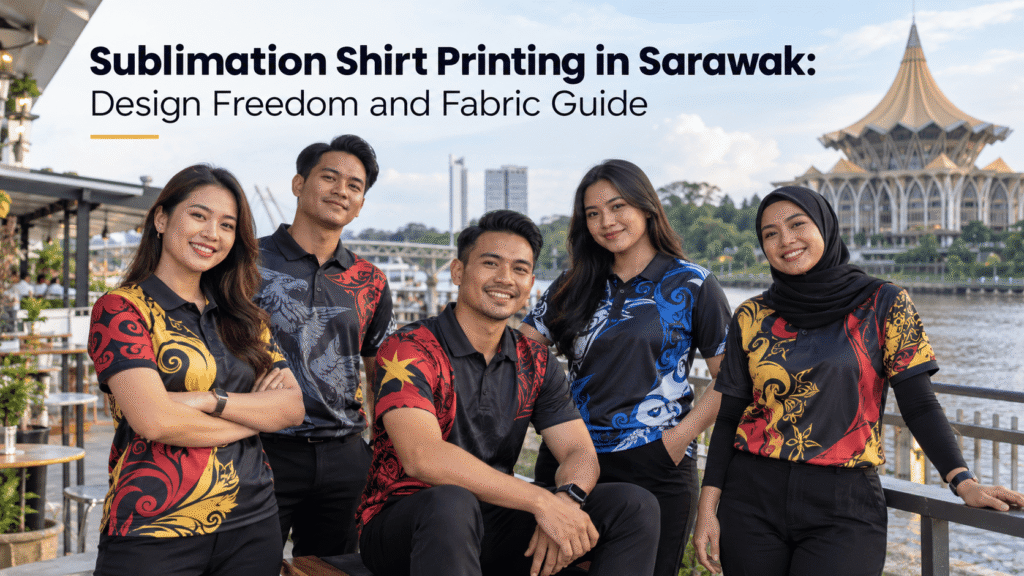
For batik-inspired club and event jerseys, this makes gradients, repeated patterns, photos and colour transitions practical. It is especially useful when visual identity needs to continue across body and sleeve panels.
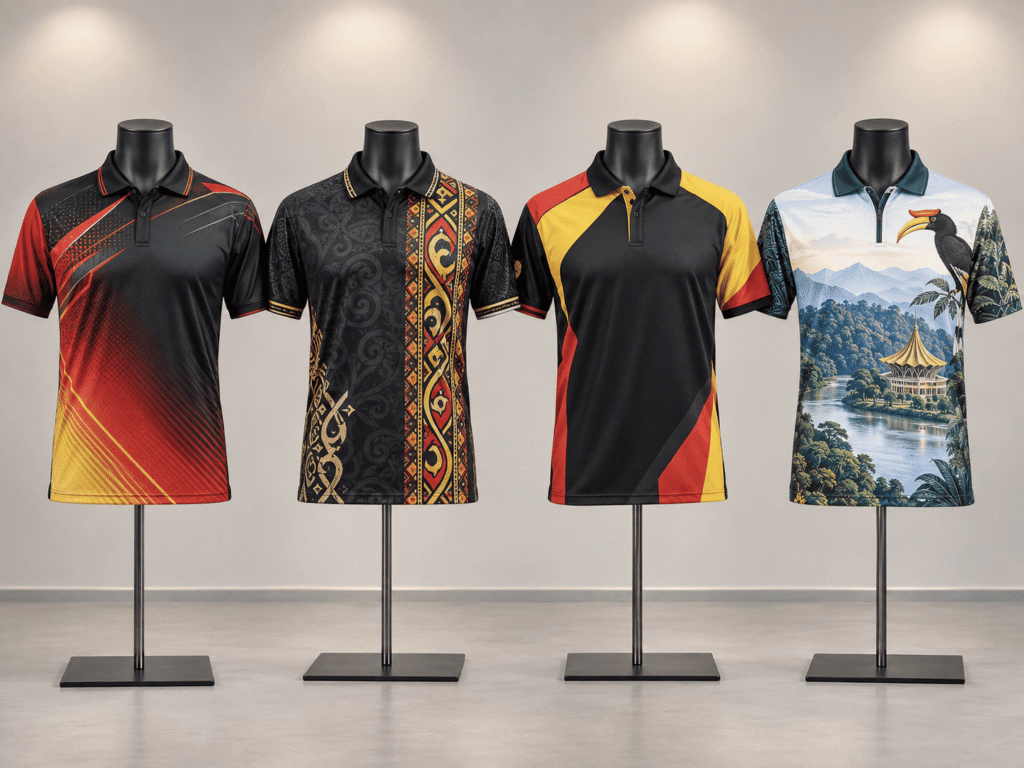
Sublimated jerseys can carry batik-inspired patterns across front, back and sleeves; request a panel proof so motifs align at seams as intended.
Technical reference: Epson’s dye-sublimation overview.
Quick buyer summary
Wide design canvas
Use full-colour artwork, gradients and coordinated front, back and sleeve panels.
Light print feel
On suitable polyester, the print does not form a separate thick transfer layer.
Confirm fibre content
Microfiber, Lycra blends, pindot and RJPK are trade or fabric descriptions; verify the actual polyester composition.
Advantages of sublimation
Integrated colour: detailed graphics can be printed through the intended panel layout, making the shirt feel less like a blank garment with a logo added afterward.
Design variation: teams can retain one master layout while changing names, numbers or branch identifiers. A variation list still needs controlled proofing.
Comfort: the decorated area does not create the same surface layer as many transfer applications; the actual breathability depends on fabric construction and fit.
Consistent identity: colours and motifs can wrap across a jersey collection, but seams and cut pieces can cause small alignment shifts.
Portfolio ideas to brief your designer
Imagine a company sports jersey with a diagonal colour fade; a batik-inspired community shirt with repeating border art; an event crew top with a large back identifier; or a tourism team shirt with illustrated geography. These are design concepts, not claims of completed client projects. Send a reference you own or have permission to use, and ask to see relevant real samples before ordering.
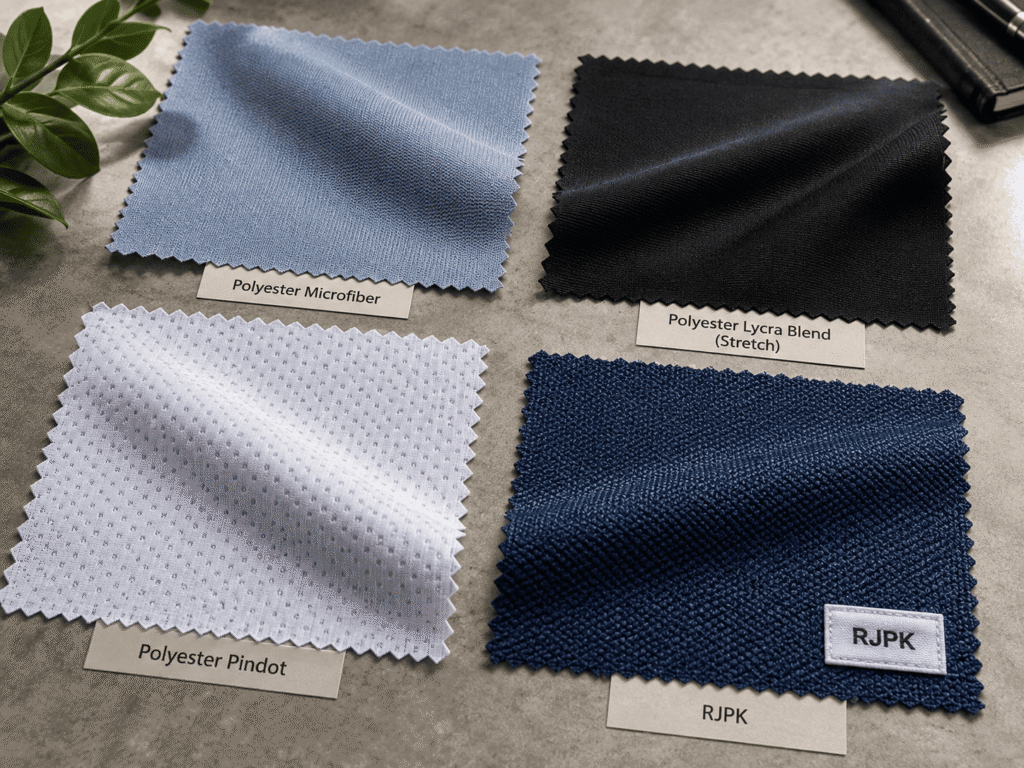
Microfiber, Lycra, pindot and RJPK: verify the construction
| Fabric name buyers use | Potential benefit | Compatibility question | What to sample |
|---|---|---|---|
| Microfiber | Smooth, lightweight hand for teamwear | Is it polyester microfiber, and what is the blend ratio? | Hand feel, opacity and finished colour |
| Lycra / stretch blend | Stretch and ease of movement | How much polyester is present, and can elastane tolerate the transfer settings? | Stretch recovery and colour after heat |
| Pindot | Textured knit and potential airflow | Is the pindot knit polyester and will dots affect image sharpness? | Print clarity, drape and see-through risk |
| RJPK | A locally used jersey fabric designation | What is the supplier’s exact RJPK fibre composition, weight and knit? | Physical swatch, colour and approved wash care |
These names do not by themselves guarantee dye-sublimation compatibility. Ask for a supplier specification showing polyester content, GSM, stretch, colour and care instructions. Standard dye sublimation is not the right process for a 100% cotton shirt.
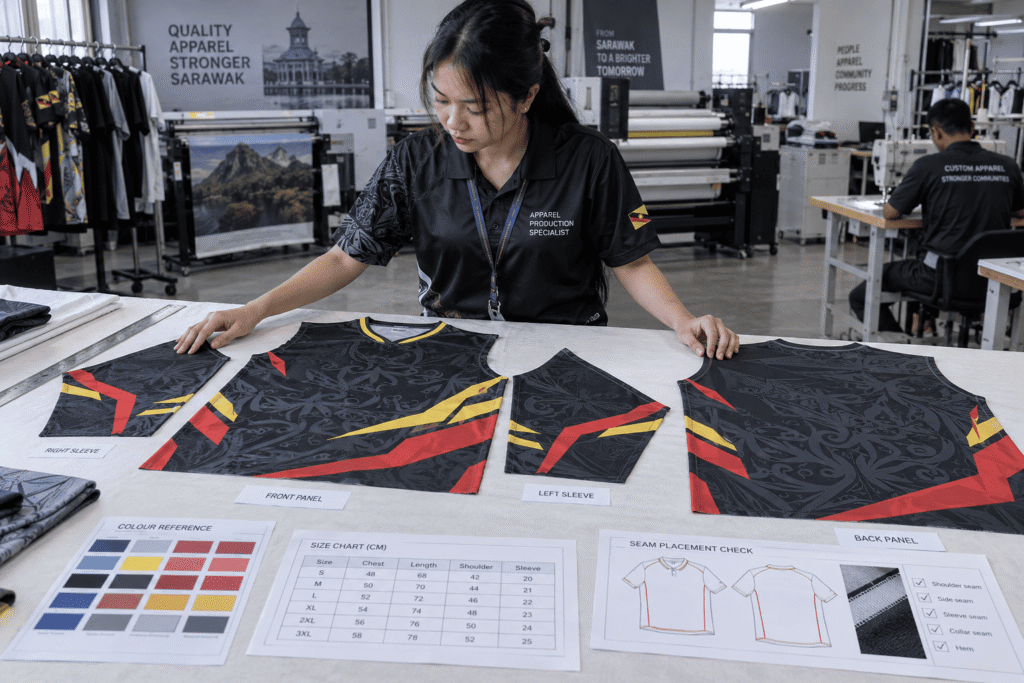
Artwork and panel checklist
- Use high-resolution source artwork and vector logos where possible.
- Provide front, back, sleeve and collar art as separate approved panels.
- Keep key text away from stitch lines, trims and fold or cut zones.
- Specify a colour reference and approve a physical sample when close matching matters.
- Check every size and any personalised name or number before production.
How to order a sublimated shirt with fewer surprises
Quotation checklist
- Fabric code, verified composition, GSM and garment cut
- Quantity and size breakdown by style or branch
- Design positions, named versions and source files
- Need for artwork preparation, colour testing and a physical sample
- Packaging, split delivery and required arrival date
Colour saturation, base-fabric shade, panel count and personalised versions influence the production process and price. Request the actual garment specification instead of relying on a generic fabric name.
Design widely, approve precisely
Sublimation gives a great deal of visual freedom on suitable polyester shirts. A good outcome still depends on the fabric, readable artwork, controlled panels and an approved fit and colour sample. Tell the supplier how the shirt will be worn, then let the design serve that purpose.
Frequently asked questions
Can sublimation print absolutely any design?
It can reproduce many full-colour graphics, but very low-resolution images, tiny text, seam alignment and the garment shape limit the result. Licensed or third-party artwork also requires permission.
Can microfiber and Lycra be sublimated?
Polyester microfiber and compatible polyester-rich stretch blends often can. Confirm the exact composition and transfer tolerance with a swatch or sample.
What about pindot and RJPK?
They may be offered in sublimation-compatible versions, but the names alone do not prove the fibre content. Request the supplier’s specification and print sample.
Will the print feel heavy?
On compatible polyester, dye enters the fibre rather than forming a thick transfer film. The shirt’s feel still depends on the chosen knit, weight and finish.
Show us your sublimation design idea
Send Uniform Sarawak your artwork, purpose, preferred fabric, size list, quantity and delivery point. We can review material suitability and the panel layout.
WhatsApp Uniform SARAWAKRelated Printing & Uniform Service Network
Choose the location or service suited to your order.